
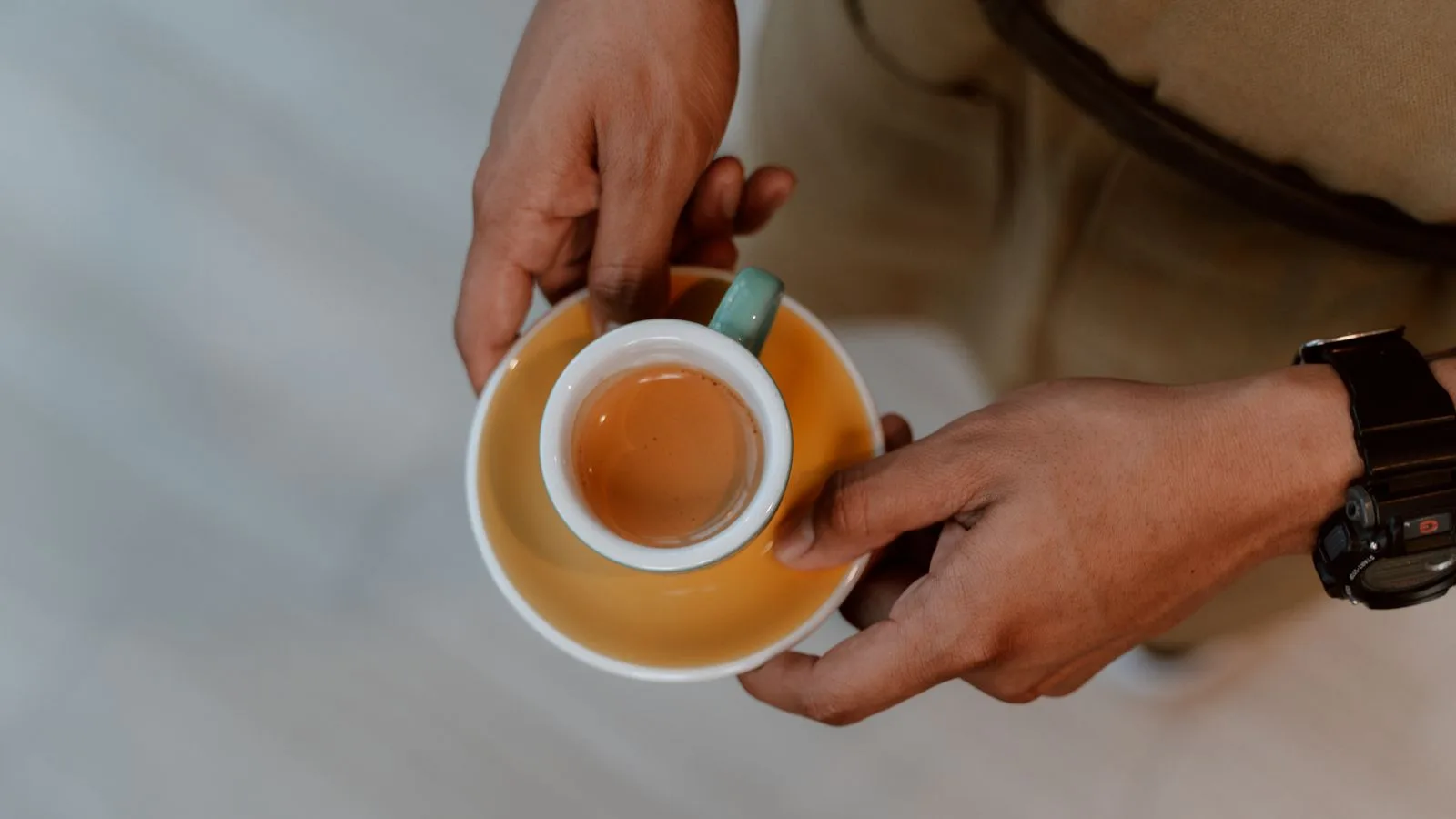
A 1-ounce espresso has about 63 milligrams of caffeine
The Mayo Clinic caffeine table lists about 63 milligrams for a 1-ounce espresso. Two reference shots have about 126 milligrams. An 8-ounce brewed coffee has about 96 milligrams, and a 1-ounce decaf espresso has about 1 milligram.
When the café publishes nutrition information for your exact drink, use that. Otherwise, use 63 milligrams per 1-ounce shot as a reference and count the shots. Milk and added water change the drink's strength and size. The caffeine total comes from the espresso.
Coffee type, dry dose, drink yield, and café recipe can change the total. If health, pregnancy, medication, sleep, or sensitivity makes this number important to you, use product data and ask a clinician about your situation.
For quick order math, one reference shot is about 63 milligrams, two are about 126 milligrams, and three are about 189 milligrams. A one-shot latte, cappuccino, or Americano (espresso topped up with hot water) starts with the same reference amount as a straight espresso. Chocolate, coffee syrup, energy ingredients, or extra shots can push the total higher.
Reference amounts by serving
| Drink | Reference serving | Reference caffeine | What can change it |
|---|---|---|---|
| Espresso | 1 oz | 63 mg | Dry coffee amount (dose), coffee type (species), drink amount (yield), café recipe |
| Two 1-oz espressos | 2 oz total | About 126 mg | Whether “two shots” match the reference |
| Brewed coffee | 8 oz | 96 mg | Dry coffee amount, brewer, serving size, coffee |
| Decaf espresso | 1 oz | About 1 mg | Product and decaffeination process |
| Latte or cappuccino | Shot-dependent | Same as espresso base | Number and type of shots |
| Americano | Shot-dependent | Same as espresso base | Number and type of shots |
The espresso, brewed, and decaf estimates come from Mayo Clinic. We got the two-shot value by simple multiplication, with no new lab result behind it. A real double can use a different basket dose, so it may not equal two separate 1-ounce shots. Milk and water get no separate estimate, because the espresso recipe sets the caffeine.
Count caffeine per drink
In the reference table, espresso has more caffeine per ounce than brewed coffee. Divide 63 milligrams by one ounce and espresso has 63 milligrams per ounce. Divide 96 milligrams by eight ounces and brewed coffee has 12 milligrams per ounce. So in this example, espresso carries more than five times the caffeine per ounce.
Serving size can flip that. People usually drink all eight ounces of brewed coffee but only one or two ounces of espresso, so the 8-ounce cup has more total caffeine than one reference shot. A 12- or 16-ounce café coffee can have more still, depending on the recipe.
Keep two questions apart: “Which drink is more concentrated?” and “How much caffeine will I consume?” Espresso often wins the first. Your actual serving answers the second.
Doubles vary by café
Traditional espresso definitions describe a small single dose and drink. Many modern cafés use double baskets, often with a dose in the high teens of grams, and may split or serve that brew however their house recipe says. A menu may call the full output a double, two shots, or just espresso.
Because the names vary, simple multiplication can mislead you. If a café gives a caffeine amount for its double, use that number. If it only says double, you still don't know the species, dose, drink yield, or measured caffeine. Two times 63 milligrams is a clear estimate, so label it as one.
At home, write down the coffee dose and recipe. Writing it down keeps a 14-gram basket and a 20-gram basket from looking like the same shot.
Coffee type and dose change the amount
Caffeine starts in the dry coffee. More coffee usually means more caffeine available, if everything else stays the same. Species matters too: robusta usually has much more caffeine than arabica. So a traditional blend with robusta may differ from 100% arabica coffee at the same dose.
Roast color is a shaky shortcut. Dark roasting changes bean density and mass. Measure by scoop, and light and dark beans can put different masses in the basket, and measuring by grams changes the comparison. “Dark tastes stronger” does not prove “dark has more caffeine.”
Record the dry dose in grams, and skip bean counts or scoop volumes. Without lab analysis or reliable product data, the caffeine number stays an estimate. Knowing the dose narrows the uncertainty.
Caffeine dissolves easily, but shot length still matters
Caffeine dissolves in water and usually extracts easily. A ristretto, which makes less drink, may have somewhat less caffeine than a longer espresso from the same dry dose. It still has caffeine, and the difference isn't fixed. A lungo (a longer espresso pull) may pull more caffeine from that dose, but coffee, grind, flow, and contact time play a part too.
Do not use taste as a caffeine meter. A short ristretto can taste strong while holding less drink. A diluted Americano can taste mild while carrying two or three shots. Milk can soften bitterness and strength while the extracted caffeine stays in the cup.
At a café, nutrition data for the exact size and changes is your best shortcut. Without it, count shots, use a stated per-shot estimate, and keep in mind that it's an estimate.
Milk drinks and Americanos keep the caffeine from their shots
A latte keeps the caffeine from its espresso shots, however much milk it holds. With two shots, it has the caffeine from both. Milk changes volume, nutrition, temperature, and taste, and caffeine stays the same.
A one-shot cappuccino and a one-shot latte have about the same caffeine when the espresso is the same, even with different milk and foam. A flat white may have more caffeine at one café because it uses an extra or ristretto shot, while at another café the counts may match. A macchiato can mean a traditional marked espresso or a much larger branded drink.
An Americano follows the same rule. Hot water lowers caffeine per ounce. Total caffeine comes from the shots. Read the recipe before you compare drink names.
Chocolate, coffee syrups, energy additives, and extra shots can add caffeine on top of the espresso. Work out a menu drink from its full ingredient and shot list. Cup size alone won't do it, since a larger size may add only milk or may add another shot.
At home, count the dry coffee doses and brews, and ignore how many outlets the coffee holder has. A double basket split between two cups is one dose shared across two servings, while two double baskets in a row are two doses. The word “Shot” can hide that difference, and menus may use it loosely or differently. Write the serving down.
Decaf means much less, not zero
The Mayo table lists about 1 milligram in a 1-ounce decaf espresso. The U.S. Food and Drug Administration says decaffeinated coffee and tea still contain some caffeine, and it gives a broader 2–15 milligram range for an 8-ounce decaf coffee. Product, serving, and preparation cause the variation.
If you're choosing a bag, the decaf espresso guide keeps bag selection and process information apart from evidence about a prepared drink.
For most people, decaf is a practical way to cut back. If you must avoid caffeine, do not read “decaf” as zero. Check product information and talk through any medical restriction with a healthcare professional.
Half-caf has no standard dose either. It may mean a 50/50 blend, one regular shot with one decaf shot, or a café customization. Ask how it's made before you put a number on it.
What the FDA's 400-milligram reference means
The FDA cites 400 milligrams per day for most adults as an amount not generally linked with negative effects. It is a general reference. Don't treat it as a daily target or as permission for your own intake.
People process caffeine differently, and some conditions and medicines can raise sensitivity. If you're pregnant, trying to become pregnant, or breastfeeding, talk with a healthcare professional.
Using the 63-milligram estimate, six single reference shots equal 378 milligrams and seven equal 441 milligrams. That shows the scale, and it doesn't mean six shots are right for you. Other caffeine sources count too: brewed coffee, tea, soda, energy drinks, chocolate, supplements, and some medicines.
The FDA also lists possible signs of too much caffeine: sleep problems, anxiety, jitters, upset stomach, nausea, headache, faster heart rate, palpitations, and higher blood pressure. If you notice symptoms, reassess and seek advice. Do not look for another calculator to change the answer.
Caffeine and sleep depend on timing as well as totals
A daily total hides when you had the caffeine. You can stay under 400 milligrams and still sleep badly after a late drink. Sensitivity differs, and caffeine can stay active for hours. How you respond matters alongside any general guideline.
For one week, track the time, drink, size, shot count, and any listed caffeine amount. Add other sources too, beyond espresso. Note when you fall asleep and wake, plus any anxiety, headache, or palpitations. Do not diagnose the cause from one observation.
If you cut back, a gradual change may feel easier than stopping suddenly. Decaf shots, smaller servings, fewer shots, or an earlier cutoff are changes you can measure. Talk with a clinician about medical conditions, medicines, pregnancy, and serious symptoms.
How to estimate a café order
Use these sources in this order:
- Exact nutrition data for the chain, beverage, size, and customization.
- A café’s stated caffeine per shot and the actual shot count.
- A transparent reference estimate such as 63 milligrams per 1-ounce shot.
- A range when the basket or drink definition is unclear.
Do not guess caffeine from cup size alone. A 16-ounce latte may have one shot or several. Do not guess from bitterness, dark roast, or crema. Do not assume every double equals two standard single shots.
When an exact limit matters, pick a product with published data, or lower the uncertainty with decaf. An independent café shot can be excellent coffee and still be hard to pin a number on.
Use the estimate safely
The 63-milligram and 96-milligram figures are published reference values. The FDA provides the 400-milligram adult guidance. Exact product nutrition takes priority over these general estimates.
We offer general information here and can't give personal medical advice. If you are pregnant, trying to become pregnant, breastfeeding, taking medicine, managing a condition, or having concerning symptoms, ask a qualified healthcare professional about caffeine.
To compare brewing methods, read espresso vs coffee. For recipe and dose tracking, use the espresso ratio calculator, and keep in mind that a ratio doesn't measure caffeine.
To keep a record, write the drink, size, shots, time, and seller-listed caffeine. For example, a 12-ounce latte with two shots is a two-shot drink, even though milk makes the cup larger. If the seller lists no caffeine, mark your number as an estimate, and keep seller-listed amounts separate from your estimates.
Add tea, soda, chocolate, energy drinks, supplements, and medicine to your daily total. Look back over the record when sleep, anxiety, heart rate, or headaches change, and ask a clinician about symptoms or limits.
Caffeine estimates stay approximate, but a recorded dose and yield keep the serving itself explicit.
Record the shot I actually drink →Common questions
How much caffeine is in two shots of espresso?
Using the 63-milligram reference, two 1-ounce shots would be about 126 milligrams. The actual café drink may differ.
Does espresso have more caffeine than coffee?
It has more caffeine per ounce, but an 8- or 12-ounce brewed coffee often contains more total caffeine than one espresso shot.
Does a latte have less caffeine?
Not because of the milk. A latte has the caffeine from its espresso shots, however much milk is added.
Is decaf espresso caffeine-free?
No. Decaf contains much less caffeine, but the FDA and Mayo Clinic both note that decaffeinated drinks can still contain a small amount.

About Mara Ellis
Mara Ellis is Espresso Receipt’s fictional editorial voice. Warm, practical, and lightly witty, she turns coffee jargon into clear choices for your counter, budget, and next shot.
Read the profile and guides by Mara Ellis →Sources (3)
- Caffeine content for coffee, tea, soda and moreMayo Clinic · Check date not recorded(opens in a new tab)
- Spilling the Beans: How Much Caffeine is Too Much?U.S. Food and Drug Administration · Check date not recorded(opens in a new tab)
- Espresso brewing guideNational Coffee Association · Check date not recorded(opens in a new tab)
See an old price or conflicting detail? Send a correction.
How we researched this
We use manufacturer, standards group, government, and authorized-retailer records when available. We label a hands-on result as an observed test only when we name the exact product and test it. A checked price shows what the seller listed on the check date. It can change after that date, and your delivered total may differ.
What the evidence labels mean
- Source checked
- A cited source stated this fact when Espresso Receipt checked it. This is not a physical product test.
- Estimated
- This is calculated from stated inputs and assumptions. It is not a measured result or a current quote.
- Observed physical test
- This is a hands-on result for the exact unit under a stated test method.
- We could not confirm this
- The available sources do not establish one reliable answer.