
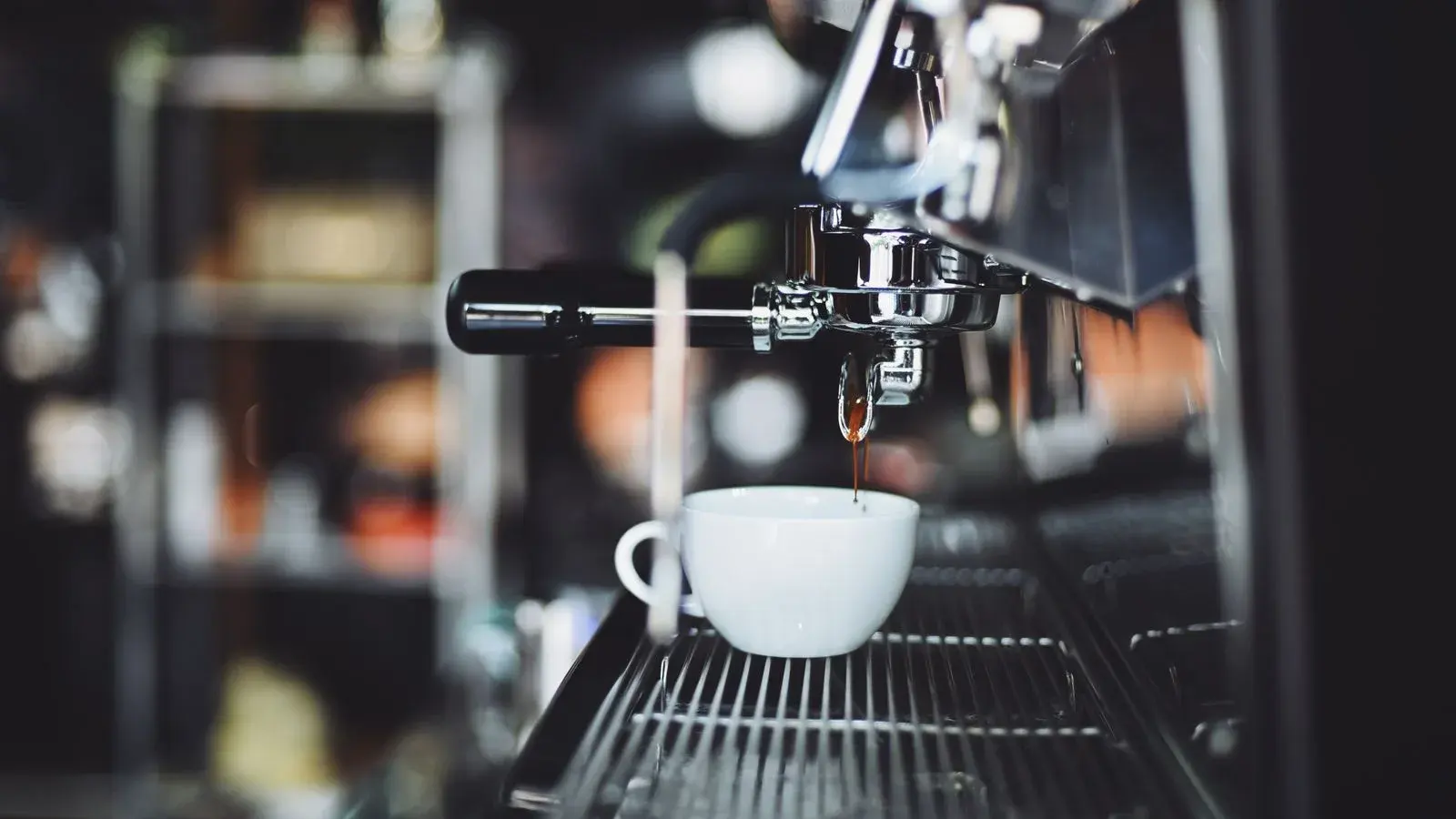
Red eye, black eye, and Americano
Lavazza describes a red eye as brewed coffee plus one espresso shot. Its black eye adds two shots. The names are handy shorthand, but not every cafe uses the same serving, so confirm the actual order.
| Drink | Base in the cup | Added espresso | What to confirm |
|---|---|---|---|
| Brewed coffee | Coffee brewed through a filter or another stated method | None unless requested | Serving size and brew method |
| Red eye | Brewed coffee | Commonly one shot | What the cafe calls one shot |
| Black eye | Brewed coffee | Two shots in Lavazza's definition | Whether those are two singles or another house dose |
| Americano | Hot water | The cafe's chosen shot count | Cup size and shot count |
Look at what goes in the cup first. Breville's Americano comparison separates espresso diluted with water from brewed coffee. A red eye uses both kinds of coffee in one mug, so it's a different drink from a large espresso or an Americano.
For more on that difference, read Americano versus brewed coffee. If espresso terms are new to you, start with what espresso means.
How to order the drink you mean
Describe it plainly: “A small brewed coffee with one added espresso shot.” Then check three things at the counter:
- Coffee size: ask which cup size the order uses. “Small” is a menu size with no fixed international volume.
- Espresso amount: ask whether the added shot is a single or a double. The number of button presses won't tell you the dose.
- Additions: say whether you want milk, sweetener, or neither. Those sit on top of the brewed coffee and espresso.
We put this ordering checklist together so you don't need the cafe to recognize a nickname. Want it iced? Ask what cold coffee base the shop uses, since it may not be the same drink simply poured over ice.
Caffeine comes from both coffees
No single verified caffeine total covers every red eye. The brewed coffee serving and the added espresso both count, and a smaller cup doesn't guarantee a smaller espresso dose.
The FDA notes that caffeine amounts and serving sizes vary. Ask the cafe about the actual drink. If you don't know either part, the total stays unknown. Milk or extra water changes the dilution, and the caffeine already in the cup stays put.
Don't stretch an estimate for one chain, size, or coffee into a universal red eye number. Our espresso caffeine guide explains why shot counts and measured caffeine are different kinds of information. Its caffeine calculator estimates your cup from espresso shots and 8-ounce servings of brewed coffee. A 16-ounce cup counts as two servings.
Build one cup you can repeat at home
Start with brewed coffee you already know how to make. Keep its finished serving size fixed, then add one espresso shot. That follows Lavazza's red-eye definition without asking you to copy an unknown cafe cup size. If you have a scale, record the espresso that reaches the cup. A “shot” on a pod machine, a single basket, and a double basket can give different finished amounts. Weighing the shot tells you what you added; it does not tell you its caffeine content.
For an illustrative recipe card, write “250 ml brewed coffee + one espresso shot yielding 30 g.” Both numbers are example inputs, not Lavazza's required serving and not a tested Espresso Receipt drink. Your own card should name the coffee base, its finished amount, the shot recipe or capsule, and one taste note. Keep the same brewed coffee for a second trial. If the first cup tastes too intense, compare it with the brewed coffee alone or use a smaller espresso addition next time. If you want more espresso character, compare a second shot only after you know what one shot did. Lavazza calls the two-shot drink a black eye.
Be careful with the comparison: changing the brewed-coffee size and espresso amount together will not tell you which change mattered. The water in the brewed coffee is part of that base. Adding plain water afterward makes a more dilute red eye, but it does not turn it into an Americano because brewed coffee is still present. Likewise, a darker roast name does not establish a particular caffeine amount for the finished mug. The FDA's caffeine guidance explains why preparation and serving vary.
Read a cafe menu before using the nickname
Some menus list red eye under brewed coffee; others put it under espresso drinks. Look at the base before the category. If the menu gives a size but not a shot count, ask what its red eye includes. A useful order is “your 12-ounce brewed coffee with one single espresso shot,” if that size and shot are actually on that menu. Say “hot” or ask which chilled brewed-coffee base the cafe uses for an iced version. That is clearer than assuming every iced red eye starts with the same coffee.
If a cafe only offers a double shot, ask whether it can add one shot separately. Do not assume that half of a double-shot button press equals the cafe's single-shot recipe. If you order a black eye, confirm whether the menu's “two shots” means two singles or a single double extraction. The drink name will not settle dose, liquid yield, or caffeine for you.
Milk and sweetener belong in the order if you want them, but they are not in Lavazza's base definition. Ask the shop what it adds by default. Milk can make a concentrated cup taste softer without removing the espresso or brewed coffee. If your goal is lower caffeine, you need information about the actual coffee ingredients, not a change in cup color or milk amount. A decaf brewed base may be an option at a cafe, but decaf still contains caffeine.
Choose the comparison that answers your question
If you are deciding between a red eye and an Americano, hold the espresso choice steady and compare the base: brewed coffee versus hot water. Breville's Americano and drip-coffee guide explains why the brew methods differ. This comparison tells you whether you like the extra brewed-coffee flavor. It does not isolate caffeine, because the red eye also brings caffeine from its brewed base.
If you are deciding whether to add a second shot, hold the brewed coffee fixed and compare one added shot with two. Stop at the drink you enjoy and can describe when you order. Keep the written recipe; the next cafe may use different cups and shots. That small note is more useful than a universal strength label.
Choose by what's in the cup
Choose a red eye when you want brewed coffee with added espresso. Choose an Americano when you want espresso diluted with water. Choose plain brewed coffee when you don't want an extra shot.
No option is guaranteed to taste better or give you a particular effect, because coffee, brewing, size, and your own taste all shape the choice. Try a red eye once with a single added shot. If it tastes too strong or too thin, keep the same coffee size next time and change only the shot count. Once it tastes right, order it that way from then on.
A red eye adds espresso to brewed coffee. An Americano adds water to espresso. Read how the two differ before you order.
Compare an Americano with brewed coffeeCommon questions
Is a red eye the same as an Americano?
No. A red eye adds espresso to brewed coffee. An Americano combines espresso and water.
What is a black eye coffee?
Lavazza describes brewed coffee with two added espresso shots. Confirm the cafe's serving and what it means by one shot.
How much caffeine is in a red eye?
There is no universal total. Ask for information about the actual brewed coffee and added espresso.

About Mara Ellis
Warm, practical, and lightly witty, Mara turns coffee jargon into clear choices for your counter, budget, and next shot.
Read the profile and guides by Mara Ellis →Sources (3)
- Red eye and black eye definitionsLavazza · Checked September 12, 2026(opens in a new tab)
- Americano versus drip coffeeBreville · Checked September 12, 2026(opens in a new tab)
- Caffeine informationFDA · Checked September 12, 2026(opens in a new tab)
See an old price or conflicting detail? Send a correction.
How we researched this
We compared Lavazza's drink definitions with Breville's explanation of Americano and drip coffee, then checked the FDA's caffeine limits. We checked the sources on September 12, 2026.
We did not test, own, taste, or measure these drinks or their caffeine. The facts here come from the sources below.
What the evidence labels mean
- Source checked
- A cited source stated this fact when Espresso Receipt checked it. This is not a physical product test.
- Estimated
- This is calculated from stated inputs and assumptions. It is not a measured result or a current quote.
- Observed physical test
- This is a hands-on result for the exact unit under a stated test method.
- We could not confirm this
- The available sources do not establish one reliable answer.