
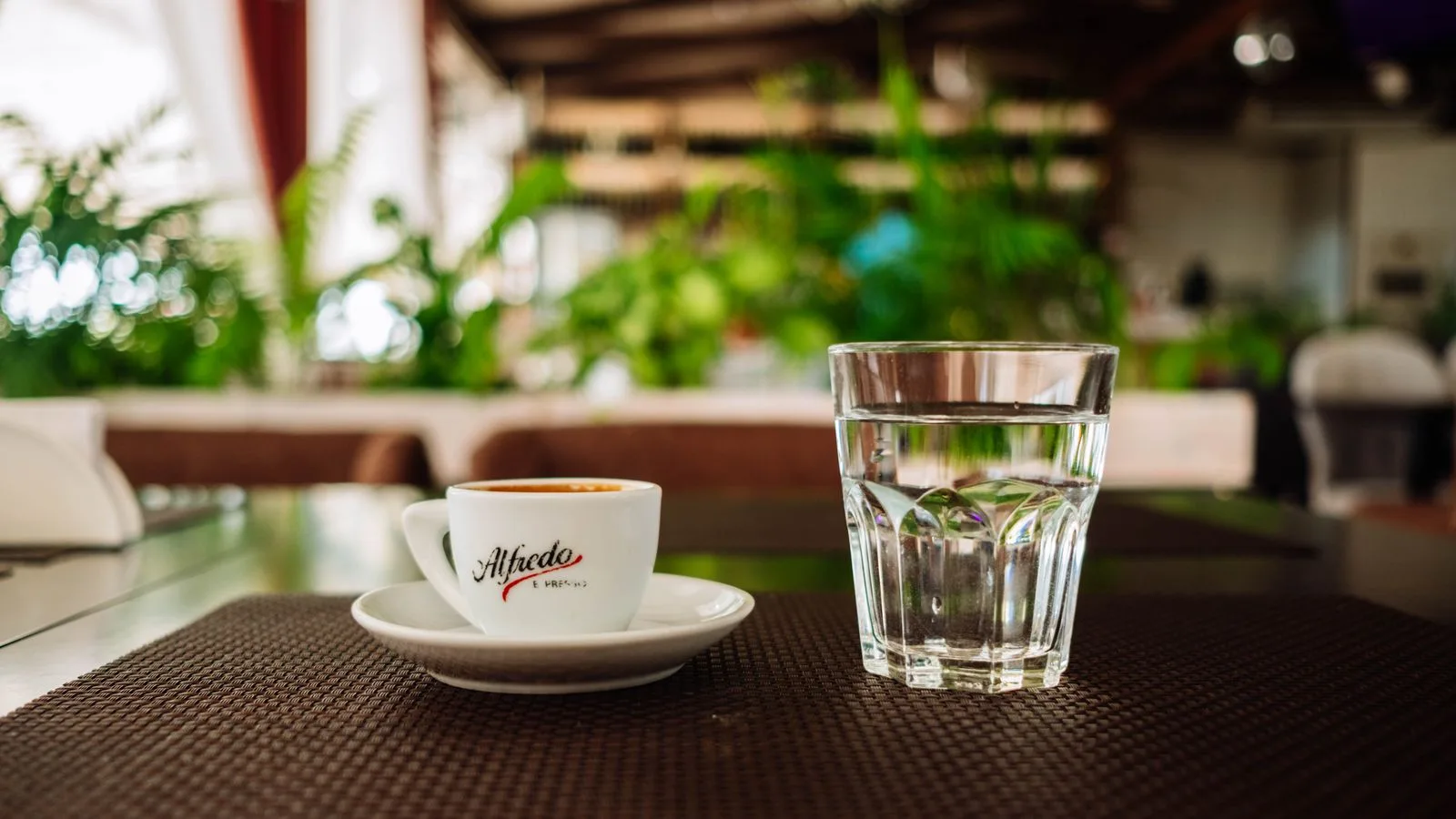
Choose an Americano for espresso flavor, or drip coffee for a clear cup
Choose an Americano when you want espresso flavor in a longer black drink. Choose drip coffee when you want a clear cup or several servings from one batch. An Americano is espresso with hot water added after brewing. Drip coffee brews to its final volume as water passes through the grounds.
Quick comparison
| Question | Americano | Drip coffee |
|---|---|---|
| How it is brewed | Espresso is made under pressure. Hot water is added after. | Water passes through grounds by gravity or brewer action |
| Grind | Fine espresso grind | Usually medium to medium-coarse |
| Serving | One or more shots plus water | Brewed directly to final beverage |
| Body | Espresso texture softened by water | Often clearer, especially with a paper filter |
| Surface | May keep tan espresso foam, called crema | No espresso crema |
| Caffeine | Depends on shot count | Depends on dry coffee amount, brew, and serving size |
| Equipment | Espresso machine and grinder | Dripper or drip brewer and grinder |
| Several cups | Usually made one drink at a time | Easy to brew as a batch |
Breville's comparison of Americano and drip coffee describes this method difference. Water added to finished espresso changes its strength and temperature, and the grounds are already done brewing by then. In drip brewing, all the water helps brew the grounds.
Grind, pressure, filter, contact time, and the amounts of coffee and water create different aroma, body, oils, and clarity. Extraction means water dissolving flavor from coffee grounds and carrying it into the drink.
The National Coffee Association's espresso guide defines the pressure-brewed base. An Americano keeps that base and becomes less strong as you add water. Drip coffee reaches its serving strength while it brews. That's why two black drinks of the same size can have different texture and flavor.
For a quick menu choice, pick the flavor and serving style you want. Ask how many shots it has if caffeine matters.
At home, count the grinder and cleanup in your choice. Drip is easier to make for several cups. An Americano uses all the espresso steps for each drink before you add water, so it's the more hands-on, one-drink-at-a-time option.
Treat these as common patterns. A paper-filtered Americano and metal-filter drip can have a smaller body difference. An espresso with a larger yield may taste unlike a short double. A café can use two, three, or four shots based on drink size.
Freshness works differently in a café. An Americano is usually made to order, but its beans can still be old or its grinder can be set poorly. Drip coffee is brewed in batches and can lose aroma while it waits, though a busy café may serve a very fresh batch. Made to order and freshly brewed describe two different things.
Either method can use decaf when the café carries it, and decaf still contains some caffeine. A shop may have decaf espresso for an Americano but no decaf batch, or may brew decaf filter coffee only when asked. Ask how the drink is made so you're working from the café's answer.
Why the cups taste and feel different
Espresso pushes hot water through fine coffee packed into a small filter basket. This packed coffee is called a puck. Some oils and fine coffee particles enter the strong drink, and an Americano keeps some of that texture and flavor after you add hot water.
Drip coffee usually uses a coarser bed of coffee and a longer contact time. A paper filter removes more oils and fine particles. This often produces a clearer cup where acidity and origin flavors stand out.
“Cleaner” describes a taste, and it doesn't rank quality. Some people prefer espresso's body. Others prefer the separation of filtered coffee.
Coffee, roast, water, recipe, and technique can matter more than the brewing method. A light-roast Americano can taste brighter than a dark drip. Adding water won't fix poor espresso, and a stale batch won't show what fresh drip coffee can do.
Water makes espresso less strong, but does not change how it was brewed
Adding hot water lowers the strength of everything already in the shot. It does not remove caffeine, undo over-extraction, or turn espresso into drip coffee. A two-shot Americano still contains what was extracted into those two shots, spread across the final cup.
Water quality and temperature still affect the result. Very hot water can make an Americano hard to taste at first and may flatten aromas as it sits. Unsuitable minerals can change the flavor.
Use drinkable water that follows the machine maker's scale guidance. Do not assume boiling water is always best.
The order of mixing changes the look more than the contents. Pouring espresso over water can keep more crema on top, and pouring water onto espresso breaks it up. Once mixed, the ingredients are nearly the same, although the first aroma and temperature may differ.
Cup size does not tell you the caffeine amount
Either drink can contain more caffeine. An Americano's total starts with its espresso shots. Added water changes caffeine per ounce, and the total stays with the shots. Drip caffeine depends on coffee dose, species, grind, extraction, and serving size.
Mayo Clinic's reference table lists about 63 milligrams in one ounce of espresso and about 96 milligrams in eight ounces of brewed coffee. So espresso is stronger per ounce, while a full drip serving can have more total caffeine than one shot. These are reference values, and your own cup can differ.
A large Americano can use several shots and have more caffeine than a small drip. A large drip can have more than a one- or two-shot Americano. Count the shots and use current seller nutrition data when available. Do not use bitterness, darkness, or crema to guess caffeine.
The coffee-to-water amount changes the drink
There is no single water ratio for every Americano. A short Americano might use roughly one part espresso to two parts water, and a longer one may use much more water. Cafés often set recipes around cup sizes, leaving room for the espresso. Ice changes the math for an iced Americano because some water is still frozen when you serve it.
Ask how many shots are in the size and how much water is added. At home, try a small experiment. Keep the same balanced double espresso, add water a little at a time, and taste as the strength changes. Stop when a sip tastes right to you, then write down the espresso yield and water mass so you can repeat the recipe.
More water does not extract more from the shot. It can make bitterness less strong, and it also thins sweetness, acidity, body, and aroma. If the base shot tastes sharply sour or drying, fix the espresso before choosing a water amount.
Americano and long black are related, but not the same everywhere
A long black is commonly linked with Australia and New Zealand. It is often made by pouring espresso over hot water. This can keep more crema on top and make a shorter, stronger drink than a large Americano. Cafés vary, so describe the recipe you want.
If the espresso goes into brewed coffee instead of water, the red eye coffee guide explains that different order.
Some menus use Americano and long black for the same drink. Others use different sizes or shot counts. Ask for espresso over water, a specific cup size, or less water, which tells the barista what you want better than a debate over one worldwide rule.
A lungo is its own thing. It changes the espresso brew by letting more drink pass through the puck. Adding clean water after a standard shot is a different step from running extra water through coffee grounds, and the flavor can differ even when the final volumes look similar.
Which one tastes stronger?
An Americano can taste more like espresso, with more body and strong roast or aroma. Drip coffee can taste clearer, so acidity and origin notes are easier to separate. These are common patterns, and any cup can surprise you.
At the same final size, strength depends on the amount of coffee used and what the water extracted. A three-shot Americano may be stronger than a lightly dosed drip. A short, strong batch brew may overpower a one-shot Americano. “Better” depends on whether you want espresso texture or filter clarity.
Choose an Americano when you like a café's espresso but want a longer black drink. Choose drip when you want a clear brewed cup, several servings, or simpler home steps. If a roaster offers both methods with the same coffee, taste them side by side. Keeping the bean the same makes the method difference easier to notice.
Home steps and equipment cost
An Americano needs the espresso steps before you add water: an espresso machine, a grinder that can make fine and adjustable grounds, puck preparation, a scale, cleaning, and machine-compatible water. Adding water is easy. Making repeatable espresso is the hard part.
You can make drip coffee with a low-cost manual cone, paper filters, a kettle, a scale, and a filter-coffee grinder. An automatic brewer adds convenience and makes batches. Grinder quality still matters, but filter coffee is often more forgiving than espresso's narrow flow range.
For one drink, a warm espresso machine can make an Americano quickly. From cold, warm-up and cleanup may take longer than making manual drip coffee. For several people, batch coffee is usually more efficient.
When you price it out, count the brewer plus the grinder, filters or cleaning supplies, energy, water treatment, and coffee wasted while adjusting the grinder.
How to make an Americano
First make espresso that tastes balanced on its own. Follow the basket's dose range and machine manual. Weigh the coffee dose and drink yield, then write the recipe down.
Heat separate water to a comfortable serving temperature. Start with a moderate amount, taste, and add more if you want a lighter drink.
For more crema on the surface, put water in the cup and pour espresso over it. For the usual presentation, add water to the espresso. Choose taste over appearance, and when you find the balance you like, weigh the added water and save that amount with the coffee name.
An iced Americano needs its own recipe. Account for espresso heat and melting ice, and use food-safe ice and water. Do not pour into glassware that is not rated for sudden temperature change. Add espresso and water in the order that fits the cup and target temperature.
How to choose at a café
Ask for batch coffee when you want the current filter coffee and its origin flavor. Ask how fresh the batch is if few people are ordering it. Choose an Americano when you prefer the espresso blend or want a black drink made to order. If caffeine matters, ask for the shot count and serving size.
You can add milk and sweetener to either drink, but they make the method difference harder to taste. Take a sip first if you're learning the difference. A splash of milk may taste different in an acidic filter coffee than in a chocolate-forward espresso blend.
Price does not prove quality. An Americano may cost more because it uses the espresso machine and several shots. Batch drip may cost less per serving because it is made together.
Compare freshness, coffee dose, and the experience you want. Do not assume the higher-priced cup is better.
Continue from the method comparison by pulling a repeatable espresso before adding water.
Build a measured Americano →Common questions
Is an Americano just black coffee?
It's black coffee in the broad sense. It's espresso plus water, which makes it a different drink from drip coffee.
Which has more caffeine?
Either one can. Count the Americano's shots, then compare them with the size and caffeine information for the brewed coffee.
Does adding water reduce caffeine?
No. It lowers the concentration per ounce, and the caffeine already brewed into the espresso stays in the cup.
What is a long black?
A long black is a related espresso-and-water drink, commonly made by adding espresso to hot water. That order often keeps more tan surface foam, called crema. Recipes vary by café.

About Mara Ellis
Mara Ellis is Espresso Receipt’s fictional editorial voice. Warm, practical, and lightly witty, she turns coffee jargon into clear choices for your counter, budget, and next shot.
Read the profile and guides by Mara Ellis →Sources (4)
- Americano vs. drip coffeeBreville · Check date not recorded(opens in a new tab)
- Espresso brewing guideNational Coffee Association · Check date not recorded(opens in a new tab)
- Espresso explainedStarbucks · Check date not recorded(opens in a new tab)
- Caffeine content for coffee, tea, soda and moreMayo Clinic · Check date not recorded(opens in a new tab)
See an old price or conflicting detail? Send a correction.
How we researched this
We use manufacturer, standards group, government, and authorized-retailer records when available. We label a hands-on result as an observed test only when we name the exact product and test it. A checked price shows what the seller listed on the check date. It can change after that date, and your delivered total may differ.
What the evidence labels mean
- Source checked
- A cited source stated this fact when Espresso Receipt checked it. This is not a physical product test.
- Estimated
- This is calculated from stated inputs and assumptions. It is not a measured result or a current quote.
- Observed physical test
- This is a hands-on result for the exact unit under a stated test method.
- We could not confirm this
- The available sources do not establish one reliable answer.