
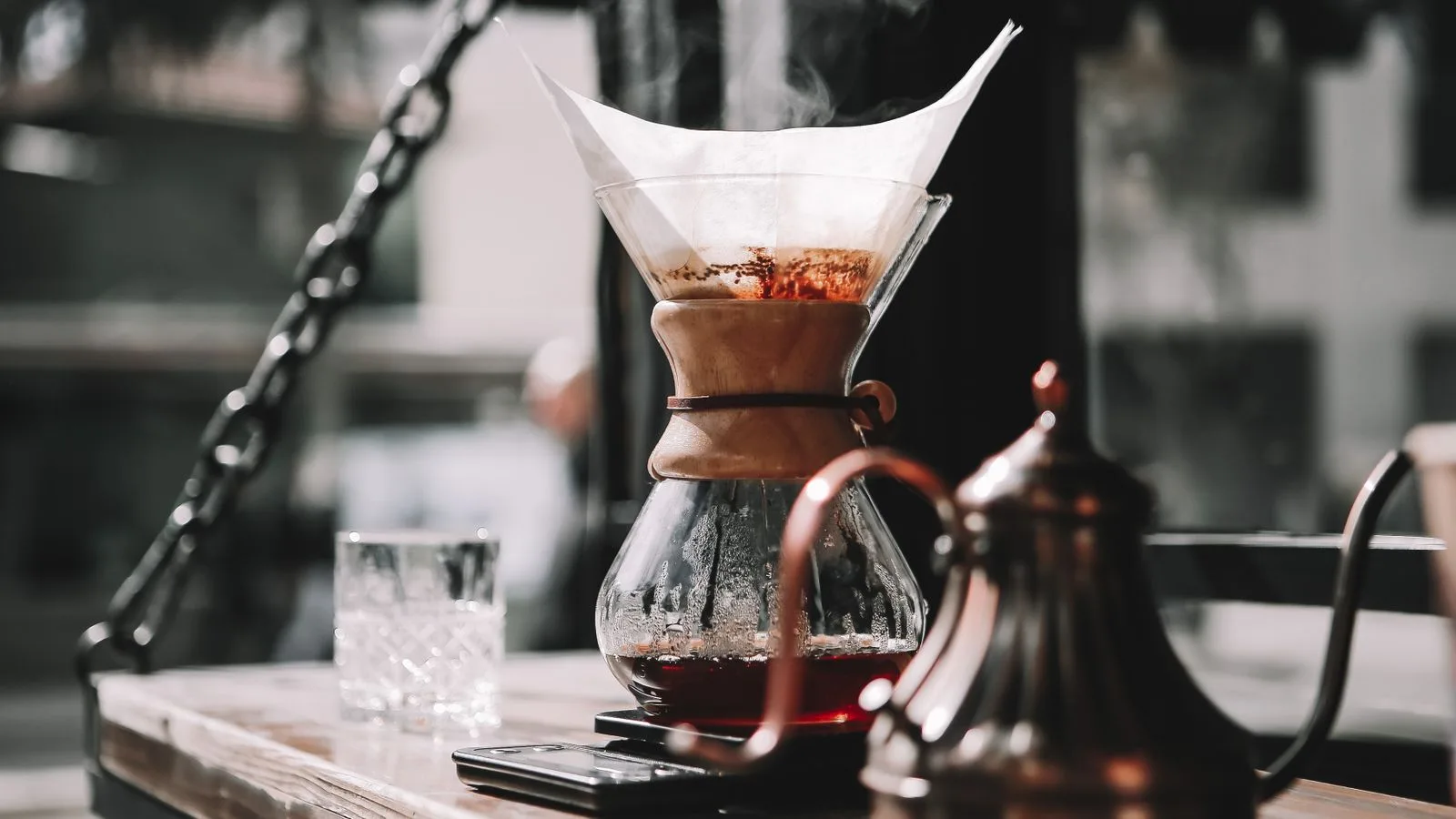
Choose espresso for a small strong drink, or drip coffee for a full cup
Choose espresso when you want a small, strong drink or an espresso-based milk drink. Choose drip coffee when you want a full mug, simpler equipment, or several servings at once. Espresso is coffee made with pressure. Here, “coffee” means brewed or drip coffee.
Quick comparison
| Field | Espresso | Drip coffee |
|---|---|---|
| How it is brewed | Pressure pushes water quickly through fine coffee in a small basket | Water flows through coarser coffee and a filter |
| Main force | Pump or lever pressure | Gravity |
| Typical grind | Fine | Medium, recipe dependent |
| Serving | Small and concentrated | Larger and less concentrated |
| Texture | Can carry more fine coffee into the cup and often has tan foam called crema | Often clearer, especially through paper |
| Caffeine per ounce | Usually higher | Usually lower |
| Caffeine per serving | Depends on shot count | Often higher than one shot because the serving is larger |
| Equipment | Espresso machine plus capable grinder | Brewer or dripper plus suitable grinder |
| Scaling for a group | Often sequential | A batch brewer can make several cups together |
The National Coffee Association defines espresso by its pressure method. A tiny cup of drip coffee doesn't qualify, and neither does strong coffee from a moka pot (a stovetop brewer). The main differences come from how water meets the grounds, how long it stays, what reaches the cup, and the serving size.
Read the table as common patterns, which won't hold for every machine or recipe. A large café espresso drink can use several shots, and a small drip serving can contain less coffee than a double espresso. When it matters, compare the actual dry coffee amount and serving size.
Why the methods need different steps
Espresso uses pressure to move hot water through a fine, packed bed of coffee called the puck. The puck creates resistance, and small changes can change the flow, so grinder precision, even grounds, coffee amount, and basket fill matter. The drink arrives quickly and is strong.
Drip coffee usually uses gravity to move water through medium-ground coffee. The water stays in contact longer, and a paper or metal filter separates the drink from the grounds. Grind still controls flow and extraction (how much flavor the water pulls from the coffee), though drip usually needs less precise adjustment than a non-pressurized espresso basket.
Breville’s espresso-versus-drip explanation is about preparation, not the bean. The same roasted coffee can go into both brewers with a different grind and recipe. The cups will taste different because the brewing conditions changed.
A higher pump number does not mean better espresso
Look for controlled pressure when you compare machines. A machine may advertise a 15-bar or 19-bar pump even though the puck brews near a lower target. The pump rating describes capacity, while valves, flow, resistance, and control decide what happens during brewing.
The heritage espresso definition discussed by the Specialty Coffee Association uses roughly 9–10 atmospheres. Modern recipes may use low-pressure pre-infusion (a short wetting step) or lower pressure later in the shot. Drip coffee has no direct equivalent, since gravity and the coffee bed control its flow.
Do not buy a machine because its maximum bar number is higher. Ask whether it controls brewing pressure well, whether the basket and grinder create even resistance, and whether the steps are documented. Treat pressure as one part of the method, since the top number alone won't tell you how the shot tastes.
Grind size changes with contact time
Espresso has short contact time and a small drink, so it needs a fine grind with more surface area. The packed bed also has to resist pressurized water. Drip coffee uses a coarser grind because water spends longer moving through a deeper, looser bed.
Drip coffee ground espresso-fine can block the filter and carry extra fine particles into the cup. Espresso ground drip-coarse can let water race through the basket.
“Fine” and “medium” may land on different numbers on different grinders. Burr shape matters (burrs are the two cutting parts, flat or cone-shaped), and so does calibration, which sets the grinder dial's reference point. Coffee, dose, filter, and brewer change the useful setting too, so a 10 on one grinder won't match a 10 on another.
With one grinder for both methods, old coffee and repeatability become practical concerns. Moving from espresso-fine to drip-coarse and back may leave old coffee in the chamber or make the old setting hard to find again. A grinder can cover both methods and still make daily use frustrating.
Espresso is stronger in a small cup
“Strong” can mean concentration, roast flavor, or total caffeine. Espresso is usually stronger by concentration. A modest coffee dose goes into a small drink, creating dense flavor and body. Drip spreads the dissolved coffee across a much larger volume, so each ounce is less concentrated.
Drip coffee can still taste bold. A careful brew can have strong aroma, acidity, and sweetness, and dark-roast drip can taste more roasty than light espresso. Taste depends on the coffee and recipe as well as concentration.
Adding water to espresso makes an Americano. Water lowers the strength. The coffee was still brewed under pressure, so adding water later can't recreate drip coffee's brewing path or filter.
Caffeine per ounce and per serving are different
Espresso has more caffeine per ounce in the reference table. The Mayo Clinic caffeine table lists 63 milligrams for a 1-ounce espresso and 96 milligrams for an 8-ounce brewed coffee. The normal brewed serving has more total caffeine than one shot.
Real drinks vary. A café may use a double basket by default, put two or three shots in a larger drink, or use a different drip dose. Coffee species, dose, extraction, and serving size affect the result, so use a chain's published nutrition data when you can find it. Skip multiplying one generic shot number when that data exists.
Milk and water change strength and leave the extracted caffeine in the cup. A two-shot latte has the caffeine from those shots even though it tastes gentler. A large Americano gains no caffeine from added water.
Filters change body and what reaches the cup
Espresso's metal basket lets oils and very fine particles into the drink. Pressure and fresh coffee also create crema, a foam layer made from gas and liquid, and the result can feel thick and dense. A paper-filtered drip brew holds back more oils and sediment, often making a clearer cup with less body. A metal drip filter lets more material through and makes the texture gap smaller.
Crema can look thick on a bitter or uneven shot, so treat it as one sign of how the shot went. Its life also changes with freshness, roast, and species. Clear drip coffee can also be poorly extracted. Appearance shows part of the method, and taste judges the result.
If you prefer clear, separate flavors, paper-filtered coffee may suit you. If you prefer a dense texture, espresso may suit you. Neither method is always better.
Filter material also changes cleaning and waste. You normally discard paper after each brew, and metal filters need thorough cleaning so old oils don't turn stale. Espresso baskets are reusable, but the machine needs contact-point cleaning and model-specific backflushing (running water through the brew path) or descaling (removing mineral buildup). Count that upkeep into your choice.
The beans can be the same
There is no special espresso bean. A bag labeled espresso is a roaster's recommendation for how the coffee may work under pressure. It may be a blend for balance and consistency, a dark roast that brews easily, or a light single origin made for a longer modern ratio. Drip labels work the same way, guiding use without naming a new species.
You can use one bag for espresso and drip. The brews will show different sides of the coffee because grind, ratio, contact, filter, and concentration differ. Espresso may show more body and intensity, and drip may separate aroma and acidity more clearly. Taste decides, since the label cannot guarantee the result.
Freshness matters to both methods. Espresso shows gas through crema and can show bigger flow changes as coffee ages. Expect to nudge the espresso grind during a bag's life even when the drip recipe stays fairly forgiving.
Equipment cost and morning work differ
A simple drip setup can use a dripper, filters, kettle, scale, and suitable grinder. An automatic batch brewer adds convenience and can make several cups at once. Espresso requires a pressure-capable machine, a grinder that can make espresso-fine coffee unless the machine includes one, a scale, accessories, cleaning supplies, and suitable water. The starting cost and cleaning work are usually higher.
Espresso also has several steps: warm the machine, grind, spread the grounds, tamp, brew, knock out the puck, clear old grounds from the grinder when needed, and clean. Milk drinks add steaming and wiping. Drip can be more hands-off and easier for a household to scale.
Espresso can be fast for one practiced user. A maker's three-second heater claim still leaves out the time needed to make and clean up after a latte.
Use the setup calculator for equipment cost and the break-even calculator to compare café spending. Cheap coffee grounds alone won't make either method cheap.
Compare the full routine
List what each method asks of your counter before you choose. Include the equipment you must buy, active minutes, servings in the busiest session, drink volume, coffee dose, and cleaning. Once those limits fit, choose the cup you prefer.
Caffeine alone makes a weak tiebreaker, since you can change it more directly through coffee dose, species, serving size, shot count, and decaf. Before you choose by the word strong, define whether you mean concentration, roast taste, or stimulation.
How to compare both methods at home
Try one fresh coffee brewed both ways from written recipes. For espresso, write down dose, drink yield, time, and temperature setting. For drip, write down coffee dose, water mass, grind, brew time, and filter. Let the espresso cool a little before tasting so temperature is not the only difference.
Compare aroma, acidity, sweetness, bitterness, body, finish, and how each drink changes as it cools. Ask what each method makes easier to taste and which routine you want tomorrow morning.
Also compare your busiest use case. Espresso normally makes drinks in sequence, while a drip brewer can make several cups together. Note active preparation, cleanup, and number of servings to see whether the cup you prefer also fits your home routine.
If both methods fit, keep the choice simple. Use espresso for concentrated shots and milk drinks, and drip for a larger filtered cup and batches. The same fresh coffee lets you compare the methods without changing the bean. Hold the water and roast constant when possible so the method stays the main change.
For a first choice, decide between a small, strong drink and a full mug, and between one drink and several. Then decide whether you accept grinding, tamping, steaming, and cleaning. Espresso fits the small, strong drink but needs more equipment and hands-on work, and drip more often fits several servings and less daily work.
Continue from the brew-method comparison into a measured home recipe.
Try the espresso routine →Common questions
Is espresso stronger than coffee?
Yes, per ounce and by flavor concentration. Per serving, a mug of drip coffee is much larger and often contains more total caffeine than one shot.
Can I use the same beans?
Yes. Espresso and drip can use the same roasted coffee. The grind, recipe, and brewing method change.
Is espresso healthier than coffee?
Neither method is universally healthier. Serving size, caffeine, additions, and individual health context matter more than the name.
Which costs less at home?
Drip equipment is usually cheaper and easier to scale for several cups. Espresso requires more specialized equipment and a capable grinder, but uses a smaller beverage volume per serving.

About Mara Ellis
Mara Ellis is Espresso Receipt’s fictional editorial voice. Warm, practical, and lightly witty, she turns coffee jargon into clear choices for your counter, budget, and next shot.
Read the profile and guides by Mara Ellis →Sources (4)
- Espresso brewing guideNational Coffee Association · Check date not recorded(opens in a new tab)
- Espresso vs. drip coffeeBreville · Check date not recorded(opens in a new tab)
- Defining the Ever-Changing EspressoSpecialty Coffee Association · Check date not recorded(opens in a new tab)
- Caffeine content for coffee, tea, soda and moreMayo Clinic · Check date not recorded(opens in a new tab)
See an old price or conflicting detail? Send a correction.
How we researched this
We use manufacturer, standards group, government, and authorized-retailer records when available. We label a hands-on result as an observed test only when we name the exact product and test it. A checked price shows what the seller listed on the check date. It can change after that date, and your delivered total may differ.
What the evidence labels mean
- Source checked
- A cited source stated this fact when Espresso Receipt checked it. This is not a physical product test.
- Estimated
- This is calculated from stated inputs and assumptions. It is not a measured result or a current quote.
- Observed physical test
- This is a hands-on result for the exact unit under a stated test method.
- We could not confirm this
- The available sources do not establish one reliable answer.