
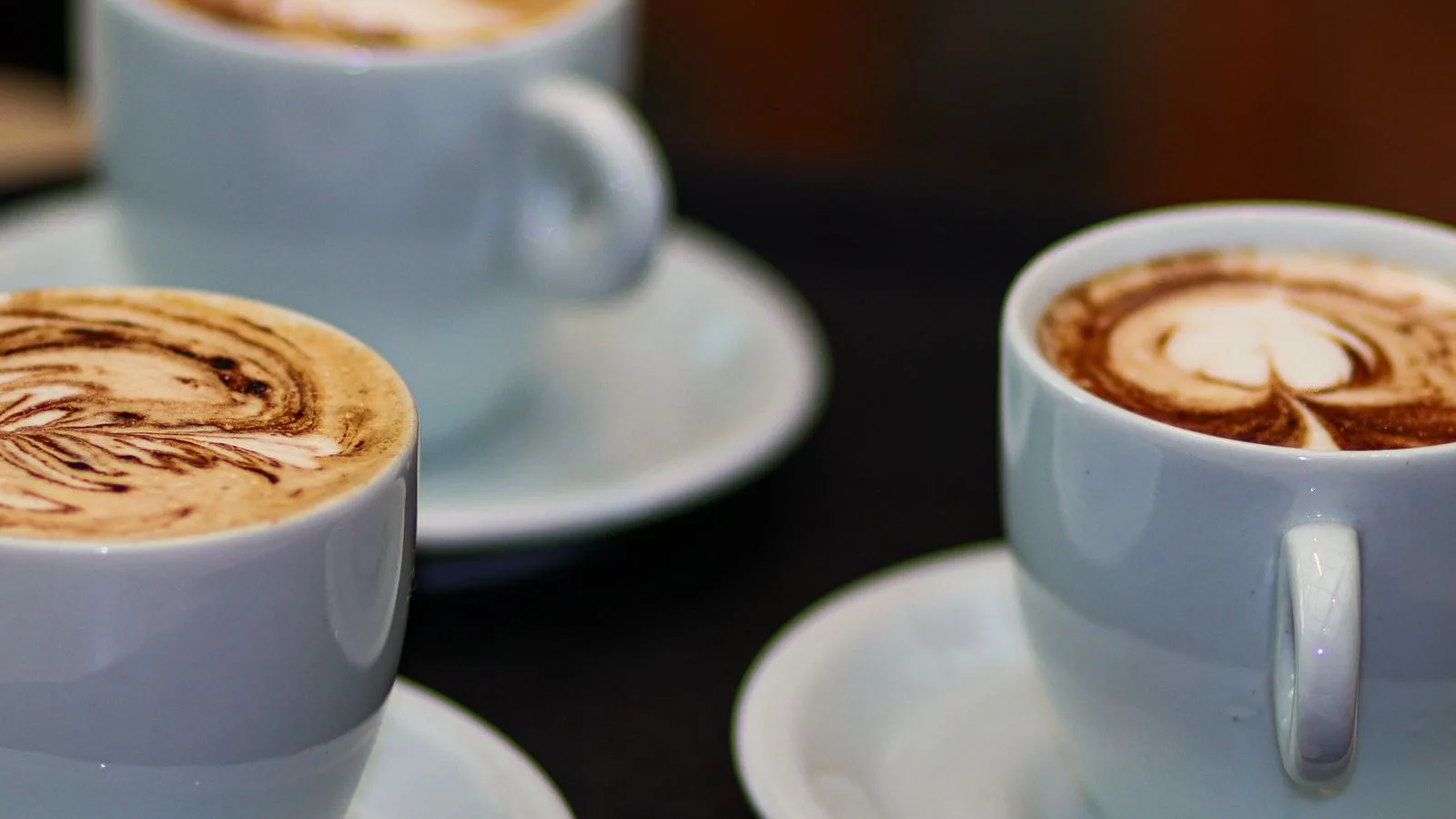
Choose a cappuccino for more foam, or a latte for more milk
Choose a cappuccino when you want a smaller drink with more coffee flavor and deeper foam. Choose a latte when you want a longer drink with more milk and thin, smooth foam. When caffeine or coffee strength is the question, compare shot counts.
Quick comparison
| Question | Cappuccino | Latte |
|---|---|---|
| Espresso | Usually one or two shots | Usually one or two shots |
| Typical milk volume | Less | More |
| Texture | Deeper foam with more air | Thin, smooth foam with tiny bubbles |
| Perceived coffee intensity | Higher at equal shot count | Gentler at equal shot count |
| Caffeine | Determined by shot count | Determined by shot count |
| Calories | Usually lower before additions | Usually higher because of more milk |
| Common cup | Smaller | Larger |
| Best fit | Smaller drink with more coffee flavor | Longer drink with more milk |
The names don't guarantee one worldwide recipe. A six-ounce specialty-café cappuccino and a large chain cappuccino can differ in milk volume, shot count, and texture. The Istituto Espresso Italiano defines a certified Italian cappuccino within one tradition, and other cafés can use different sizes and recipes. Check the cup size and shot count.
Read the table as common patterns. A café can serve a double-shot cappuccino and a single-shot latte, which reverses the expected caffeine result. Syrups, whipped cream, alternative milks, and large cups also change nutrition and taste.
Use the table to ask good questions. Do not guess an unstated recipe. Ask for it.
Why café recipes vary
The common shortcut says a cappuccino has equal parts espresso, steamed milk, and foam. It's easy to remember and hard to measure. Foam settles, and the tan espresso foam called crema takes up different amounts of space.
The certified Italian description is more specific. It uses an espresso base with steamed cow's milk in a set cup, then judges the look, aroma, feel, and taste.
Modern specialty cafés often mix the milk and foam instead of making three separate layers. It can still be a cappuccino when the surface is glossy and easy to pour. “Wet cappuccino” usually means more liquid milk and less airy foam, and “Dry cappuccino” means less liquid and more foam. These words show the direction, and neither one sets an exact ratio.
A latte varies even more. It may come in an eight-ounce ceramic cup, a 12-ounce takeaway cup, or a much larger flavored size. It usually has a lot of steamed milk and a thin foam layer. If the menu lists ounces and shots, use those numbers for that café's recipe.
Which drink tastes stronger?
With the same espresso dose, a cappuccino usually tastes stronger because less milk dilutes it. That's about drink strength and how it tastes to you, with the same amount of coffee in both. Milk sweetness and fat soften bitterness and change aroma and texture.
More milk makes the drink taste more like milk. Less milk leaves roast, acidity, and espresso texture easier to notice.
Foam also changes how the drink feels. A well-made cappuccino has warm, airy foam, so it can feel light even when the coffee flavor is clear. A latte has more liquid milk, which makes the same espresso seem rounder and less intense. Neither effect shows how well the espresso was extracted.
If you want strong coffee flavor without straight espresso, choose the smaller drink and confirm its shots. If you want a longer drink with milk that softens the coffee, choose a latte. A large one-shot cappuccino can taste weaker than a small two-shot latte, so the recipe still decides.
Caffeine follows the shots
Milk and foam do not remove caffeine. If a cappuccino and latte each contain the same double espresso, they have about the same caffeine before chocolate or other additions. The latte spreads that caffeine through a larger drink.
The hard part is café sizing. One shop may use a double basket for every milk drink. Another may use one shot in a small drink and two or three in larger sizes, and a chain may list caffeine by menu size.
Ask “How many shots are in this size?” or check the nutrition entry. Do not estimate caffeine from the finished cup size.
For a general reference, Mayo Clinic lists about 63 milligrams for one ounce of espresso and says products vary. Use the café's current caffeine figure for the exact order. Anyone managing pregnancy, medication interactions, heart symptoms, or unusual sensitivity should ask a clinician instead of relying on the drink name.
Foam changes the texture
Both drinks use milk that has been heated and filled with air, at different foam levels. Latte milk should be glossy, joined together, and fluid enough to mix with espresso and support fine latte art. Large dry bubbles break that mix and leave a stiff cap over thin liquid.
Cappuccino milk usually has more air, made of fine bubbles. That does not mean adding coarse bubbles on top of hot milk. Fine bubbles add sweetness, stability, and a pleasant feel.
The goal is deeper foam that stays connected to the liquid below. A traditional or dry version may have a clear dome. A modern version may look like a small latte but feel airier.
The Nespresso recipe library shows why labels need context. It lists branded ingredients and steps instead of claiming every café uses one formula. When you compare recipes, note the espresso volume, milk volume, final cup, and foam instruction, like reading a recipe card before you cook.
Calories depend mostly on milk and extras
A plain latte usually has more calories than a plain cappuccino made with the same milk because it has more milk. That's a volume comparison, and it does not mean one drink is always healthy. Cup size, milk type, sweetener, syrup, chocolate, cream, and toppings can matter more than the base drink.
Alternative milks don't create a fixed ranking. Products differ in sugar, fat, protein, and added nutrients. “Oat latte” is not enough information to calculate calories or allergens, so use the café's exact product and nutrition information. The same applies to whole, reduced-fat, and skim dairy milk.
For a diet decision, compare exact orders: size, shot count, milk type, syrup pumps, and toppings. Use the seller's nutrition listing for those items. A smaller plain cappuccino often has less milk. This is not medical advice, and it does not resolve allergies or accidental allergen contact.
How to order what you want
Order by the drink you want, then confirm the café's recipe. Ask for a cappuccino when you want a shorter drink, clearer espresso flavor, and deeper foam. Ask for a latte when you want more milk, a longer drink, and smooth mixed-in foam. If the menu has several sizes, ask whether the shot count changes with size.
For a smaller milk addition, compare cortado and cappuccino. Confirm the cafe's actual milk amount and shot count before choosing.
You can ask for a “traditional small cappuccino,” “wet cappuccino,” or “dry cappuccino.” Ask politely, because cafés use these terms differently. If the café serves only a large cappuccino, ask for a smaller cup and skip the ratio debate.
For a latte, say hot or iced. An iced latte uses cold milk and ice, so steamed-milk texture no longer separates it from other drinks.
Say any flavor additions in your order because they change the drink. A vanilla latte and a plain cappuccino make an uneven comparison. To assess espresso or milk technique, start without syrup. If you want a sweet café drink, order one and enjoy it.
How to make both drinks at home
Use the same balanced espresso for both drinks and change only the milk plan. Follow the basket maker's dose range and weigh the drink yield. Do not use milk to hide a very fast, slow, or uneven shot. A steady espresso recipe makes the texture comparison useful.
For a latte, start with enough cold milk for the cup. Add a small amount of air early, and keep the milk moving so bubbles become fine and mixed in. Stop before it scorches, swirl the pitcher, and pour while the surface is glossy.
For a cappuccino, add more air while keeping the milk moving in a controlled circular flow. Pour into a smaller cup so coffee remains the main flavor.
Try this with one espresso recipe: keep the shot and milk amount the same, change only how much air you add, and taste each drink. Stop when the texture matches the drink you wanted.
If repeatability matters, do not steam one oversized pitcher and divide it by eye. Weigh the milk before practice so you can see how the recipes differ. Run steam through the wand and wipe it at once as the machine manual says. Dried milk can create sanitation and performance problems.
Equipment changes the steps
When choosing equipment, the beginner machine guide compares manual and automatic milk options. The drink names stay the same on any machine.
A powerful steam system can texture milk quickly and recover between drinks. A compact single-boiler machine may require a wait between brewing and steaming. An automatic frother can make the steps easier but may give you less control over the two textures. A manual wand gives more control but needs practice.
Cup size matters as much as a machine feature. A six-ounce cup naturally limits a cappuccino. A 12-ounce cup makes it more like a latte unless you add more espresso.
A narrow pitcher can help a small amount of milk move. An oversized pitcher makes one cappuccino harder to texture without waste.
Choose equipment based on how often you make drinks and how much manual work you accept. If you make several milk drinks in a row, look for fast steam recovery. If you make one morning latte, you may prefer fast warm-up and assisted milk. Find my setup compares these needs and skips ranking machines by pump pressure.
Compare the exact order
If caffeine matters, compare shot counts. If calories matter, compare cup size, milk, and extras. If price matters, compare espresso dose and finished size. For allergens, use the café's current ingredient and accidental allergen contact information.
Do not assume the larger cup has more coffee. When the menu is clear, order the listed size and shot count, so a bigger cup doesn't change the comparison without notice.
For a side-by-side taste, order both drinks from the same café with the same espresso dose, milk, and flavor additions. The cappuccino should show espresso more clearly through less milk and deeper foam. The latte should make a longer drink with more liquid milk and a smoother surface. Holding everything else the same separates drink structure from changes in coffee, syrup, or shot count.
For takeaway drinks, check whether the café changes shots as cup size increases. Extra milk alone makes coffee taste gentler without adding caffeine from espresso. Use that shot count with the finished size to compare coffee concentration.
Before you compare two drinks, write down the size, shot count, milk type, and extras. Temperature changes what you notice too, since a very hot drink can hide sweetness and aroma at first. Let both cool to a comfortable range, then taste. The better choice fits the coffee intensity, milk volume, foam depth, and drinking time you want.
Continue from drink choice into controlled steaming and pouring steps.
Practice the milk routine →Common questions
Which is stronger, a cappuccino or latte?
At the same number of espresso shots, a cappuccino usually tastes stronger because it contains less milk. Caffeine is the same if the shot count is the same.
Which has more foam?
A cappuccino normally has a deeper foam layer with more air in it. A latte uses thinner, smooth, tiny-bubble foam mixed through more liquid milk.
Which has more calories?
Usually the latte because it normally contains more milk, but the exact result depends on cup size, milk, sweetener, and shot count.
Can both drinks use latte art?
Yes. Both can use glossy microfoam, although a very dry cappuccino's deeper foam makes fine-line pouring more difficult.

About Mara Ellis
Mara Ellis is Espresso Receipt’s fictional editorial voice. Warm, practical, and lightly witty, she turns coffee jargon into clear choices for your counter, budget, and next shot.
Read the profile and guides by Mara Ellis →Sources (4)
- Certified Italian Espresso and CappuccinoIstituto Espresso Italiano · Check date not recorded(opens in a new tab)
- Coffee recipe libraryNespresso USA · Check date not recorded(opens in a new tab)
- Espresso explainedStarbucks · Check date not recorded(opens in a new tab)
- Espresso brewing guideNational Coffee Association · Check date not recorded(opens in a new tab)
See an old price or conflicting detail? Send a correction.
How we researched this
We use manufacturer, standards group, government, and authorized-retailer records when available. We label a hands-on result as an observed test only when we name the exact product and test it. A checked price shows what the seller listed on the check date. It can change after that date, and your delivered total may differ.
What the evidence labels mean
- Source checked
- A cited source stated this fact when Espresso Receipt checked it. This is not a physical product test.
- Estimated
- This is calculated from stated inputs and assumptions. It is not a measured result or a current quote.
- Observed physical test
- This is a hands-on result for the exact unit under a stated test method.
- We could not confirm this
- The available sources do not establish one reliable answer.