
Choose an espresso macchiato for less milk, or a latte for more milk
Pick an espresso macchiato when you want espresso with a small mark of milk or foam. Pick a latte when you want a bigger drink with much more steamed milk. Say the full drink name when you order, because a latte macchiato and a branded caramel macchiato are different milk-forward drinks.
Four drinks with two shared words
| Drink | Coffee base | Milk relationship | Typical character |
|---|---|---|---|
| Espresso macchiato | Espresso | A small mark of milk or foam | Short and coffee-forward |
| Latte | Espresso | Substantially more steamed milk | Larger, smooth, milk-forward |
| Latte macchiato | Espresso added to milk | Milk is marked by coffee | Layered presentation, milk-forward |
| Caramel macchiato style | Brand-specific espresso drink | Milk plus flavoring and topping | Sweet, larger menu beverage |
The Italian word macchiato means marked or stained. The Starbucks explanation of espresso drinks separates its small espresso macchiato from its larger Caramel Macchiato.
Read the table as what each drink is going for. Sizes aren't universal: shot count, cup size, milk, syrup, and preparation all vary.
An espresso macchiato may arrive in an espresso cup or a slightly larger one. A latte can be a small specialty-café drink or a big takeaway cup. A latte macchiato may show clear layers, and a caramel version follows the seller's current recipe.
Hot milk changes how a drink tastes and feels. Cold milk and ice lose the foam that helps separate the traditional hot drinks. So for an iced menu item, read its listed ingredients, and don't assume it's the hot drink poured over ice.
The name does most of the work. “Espresso macchiato” clears up the biggest mix-up, and “Latte macchiato” or the exact brand name saves the barista from guessing.
An espresso macchiato keeps espresso first
An espresso macchiato starts with one or more espresso shots and adds just enough milk or foam to mark the surface and soften the edge. The idea is to keep the concentrated espresso experience while adding a little milk sweetness and texture.
Some cafés spoon foam onto the shot. Others pour a little textured milk (steamed milk with fine foam), which changes the feel and the dilution. You might see a clear white mark or a more blended tan surface, and neither look proves quality or a traditional recipe. Milk stays a small accent.
Order one when straight espresso feels too intense but a cappuccino (espresso with steamed milk and airy foam) or latte has more milk than you want. If the café uses unfamiliar words, ask for “espresso with just a small spoonful of steamed milk or foam.” That describes the result without leaning on a disputed size rule.
A latte makes milk the main ingredient
A caffè latte combines espresso with much more steamed milk and a thin layer of smooth foam called microfoam (milk foam with very small bubbles). Espresso stays the flavor base, but milk supplies most of the volume. That makes the drink longer, cooler over time, and gentler in coffee flavor than an espresso macchiato with the same shots.
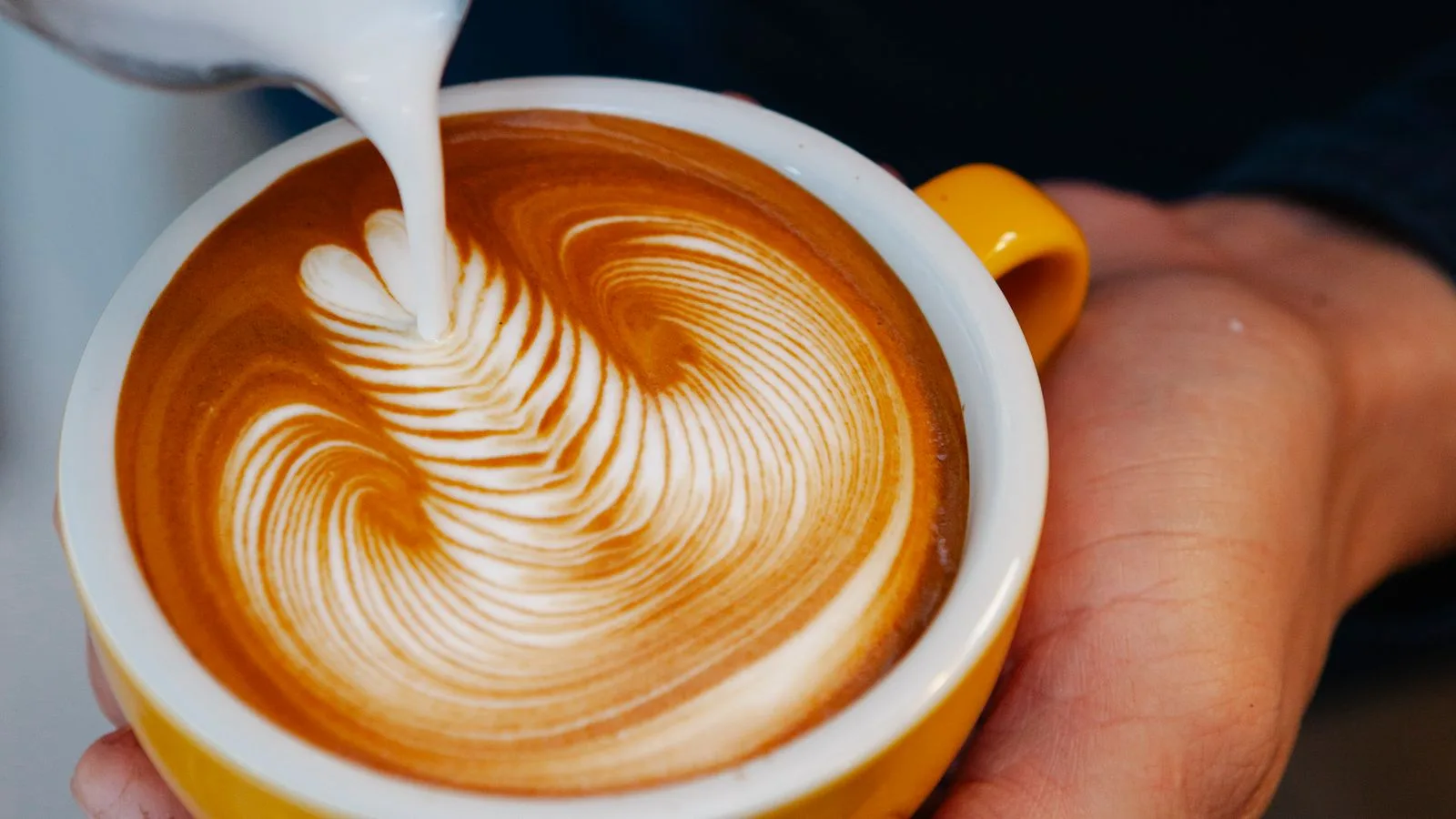
Good latte milk stays blended as smooth, glossy liquid with fine foam. Fine microfoam adds sweetness and body while staying fluid enough to pour. Latte art comes from that texture plus pouring skill. It's optional, and a pretty heart doesn't prove the espresso is balanced.
For big sizes, ask whether the café adds espresso as the cup grows or only more milk. Two lattes with the same name can differ in coffee strength and total caffeine, so check a published shot chart or just ask.
Latte macchiato marks the milk
In a latte macchiato, espresso marks the milk. It's often made by pouring hot textured milk into a glass and adding espresso so visible layers form. Like a latte, it's milk-forward, but the preparation and presentation differ.
The word order tells you the focus: an espresso macchiato is marked espresso, and a latte macchiato is marked milk. The Nespresso recipe library lists drinks with ingredients and steps, which helps when names overlap.
Layers change the first few sips unless you stir. They don't add caffeine or create a new brewing method. Stir the same espresso and milk together and the nutrition would be about the same, even though the glass looks different.
A caramel macchiato is a separate menu drink
Judge a chain-style caramel macchiato by its official ingredient and nutrition listing. The chain drink usually has much more milk, flavoring, and a sweet topping. Hot and iced versions may be built differently, and sizes can change shot and syrup counts.
Some people simply want a sweet espresso drink, and that's a fair order. Just don't use the branded recipe to guess the size, calories, or flavor of an espresso macchiato, and don't treat an espresso macchiato as a low-sugar mini version of the branded drink.
To recreate one at home, use the current brand recipe if you want a match. To cut the sweetness, ask for fewer syrup pumps or less topping, since the word macchiato doesn't set the sugar. Recipes and nutrition data can change, so current first-party menu information comes first.
Which drink tastes stronger?
With the same shot count, an espresso macchiato usually tastes much stronger than a latte, because it has far less milk. It keeps espresso's strength, aroma, body, and any bitterness or acidity. The small splash of milk softens it without making it long.
A latte spreads the same espresso through more liquid. It can taste sweeter, because heated milk adds perceived sweetness and quiets the coffee flavor. The finished drink is less strong, while the espresso itself may be the same.
A latte macchiato is milk-forward too. A caramel macchiato can taste strongly of sweetness or topping even when its coffee strength is modest. So when someone says “Strong,” ask which kind they mean: coffee flavor, sweetness, caffeine, roast character, or alcohol-like sensory intensity.
Caffeine depends on espresso dose
An espresso macchiato and a latte have the same caffeine when they use the same espresso dose. Milk doesn't cancel caffeine. The latte has less caffeine per ounce because it's diluted, but the whole cup holds the same amount. A two-shot latte has more total caffeine than a one-shot macchiato, even if it tastes gentler.
Chain sizes make this trickier. A large flavored macchiato may use more shots than a small latte, or the same number in nearby sizes. Use the current menu's caffeine figure when there is one. Otherwise count shots, and treat any per-shot estimate as rough, because coffee and extraction (how much the water pulls from the grounds) vary.
Layers, cup volume, and sweetness can't tell you the caffeine. If you limit caffeine, confirm decaf is available, and remember that decaf has less caffeine without always being caffeine-free. Ask a health professional about your personal limits.
Calories and sugar require an exact order
A plain espresso macchiato usually has much less milk than a latte, so it usually has fewer calories. That comparison only holds when both use the same unflavored milk and no sweetener. A latte's calories also change with cup size and milk type.
A sweet caramel macchiato adds syrup and topping, and the general comparison stops working. Alternative milks can differ in sugar, fat, protein, and additives. A “skinny,” “light,” or “oat” label doesn't calculate nutrition for you, and each business may define it differently.
For an accurate choice, note the size, shot count, milk type, syrup pumps, sauce, topping, and whipped cream. Check the seller's allergen and accidental allergen contact statements too. A drink category can't prove a drink is safe for a medical need.
How to order the right drink
At an independent café, say “espresso macchiato” and ask whether it comes as espresso with only a mark of milk. If you want more milk but less than a latte, a cortado (a small espresso drink with a little warm milk) or small cappuccino may fit better, though those names vary too. At a chain, use the exact full menu name and size.
If the barista asks a follow-up question, the name wasn't clear enough. Answer with what you want: short or large, plain or sweet, how many shots, and how much milk. For an iced drink, expect a different texture from traditional spooned foam.
Ordering abroad? American branded macchiato words may mean something else there, so describing espresso marked with milk is safer. When a menu shows photos and ounces, trust those local details over a general internet definition.
How to make a macchiato and latte at home
Start with an espresso recipe that repeats. Weigh the dose and the drink yield, and get the espresso right before you fiddle with milk. For an espresso macchiato, steam a small amount of milk with fine foam, then add only a spoonful or a short pour.
Expect some leftover milk, because standard pitchers need enough milk to swirl in a circle. A small pitcher that fits your steam wand (the machine's steam pipe) helps.
For a latte, steam more milk with a little air. Add the air early, keep the milk rolling, and finish with a glossy surface. Swirl the espresso and the pitcher, then pour steadily. If the milk splits into stiff foam and thin liquid, work on blending it before you try latte art.
Try this on your next macchiato: keep the same shot and add one spoonful of foam. Taste it. Add a second spoonful only if the shot still tastes too sharp, and stop as soon as the milk starts to take over.
For a latte macchiato, make the milk first and add espresso to build the layers you like. For a caramel-style drink, follow a listed recipe and count the sweeteners. Wipe the steam wand and run a short burst of steam through it right away, as your machine manual says.
Save the order that worked
Ask for the cup size and shot count, and use published ingredients for branded drinks. The National Coffee Association's espresso guide defines the espresso base, while the café's current recipe, allergen notice, and nutrition information define your order.
For caffeine, count espresso shots. For calories and sugar, note the exact milk, syrup, sauce, topping, and size. For an iced drink, confirm iced when you order and use the listed recipe, because hot milk texture doesn't carry over to ice and cold milk.
When you order for someone else, repeat the full menu name and size so a traditional espresso macchiato doesn't turn into a larger flavored drink with different ingredients and nutrition. If you want to match a past visit, save the exact name, size, shots, milk, syrup, and topping, and repeat them next time. If the menu changes, check the recipe again.
Continue from drink vocabulary into a controlled milk routine.
Practice the milk routine →Common questions
Is a macchiato stronger than a latte?
An espresso macchiato usually tastes much stronger because it contains far less milk. Its caffeine depends on the shot count, which the name alone won't tell you.
What does macchiato mean?
It means marked or stained in Italian. In an espresso macchiato, milk marks espresso; in a latte macchiato, espresso marks milk.
Is a caramel macchiato traditional?
No. It is a modern branded drink built more like a flavored latte, often with vanilla and caramel.
What should I order for just a little milk?
Order an espresso macchiato and, if needed, clarify that you want espresso with only a small spoonful of foam or milk.

About Mara Ellis
Mara Ellis is Espresso Receipt’s fictional editorial voice. Warm, practical, and lightly witty, she turns coffee jargon into clear choices for your counter, budget, and next shot.
Read the profile and guides by Mara Ellis →Sources (3)
- Espresso explainedStarbucks · Check date not recorded(opens in a new tab)
- Coffee recipe libraryNespresso USA · Check date not recorded(opens in a new tab)
- Espresso brewing guideNational Coffee Association · Check date not recorded(opens in a new tab)
See an old price or conflicting detail? Send a correction.
How we researched this
We use manufacturer, standards group, government, and authorized-retailer records when available. We label a hands-on result as an observed test only when we name the exact product and test it. A checked price shows what the seller listed on the check date. It can change after that date, and your delivered total may differ.
What the evidence labels mean
- Source checked
- A cited source stated this fact when Espresso Receipt checked it. This is not a physical product test.
- Estimated
- This is calculated from stated inputs and assumptions. It is not a measured result or a current quote.
- Observed physical test
- This is a hands-on result for the exact unit under a stated test method.
- We could not confirm this
- The available sources do not establish one reliable answer.