
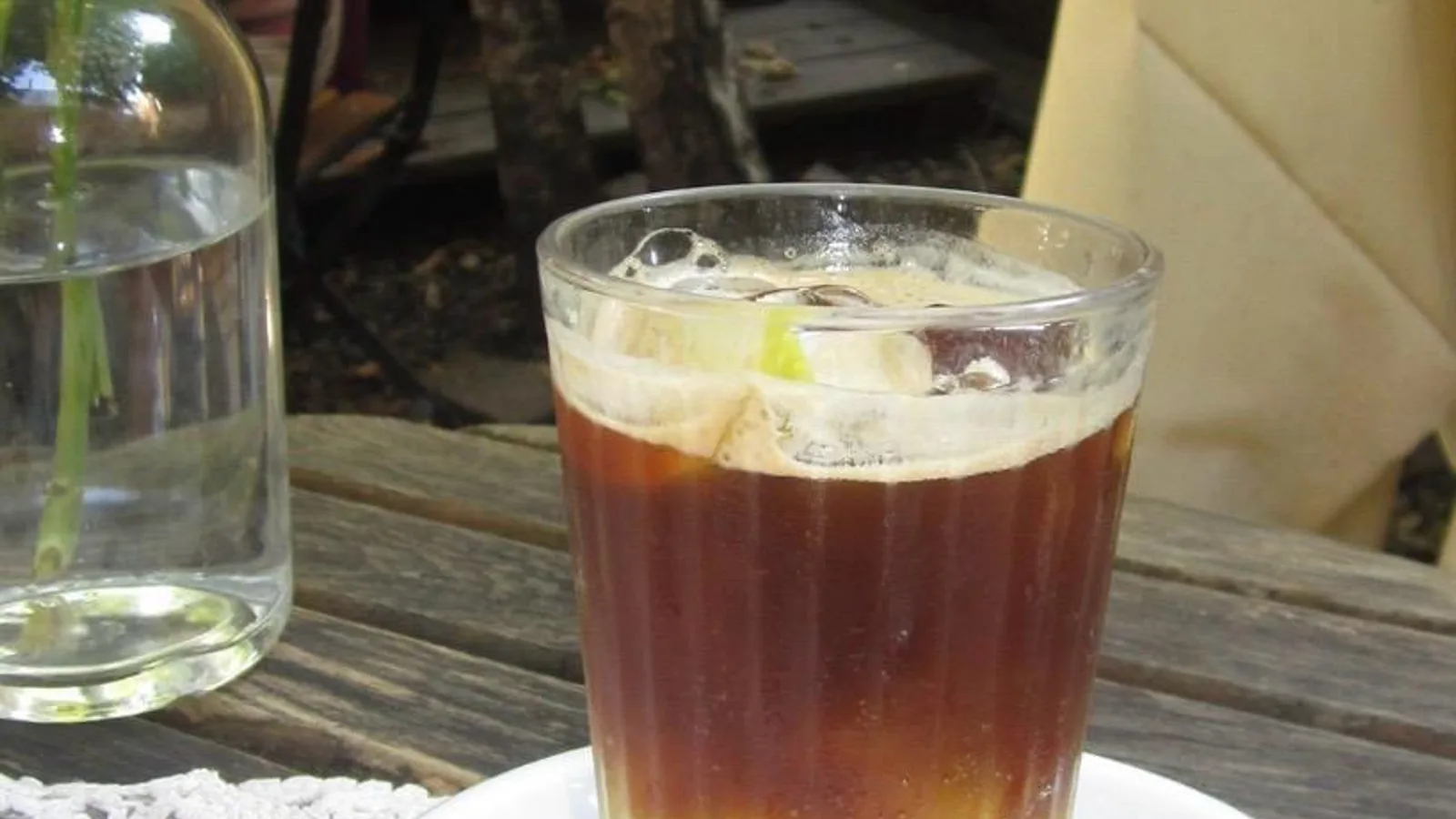
An espresso tonic combines coffee, tonic water, and ice. For one measured glass, start with Nespresso's espresso tonic: fill a glass with ice, add 90 mL tonic water, then pour 40 mL coffee over it. Grapefruit or lime is optional. Use a tall glass with room above the liquid so you can pour without rushing.
You can make the coffee with the capsule system named by Nespresso, or brew your usual espresso into a separate heat-safe cup. The 40 mL amount is a volume in Nespresso's recipe. Other machines may use a different target. If you use another machine, record its actual drink weight or volume and keep it the same when you compare glasses.
This is a cold, fizzy coffee drink with no alcohol in the stated ingredients. Tonic water brings its own sweetness and bitter taste, so the bottle you choose matters. Make the plain version first. Then you can tell whether a change came from the coffee, the tonic, or the citrus.
Choose a measured starting glass
Two maker recipes give different starting points. Nespresso states 90 mL tonic and either 40 or 80 mL coffee with ice. De'Longhi's espresso tonic states 70 mL tonic, 100 g ice, and one double espresso.
De'Longhi does not state the finished amount of that double shot. Do not turn the words “double espresso” into 80 mL in your notes.
Choose Nespresso's 40 mL option if you want two stated liquid amounts for your first comparison. The coffee and tonic total 130 mL before ice and optional citrus. The glass must hold more than 130 mL because ice takes space. Neither source gives a required glass capacity for the plain version, so check the room in your own glass before you pour.
| Source | Coffee | Tonic and ice | How to use it |
|---|---|---|---|
| Nespresso espresso tonic | 40 mL or 80 mL coffee | 90 mL tonic; ice amount unstated | Start with 40 mL. Keep the tonic fixed if you later compare 80 mL. |
| De'Longhi espresso tonic | One double espresso; finished amount unstated | 70 mL tonic; 100 g ice | Use your usual double shot, and write down its actual amount. |
Use the table to choose one method. The makers use different tonic amounts and describe coffee in different ways.
If you make both on one day, the comparison changes several things at once. Try one recipe first and record it. That gives you a useful starting point for the next glass.
Build the drink without losing the order
Set out a tall glass, ice, a measuring cup for tonic, and your normal coffee cup. Brew into the coffee cup if you are unsure whether the serving glass belongs under your machine's outlet. A cold glass may be unsuitable for direct hot extraction. Follow your machine's instructions for the cup, basket or capsule, hot parts, stopping the shot, power-off, and cleaning.
For Nespresso's 40 mL version, use this sequence:
- Put ice in the serving glass. Leave enough empty space for both measured liquids and any rise in the drink as you pour.
- Measure 90 mL tonic water and add it over the ice. Keep the tonic bottle and amount the same for your first two glasses.
- Prepare 40 mL coffee by the source method, or use a separately brewed espresso whose amount you record. Pour it slowly over the ice and tonic. Pause if the drink rises toward the rim.
- Taste it plain. If you want citrus, add a small squeeze of grapefruit or lime and record that change. Nespresso lists both as optional.
Nespresso's page brews coffee on top of the iced tonic. Pouring from a separate cup lets you control the stream if your machine cannot fit a tall glass. That change in equipment does not prove the drink will taste the same as coffee brewed directly over it. It is a practical way to keep the hot cup away from your hand and the cold serving glass away from the machine outlet.
Do not fill the glass to its rim before the coffee goes in. The coffee is hot, the tonic is carbonated, and you need room to stop pouring.
If the surface rises, set the coffee cup down and wait before adding the rest. Handle the cup by a cool part or use its handle. Keep children away from the hot coffee and machine.
De'Longhi's method follows the same broad order: ice, tonic, then espresso. Its 100 g ice measure gives you a repeatable ice portion if you have a kitchen scale. It asks for a slow pour over the ice, then an optional orange or lemon slice.
Use that full source recipe if you want to compare its version later. Do not borrow its 100 g of ice while calling the glass Nespresso's exact recipe.
Make one useful change for the next glass
Suppose the first glass uses 40 mL coffee, 90 mL tonic, and the same ice from your chosen tray. Those two liquids make 130 mL before ice. The coffee is about 31% of their combined measured volume: 40 divided by 130.
The percentage describes the two measured liquids. It cannot tell you the strength, caffeine, sweetness, or flavor. Melted ice and optional citrus change the finished volume.
If you want a stronger coffee share in the next glass, Nespresso offers an 80 mL coffee option with the same 90 mL tonic. Those stated liquids would make 170 mL before ice, with coffee about 47% of that measured total. Check your glass capacity again.
Keep the tonic, ice portion, and citrus choice steady so the coffee amount is the one deliberate change. There is no promise that this version will taste better; taste it and decide.
If the first glass tastes too sweet for you, changing coffee amount and tonic brand together will hide which choice mattered. First check the tonic label. Choose a different tonic for another day, measure the same 90 mL, and keep the coffee and ice steady. Sugar and sweetener vary by product, and neither maker page gives a nutrition total for the drink in your hand.
If you want more citrus, add it after you taste the plain version. A squeeze changes the drink as well as its appearance. Keep the next coffee and tonic amounts steady while you judge it.
You can stop adjusting when you have a glass you want to repeat. Write down the coffee amount, tonic brand and amount, ice, and citrus. That small record is more useful than a universal “best” ratio.
Know when to change the coffee instead
Taste the plain espresso before it meets the tonic if the finished drink seems unpleasant and you cannot tell which ingredient is responsible. If the shot itself tastes sharply sour or harshly bitter, use the espresso dial-in guide to change one brewing variable. Keep the tonic amount fixed while you test the coffee. Do not assume a new tonic can correct a shot that you dislike on its own.
For a capsule drink, follow the capsule maker's stated coffee volume. For an espresso machine, use a recipe that you can repeat with your basket and scale. Our espresso ratio calculator can help you record dry coffee and finished shot weight.
A shot measured in grams does not automatically equal the same number of milliliters in the maker table. Keep the units as you measured them.
If you want a different iced coffee with milk, use the iced latte recipe. An espresso tonic has tonic water and no milk in the stated source recipes. Affogato is a dessert with ice cream. Those routes answer different preparation questions, so their amounts should not be copied into this glass.
Limits to keep in the recipe
This is a source-based method. We did not test, own, prepare, taste, or measure this drink or equipment. The photo shows a layered iced coffee drink, but it does not establish the ingredients, quantities, machine, or taste of the recipe above. The source pages were checked on October 1, 2026.
The maker pages do not give a caffeine value for the final glass. If caffeine matters to you, check the coffee you actually use; our caffeine guide explains why shot counts alone give an incomplete answer. Tonic labels also differ. Read the bottle for its ingredients and nutrition information, especially when sugar or sweeteners matter to you.
Make the 40 mL and 90 mL glass, note what you used, and taste it before adding citrus. On the next glass, keep the setup steady and change one amount or ingredient that answers your own preference. Follow your machine manual when you finish brewing and clean up.
Adjust the plain shot if it tastes sour or bitter before you add tonic.
Make the coffee repeatable
About Mara Ellis
Mara Ellis is Espresso Receipt’s fictional editorial voice. Warm, practical, and lightly witty, she turns coffee jargon into clear choices for your counter, budget, and next shot.
Read the profile and guides by Mara Ellis →Sources (2)
- Espresso TonicNespresso Poland · Checked 2026-10-01(opens in a new tab)
- Espresso TonicDe'Longhi Netherlands · Checked 2026-10-01(opens in a new tab)
See an old price or conflicting detail? Send a correction.
How we researched this
We use manufacturer, standards group, government, and authorized-retailer records when available. We label a hands-on result as an observed test only when we name the exact product and test it. A checked price shows what the seller listed on the check date. It can change after that date, and your delivered total may differ.
What the evidence labels mean
- Source checked
- A cited source stated this fact when Espresso Receipt checked it. This is not a physical product test.
- Estimated
- This is calculated from stated inputs and assumptions. It is not a measured result or a current quote.
- Observed physical test
- This is a hands-on result for the exact unit under a stated test method.
- We could not confirm this
- The available sources do not establish one reliable answer.