
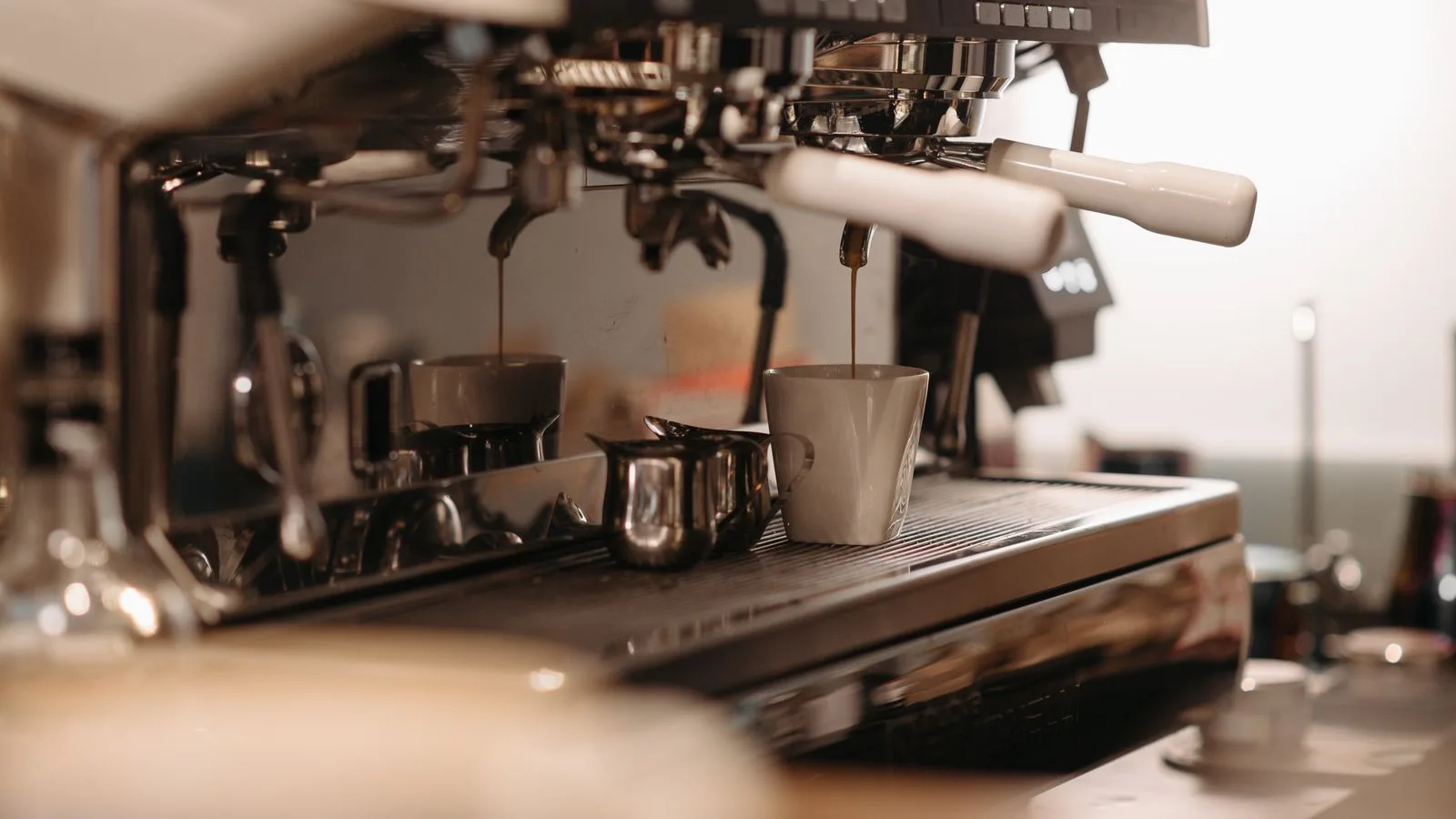
Choose ristretto for a smaller, denser shot
Choose ristretto when you want less drink and more strength from about the same coffee dose. Choose standard espresso when you want a fuller drink. To tell them apart, compare the dry coffee amount with the drink amount, and don't rely on a timer preset.
Quick comparison: ristretto, espresso, and lungo
| Question | Ristretto | Espresso | Lungo |
|---|---|---|---|
| Coffee dose | Often similar | Recipe baseline | Often similar |
| Beverage yield | Lower | Middle reference | Higher |
| Brew ratio | Shorter | Commonly around 1:2 as a starting point | Longer |
| Concentration | Highest tendency | Middle | Lowest tendency |
| Flavor tendency | Dense, potentially less developed | Balanced target | More dilute, potentially more drying |
| Caffeine | Often somewhat less total | Baseline | Often somewhat more total |
| Best definition | Dose-to-yield ratio | Stated recipe | Dose-to-yield ratio |
Say a standard starting espresso uses 18 grams of coffee to make 36 grams in the cup. A ristretto may use about the same coffee to make much less than 36 grams. The Specialty Coffee Association's discussion of espresso definitions explains why a recipe should list dose, drink yield, time, temperature, and pressure. For ristretto, yield and ratio matter most.
Think of the three as points along one yield range, with soft edges. Grind, flow, basket, coffee, and machine can all shift a recipe. A well-adjusted lungo (a longer shot with more drink from a similar dose) can taste better than a badly stopped ristretto, and a modern espresso can use a ratio that another café would call lungo.
Crema is the tan foam on espresso, and it can make a short shot look bigger than its liquid weight. Fresh coffee may build a tall, gassy layer, while older coffee makes less. So weigh the drink. Stir before tasting so you get the crema, the early liquid, and the later liquid together.
Ratio is clearer than seconds or ounces
Stopping a shot at 20 seconds doesn't make it a ristretto. Time depends on when the clock starts, early low-pressure wetting (pre-infusion), pump behavior, grind, dose, and resistance from the packed coffee bed (the puck). The same 20 seconds can produce very different yields. Cup volume is unreliable too, because crema takes up different amounts of space.
Weigh the dry coffee and the liquid drink. An 18-gram dose and a 27-gram yield make a 1:1.5 ratio. An 18-gram dose and a 36-gram yield make 1:2. Those numbers tell you which way the strength moves, and taste still has to weigh in.
The National Coffee Association's espresso guide offers a 1:2 ratio and roughly 20 to 30 seconds as a practical starting place. Treat that as a first test. A ristretto earns its lower yield by suiting a particular coffee, since no single number marks the line.
Do not just stop a standard shot early
Don't just stop a normal espresso early. You'll get less liquid, but maybe not balance. Early brewing can lean on acidity and the compounds that dissolve easily, while leaving other balancing flavors behind. The cup might be dense and sweet, or sharp and unfinished.
A deliberate ristretto may need a grind change so flow, contact, and yield work together. Some baristas grind finer to build the right resistance for the shorter target. Others change dose, temperature, pressure, or pre-infusion. No single control works for every coffee.
Change one thing at a time. Save your starting espresso recipe, shorten the yield, taste, and then decide whether the grind needs a nudge. If the puck has channeling (uneven flow), stopping early can hide it without fixing it, so keep puck prep as part of the recipe.
Why ristretto can taste different
Ristretto is stronger by volume, so it can feel syrupy and smell intense. A lower yield changes how much acid, sugar, bitterness, and other dissolved material ends up in the cup. The shot may seem sweeter, brighter, rounder, or under-extracted, meaning the water pulled too little from the coffee.
Ristretto isn't always sweeter. Sweetness depends on roast, the coffee's makeup, water, temperature, how evenly it's ground, flow, and when you stop the brew. A very light coffee at a very short ratio may not brew enough and can taste sour. A darker coffee that dissolves easily may turn rich quickly.
Standard espresso isn't always more bitter either. A longer yield can bring balance to a tricky light roast, and too much yield can taste thin or dry. Once the recipe repeats, let taste pick the ratio.
“Stronger” can mean two different things
Ristretto is usually stronger by concentration, with more flavor packed into each gram or sip. The whole cup is smaller, though, and may hold less dissolved coffee than a longer espresso from the same dose. When someone says “stronger,” they may mean taste, concentration, caffeine, roast, or bitterness.
That's why a tiny ristretto can taste stronger while holding somewhat less total caffeine than a longer shot. Per ounce and per serving can tell different stories. Adding milk or water lowers the strength, and the caffeine already extracted stays in the cup.
When you order, decide what you're after: a smaller, denser shot, or more drink? If you're managing caffeine, go by the café's published values or a cautious range.
Caffeine can differ, but not by a fixed amount
Caffeine dissolves readily in water, so a shorter yield may still pick up much of the dose's available caffeine. A ristretto from the same coffee and dose often has somewhat less total caffeine than a longer espresso, but that difference isn't universal.
Species, blend, dose, particle size, temperature, pressure, contact time, and yield all play a part. A bigger ristretto made with robusta can carry more caffeine than a smaller arabica espresso, and a café may use different shot counts in its drinks.
Don't set a personal health limit from the word ristretto. Use seller data when it exists, and count shots. Decaf lowers caffeine without always removing it. If you have medical limits, ask a clinician, and don't assume a short drink is low in caffeine.
Café and capsule recipes differ
One café may define ristretto with a house ratio. Another may set a shorter button by volume or time. A capsule system may use a labeled output volume. Each definition is tied to that café's coffee and equipment, so read it in that context.
The Nespresso coffee recipe library uses its own system's recipes and drink volumes. The Starbucks espresso guide explains ristretto within that chain's menu. Each source describes its own setup, and neither sets a worldwide specialty-café standard.
When you order, ask whether ristretto changes the drink yield, the shot count, or both. If a flat white uses ristretto, ask how many shots go in. A menu name can't answer recipe questions the café hasn't shared.
How to adjust ristretto at home
Start with an espresso that already repeats. Write down the coffee, roast date, dose, yield, time convention, temperature setting, grind position, and taste. Keep the dose within the basket maker's range, then pick a clearly shorter target yield and compare.
Stir before you taste, because the layers in a shot can differ. If the shorter drink is dense but sharply sour, try a finer grind, a bit more extraction help that suits the coffee, or a smaller step down in yield. If it's harsh, don't count on an even shorter shot to fix it. Check the flow and your puck prep.
Use the espresso ratio calculator to turn a dose and target ratio into a drink yield, and Fix a shot when flow and taste disagree. Taste each shot before you decide on the next tweak.
Machine buttons and baskets need context
A ristretto button may stop the pump at a set volume or time. It can't know the true drink weight as freshness and crema change, and it can't correct your grind. Check its output on a scale before you treat the label as a recipe.
Pressurized baskets can make a strong short drink with a less precise grinder, but their built-in resistance changes the test. Non-pressurized baskets show grind and puck prep more directly. Superautomatic machines (which grind, dose, and brew at the press of a button) may change dose, grinder position, and water through internal settings, so check the exact manual before you override them.
Controlled flow through a well-prepared coffee bed is what shapes the shot, whatever pump pressure the box advertises.
Temperature stability shows up in side-by-side comparisons. If one shot starts cold and another starts overheated after steaming, the yield comparison is unfair. Follow the maker's warm-up and recovery steps, keep the portafilter (the handled holder for the basket) warm and clean the same way, and compare shots in the same brew-only sequence.
Water matters too. Minerals affect extraction and scale risk, and a general internet recipe can't vouch for your boiler. Use water that meets your exact machine's warranty and care instructions, and keep it the same for espresso and ristretto.
Common ristretto mistakes
Don't change dose, grind, yield, and temperature together. That turns a Tuesday into a science fair. Don't give the name credit for the result, and count crema before you aim for a short visual volume. Skip copying a café's seconds if your clock starts at a different moment or your pre-infusion differs, because each of those habits hides the information you need for the next adjustment.
A restricted, nearly stopped shot can reach a short yield and still taste harsh or uneven. Ristretto describes the coffee-to-drink relationship, and you don't need to grind so fine that the machine nearly stalls. Look at a bottomless portafilter (a holder with no bottom spout) only when it's safe, and don't diagnose an unseen puck from time alone.
Keep ristretto only where it earns its place. A coffee built for a longer ratio may lose clarity and sweetness when you shorten it. Keep the recipe only if it tastes good and repeats.
Ristretto in milk drinks
Some cafés use ristretto in flat whites or other milk drinks for a dense base with a different sweetness and texture. Milk can soften acidity and bitterness while keeping strong aromas. How it turns out depends on shot count and milk volume, and the label won't tell you.
A smaller yield doesn't always make the finished milk drink weaker. Two ristretto shots can keep the coffee clear in a small flat white, while in a very large latte the same base may fade. Compare total coffee dose with drink size.
When copying a chain recipe, use the chain's current listed preparation. When making your own, taste the ristretto before the milk goes in, and fix an unpleasant shot first so you're judging the espresso itself.
Record the recipe
Here's a fair home test. Pull the standard espresso first and write down its dose, yield, ratio, time convention, temperature, coffee, and taste. Then pull the ristretto with the same coffee and dose, changing only the target yield. Stir both and taste them side by side.
If the shorter drink tastes sharp, check the grind, water, temperature, and puck before blaming the name, and adjust grind only if you need to. Keep the version you like better and save it like a recipe card, so next week's shot starts from what worked.
Ristretto becomes useful when dose and beverage yield are visible.
Calculate a shorter shot →Common questions
Is ristretto stronger than espresso?
It is usually more concentrated by volume and can taste more intense, although the smaller total drink may contain less coffee material.
Does ristretto have less caffeine?
Often somewhat less than a longer shot made with the same dry coffee amount, but caffeine dissolves into water readily and the difference is not fixed. Coffee and recipe matter.
Can I make ristretto by stopping early?
You can make less drink, but a deliberate ristretto recipe may also require a different grind so flow and taste remain balanced.
What is a lungo?
A lungo moves in the opposite direction: it makes more drink from a similar dry coffee amount.

About Mara Ellis
Mara Ellis is Espresso Receipt’s fictional editorial voice. Warm, practical, and lightly witty, she turns coffee jargon into clear choices for your counter, budget, and next shot.
Read the profile and guides by Mara Ellis →Sources (4)
- Defining the Ever-Changing EspressoSpecialty Coffee Association · Check date not recorded(opens in a new tab)
- Espresso brewing guideNational Coffee Association · Check date not recorded(opens in a new tab)
- Espresso explainedStarbucks · Check date not recorded(opens in a new tab)
- Coffee recipe libraryNespresso USA · Check date not recorded(opens in a new tab)
See an old price or conflicting detail? Send a correction.
How we researched this
We use manufacturer, standards group, government, and authorized-retailer records when available. We label a hands-on result as an observed test only when we name the exact product and test it. A checked price shows what the seller listed on the check date. It can change after that date, and your delivered total may differ.
What the evidence labels mean
- Source checked
- A cited source stated this fact when Espresso Receipt checked it. This is not a physical product test.
- Estimated
- This is calculated from stated inputs and assumptions. It is not a measured result or a current quote.
- Observed physical test
- This is a hands-on result for the exact unit under a stated test method.
- We could not confirm this
- The available sources do not establish one reliable answer.