
THE DECISION
Which one fits your routine?
Baratza Encore ESP
The lowest checked purchase price is the priority and its controls meet the need
Main limit: It lacks the compared Pro controls; do not assume the same single-dose behavior
MiiCoffee DF54 v1.5
A dedicated single-dose listing with stepless adjustment meets the budget
Main limit: Check working space and exact revision; no measured retention or taste result
Baratza Encore ESP Pro
The buyer will use stepless adjustment and the automatic stop
Main limit: Higher price than the ESP and DF54 at the checked prices
MiiCoffee DF64 II v2.6
A specific supported burr option has a clear purpose
Main limit: Highest base price here; confirm fitting and any extra parts
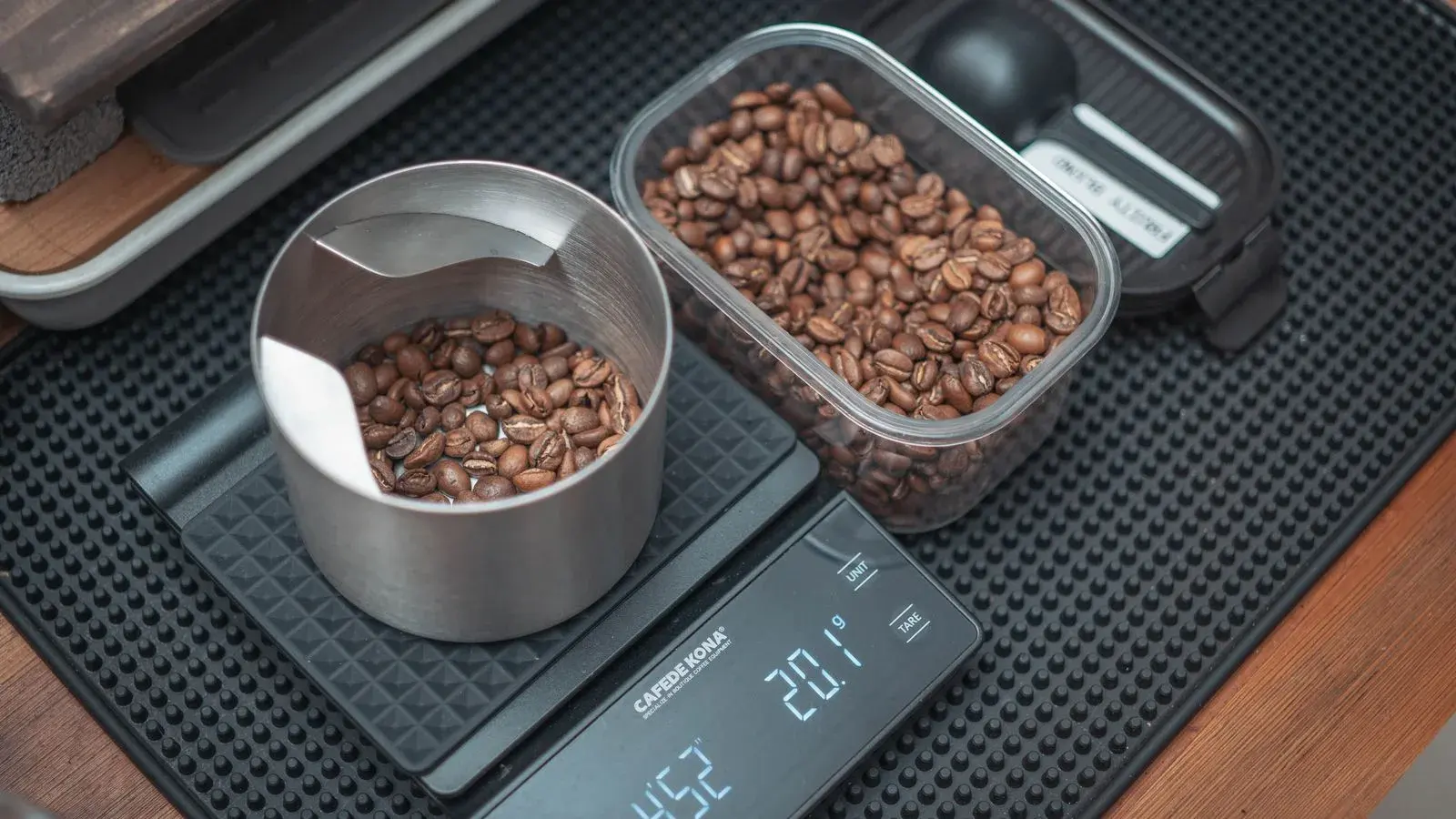
Single dosing means adding the beans for one serving before you grind. It's a routine as much as a product label. You still decide how to weigh the beans, catch the grounds, and move them into the basket. If you'd rather keep one coffee in a hopper (the bean container on top), that may be the simpler routine for you.
Four models to compare
These are U.S. listings checked on September 11, 2026. Prices leave out tax, delivery, and optional parts. We picked them for different buying needs, and we haven't ranked them by any test.
| Model | Displayed base price | Reason to consider it | Question to settle |
|---|---|---|---|
| Baratza Encore ESP | $199.95 | Lowest purchase price in this shortlist; included dosing cup | Does its adjustment method suit your routine? |
| MiiCoffee DF54 v1.5 | $229 | Dedicated single-dose listing with stepless adjustment | Can you comfortably fill it and move the cup in your space? |
| Baratza Encore ESP Pro | $299.95 | Stepless adjustment and an automatic stop for single dosing | Will you use those controls enough to pay more? |
| MiiCoffee DF64 II v2.6 | $399 | A specific reason to consider the listed 64 mm burr options | Which exact burr set and fitting cost are you comparing? |
Sources: Encore ESP, Encore ESP Pro, DF54, and DF64 II. Those pages list features and prices. They can't tell you how the coffee tastes, how loud the grinder is, how fast it runs, or how long it lasts.
Stepless adjustment moves through a continuous range. An automatic stop ends grinding under the conditions the maker states. You'll still want to weigh the beans and check the grounds that come out.
Choose the routine before the grinder
Walk through a normal morning at your counter. Use the same steps for every model on your list:
- Take out the coffee and scale.
- Weigh the beans for the drink.
- Add the beans and start the grinder as its manual directs.
- Collect the grounds and check their mass.
- Transfer the grounds, prepare the basket, and put the loose items away.
Weighing beans helps when you switch from regular coffee to decaf. It still can't prove that none of the old coffee is left inside. That leftover is called retention, and the amount can depend on the coffee, the setting, and your method. So treat a seller's retention figure as a claim, and don't count on one dose being free of the previous coffee.
If two people make drinks, bring both into the decision. One may enjoy weighing each dose, while the other wants fewer loose parts before work. A feature earns its place when it helps whoever repeats the task every day.
Budget for the whole routine
Write the whole purchase out as separate lines:
| Budget line | What to enter |
|---|---|
| Grinder | Delivered price for the exact revision and voltage |
| Scale | Actual quote, or $0 if you already own a suitable scale |
| Cup and funnel | Only parts you need and have confirmed will fit |
| Optional burrs or fitting | A separate quote, not an assumed future saving |
| Total | Sum of the lines above |
Say you pick a $229 grinder and set aside $30 for a scale and $20 for accessories. That totals $279 before tax and delivery. Those two allowances are sample numbers, so swap in your own quotes. An included cup may save you an accessory purchase, but check that it fits your basket.
Use the setup cost calculator to keep the machine and grinder in the same budget. Money you save on the grinder can go to coffee and other parts. Taste is a separate question.
Check working space
Measure more than the grinder's footprint. You need room to add beans, lift off the lid or bellows (a squeezable top on some grinders), pull out the cup, and reach the controls. A grinder that tucks under a cabinet when closed may need to slide out for every refill.
Cut a paper outline of the listed base and set it beside your machine. Put your scale and the cup you plan to use next to it, and check where the power cord will run. Then ask the seller for the full dimension drawing and required clearance for the exact revision. Only the seller's drawing and clearance figures can confirm the fit.
Test the dose routine with your own numbers
Weigh the beans before they enter the grinder, then weigh the grounds you collect. These are two different measurements. For a hypothetical morning, you might put in 18.0 g and collect 17.6 g. That 0.4 g difference does not, on its own, measure retained grounds inside the machine. Coffee may also have spilled or stayed on a transfer cup. Clean up, use the same method again, and note whether the difference repeats. Do not use one trial to claim that a listed grinder has a fixed retention figure.
If you switch from regular coffee to decaf, the question may be more strict than ordinary recipe repeatability. Grounds from the first coffee may remain in the grind path and enter the next cup. A single-dose label does not certify a clean switch or a caffeine-free result. Check the exact maker's cleaning and purge instructions if that matters to you; do not invent a purge amount. Decaf espresso explains why “decaf” itself is not a zero-caffeine claim.
Record three parts of the routine: bean mass in, ground mass collected, and actual espresso dose that reaches the basket. The dose can differ again if grounds stay in the cup or funnel. This short record tells you where you are losing repeatability. It also helps you decide whether an included dosing cup fits your basket or whether you need a separate funnel. An accessory purchase should solve an observed transfer problem, not a number in a product description.
Compare adjustment and cleanup as daily tasks
The original Encore ESP and the ESP Pro share a family name, but the product pages describe different adjustment controls. The Pro lists stepless adjustment and an automatic stop for single dosing. If you change coffees often, ask whether you will record and return to settings, and whether the control makes that simple for you. A stepless dial offers finer position choices; it does not guarantee a better drink without the right grind and recipe.
The DF54 and DF64 II are dedicated single-dose listings in this shortlist. The DF64 II has named 64 mm burr options, which make the exact configuration part of the price question. Before you compare the $229 and $399 listings, write down the revision, burr set, voltage, included cup, and any option cost. The gap between base prices is $170 on the September 11 listings, before tax and delivery. That arithmetic alone cannot establish the value of a burr or the taste of the coffee.
Cleanup belongs in the comparison as well. Place the grinder where you would actually use it. Check whether you can remove the cup without moving the machine, reach the hopper or bellows under a cabinet, and brush or clean only the parts its manual permits. If you have to move it every morning, include that movement in the routine you are buying. The smallest outline on paper may still be awkward to operate.
For a two-person household, try the sequence on paper twice: one person changes beans and settings, and the other makes the next drink. Count the loose items each person must find, weigh, and put away. A hopper grinder can be simpler if both drink the same coffee; single dosing can make more sense when each chooses a different bag. This is a choice about work at the counter. The listings alone cannot decide it.
Choose by the need you can name
Choose the Encore ESP when purchase price is your main limit and its documented controls cover what you need. Consider the DF54 when you want a dedicated single-dose design for less than the other two stepless options here. Consider the ESP Pro for its stated controls. Consider the DF64 II when you can name a specific supported burr option (the grinding parts) you want.
Don't buy an upgrade just because an online chart shows a bigger burr number. Ask what problem it solves, how you'd notice the improvement, and what evidence backs that up. We have no controlled comparison that names a taste winner among these models.
Try this next
Enter the complete budget in the setup cost calculator. Then use the espresso grinder guide to compare a wider range. Check current prices, revision, support, and return terms when you order.
Products mentioned
Open a product to see its exact source, checked date, known uncertainty, dimensions, and main downside.
Compare these 4 grinders side by side →
Common questions
Does a single-dose grinder guarantee better taste?
No. Choose the routine and features you need. We have not tested these grinders side by side or established a taste winner.

About Mara Ellis
Warm, practical, and lightly witty, Mara turns coffee jargon into clear choices for your counter, budget, and next shot.
Read the profile and guides by Mara Ellis →Sources (5)
- DF54 U.S. listingMiiCoffee · Checked September 11, 2026(opens in a new tab)
- DF64 II U.S. listingMiiCoffee · Checked September 11, 2026(opens in a new tab)
- Encore ESP U.S. listingBaratza · Checked September 11, 2026(opens in a new tab)
- Encore ESP Pro U.S. listingBaratza · Checked September 11, 2026(opens in a new tab)
- Encore ESP product pageBaratza · Checked October 20, 2026(opens in a new tab)
See an old price or conflicting detail? Send a correction.
How we researched this
- Method
- Primary product listings and the exact model records below.
- What we added
- Four-model shortlist, morning sequence, complete-budget worksheet, and working-space checklist.
- Limits
- Desk research only. No physical test, ownership, taste, or measured performance result is claimed.
Espresso Receipt Editorial compared four primary product listings with the site's exact model records. What we add is the morning sequence, the complete-budget worksheet, and the working-space checklist, all of them planning aids.
What the evidence labels mean
- Source checked
- A cited source stated this fact when Espresso Receipt checked it. This is not a physical product test.
- Estimated
- This is calculated from stated inputs and assumptions. It is not a measured result or a current quote.
- Observed physical test
- This is a hands-on result for the exact unit under a stated test method.
- We could not confirm this
- The available sources do not establish one reliable answer.