
Use an espresso shot mirror when it gives you a clear view beneath an already compatible bottomless portafilter. Check the view with the machine off and cool, your cup in place and the tray clear. Leave the mirror out if it shifts or blocks your normal setup.
Check what you can see
Look for an exposed basket underside first. A bottomless portafilter is a coffee-holding handle with an open base, so the basket holes are visible. Normcore describes its mirror for that view. A spouted handle covers the underside; a mirror cannot give you a view through that cover.
Keep your current handle if it suits your coffee. If you're considering a change, use the bottomless portafilter guide to check the exact machine and accessory. A mirror does not establish that a different handle fits.
Compare the whole mirror
Check the complete accessory dimensions before you plan its position. Normcore lists separate Standard and V2 versions. Its V2 mirror face and complete product have different diameters, so use the larger product figure when considering space.
| Normcore version | Maker's listed mirror face | Maker's listed product size |
|---|---|---|
| Standard | 70 mm glass mirror | 70 mm diameter, 35 mm length |
| V2 with Magnification | 80 mm glass mirror with magnification | 84 mm diameter; 92 g weight |
These are Normcore's published figures, checked October 24, 2026. Its description does not give the V2's complete height or base footprint. Ask for those measurements if they decide whether your cup, scale and mirror can share the tray.
Read how the base works, too. Normcore describes a magnetic base and an adjustable ball joint. Weber's Looking Glass describes a magnetic ball inside the assembly and an elastomer foot against the tray. The location of a magnet matters: neither description proves attachment or stability on your exact tray.
Make the first check cold
Follow your exact machine's shutdown instructions before placing or adjusting the mirror. Stop brewing and steaming, switch off, unplug and let the machine and parts cool. Do not reach beneath a running extraction or adjust a mirror near hot water.
Breville's BES870 USCM X26 manual also prohibits attachments other than those provided. It warns that unrecommended attachments may cause fire, electric shock or injury.
If your exact manual prohibits the accessory or its placement, do not place or use it. Stop and ask the machine manufacturer. A cold view check cannot establish permission to use an accessory.
Use this cold check before deciding whether the accessory suits your routine:
- Place your usual empty cup and scale in their normal positions. Use an already compatible handle, secured as its machine manual requires. Keep the machine off, unplugged and cool throughout.
- Follow the mirror's setup instructions. Normcore says to remove its transparent protective film before use. Check the actual accessory for damage and stop if its glass or support is damaged.
- Place the mirror on a surface its instructions permit. Keep the cup beneath the outlet and leave the tray's drains, controls and removal path clear. Do not improvise a mount or attach it to hot parts.
- From your normal standing position, change only the mirror angle. Check whether you can see the basket underside while the cup and scale stay put. Stop if the mirror slips, tips or requires an obstructed arrangement.
- With everything still cold, check room to place and remove the cup and to empty the tray. If the mirror prevents those actions, remove it. Follow the exact machine and accessory instructions for any later use.
Check one angle at a time
Keep the empty cup, scale and mirror base in the same places. Adjust the angle once, then stand where you normally make coffee. This is an unperformed view check, limited to placement your machine and accessory instructions permit. It does not involve brewing or tasting.
Write down the mirror version, where its base sits, which part of the basket you can see and whether tray access stays clear. If another angle helps, record it. Stop when the view is usable without moving the cup away from the outlet, or leave the mirror out if that arrangement isn't possible.
Use the shot diagnosis tool if your coffee needs an adjustment. A reflected view alone cannot establish how a shot tastes. The espresso scale guide can help you check the room your scale needs before adding another item to the tray.
Confirm the exact machine and accessory before changing the handle for an underside view.
Check the exact bottomless handle fit
About Mara Ellis
Warm, practical, and lightly witty, Mara turns coffee jargon into clear choices for your counter, budget, and next shot.
Read the profile and guides by Mara Ellis →Sources (3)
- Espresso Shot Mirror Standard and V2 descriptionNormcore · Checked October 24, 2026(opens in a new tab)
- Looking Glass constructionWeber Workshops · Checked October 24, 2026(opens in a new tab)
- BES870 USCM X26 instruction bookBreville · Checked October 24, 2026(opens in a new tab)
See an old price or conflicting detail? Send a correction.
How we researched this
We compared Normcore's current Standard and V2 descriptions with Weber's Looking Glass construction details and Breville's exact BES870 safety instructions. The cold placement check is our editorial procedure. We have no ownership, physical testing, taste testing or measured performance evidence for these mirrors, and we have not performed this check.
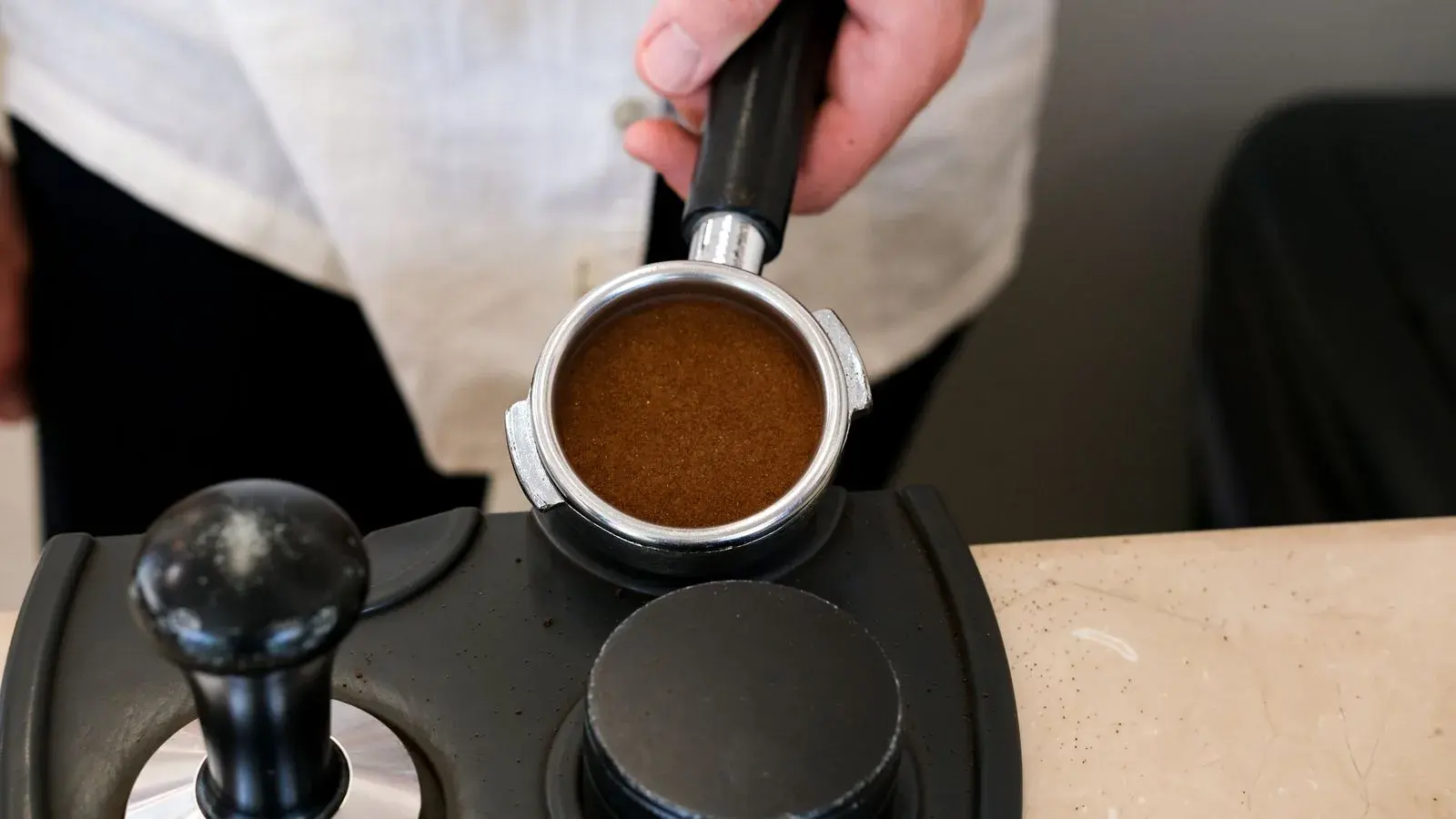
The photograph shows a barista holding a portafilter. It does not show either mirror or establish accessory fit. Ask the machine or accessory maker if its instructions leave placement or use unclear.
What the evidence labels mean
- Source checked
- A cited source stated this fact when Espresso Receipt checked it. This is not a physical product test.
- Estimated
- This is calculated from stated inputs and assumptions. It is not a measured result or a current quote.
- Observed physical test
- This is a hands-on result for the exact unit under a stated test method.
- We could not confirm this
- The available sources do not establish one reliable answer.