
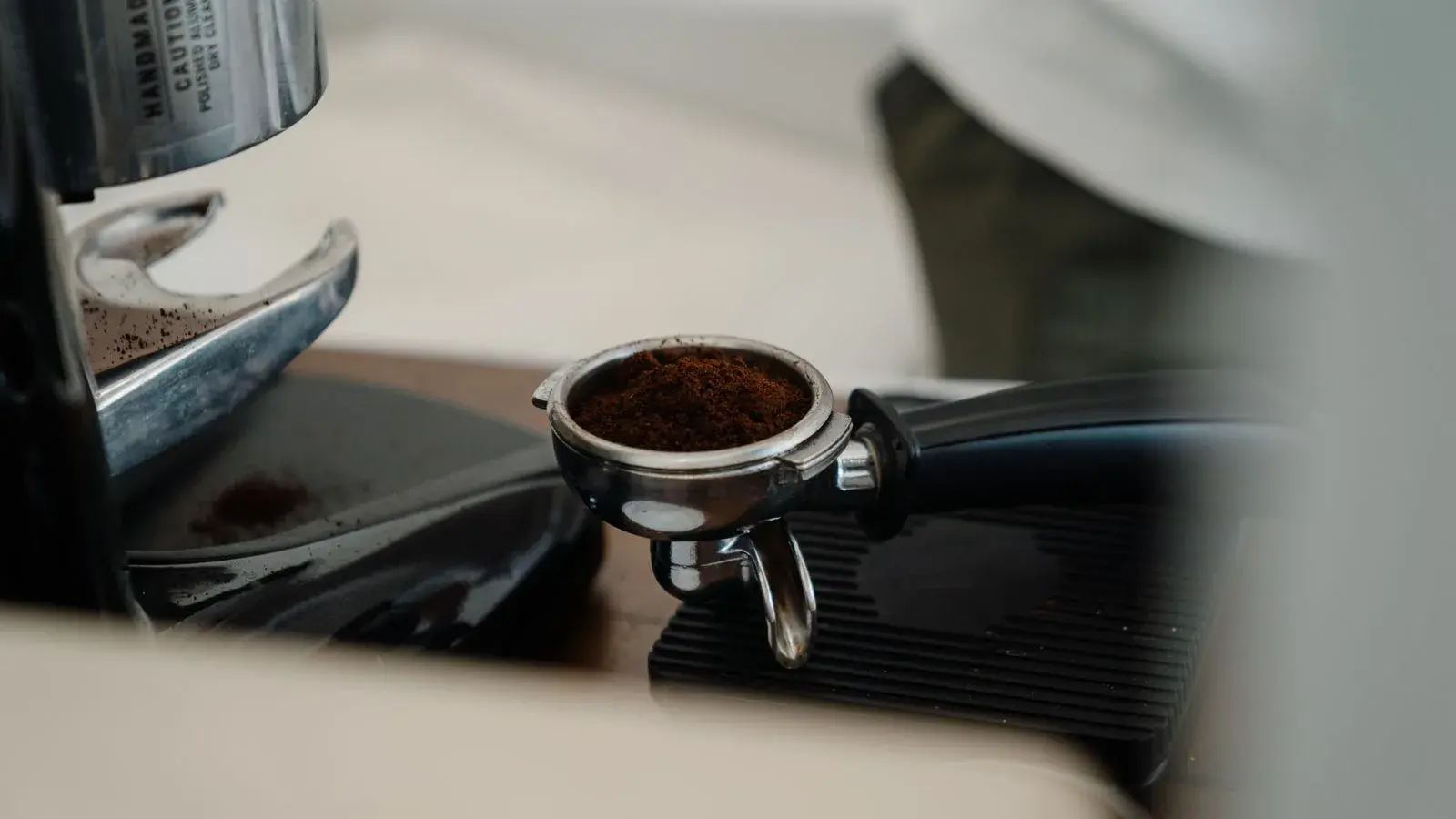
Start with your grinder, then adjust by taste
Start inside your grinder's espresso range, then let the shot tell you where to go. Espresso coffee is finely ground, and the right setting differs by grinder and coffee.
Dose is the dry coffee in the basket. Yield is the drink weight in the cup. The puck is the packed coffee in the basket.
Channeling is uneven flow, where water finds an easier path through that puck. Burrs are the two cutting parts inside the grinder, and they can be flat or cone-shaped.
The same setting number can mean a different burr distance on another grinder. Calibration sets the dial's reference point, and the zero point is the starting mark. Burr shape, coffee density, roast, age, dose, basket, humidity, and old coffee inside the grinder also affect the setting that works.
Find your setting with a small, steady process. Start inside the maker's espresso range when one is published, and keep the coffee dose and target drink mass the same. Check how long the target takes and whether the flow repeats, taste the drink, and make one small change.
Use the chart to choose your next test. The examples use catalog and maker records, and any taste or performance claim would need the coffee, equipment, water, and test method checked together.
Choose your next grind test
Use this table once your puck preparation and recipe are fairly repeatable. “Finer” and “coarser” name the next test to try. Fix a shot asks the same questions.
| Observation | Likely next grind move | Check before moving | Why the move may help |
|---|---|---|---|
| Target yield arrives much too fast | Finer | Uneven flow, low dose, stale coffee | Finer particles usually add resistance |
| Target yield arrives much too slowly | Coarser | Too much coffee, blocked basket, grinder at its finest safe setting | Coarser particles usually reduce resistance |
| Machine stalls or barely drips | Coarser | Safe basket fill and clean screen above the puck | Current puck may be too restrictive |
| Time is close but shot tastes sharp or thin | Slightly finer, or increase yield in a later test | Temperature, uneven flow, coffee age | More contact or drink mass may increase extraction |
| Time is close but shot tastes drying or harsh | Slightly coarser, or reduce yield in a later test | High temperature, uneven flow | Less contact or drink mass may reduce extraction |
| Shot time changes widely at one setting | No immediate grind move | Dose, old coffee, distribution, tamp, temperature | Inconsistency hides the real grind effect |
| First shot is slower than later shots | Repeat before changing grind | Old grounds and machine warm-up | The equipment may still be changing state |
| Setting is already at the edge of its range | Change calibration or recipe safely | Exact grinder manual and safe finest-setting procedure | The useful espresso band may sit outside current calibration |
The taste rows offer more than one test on purpose. Grind moves flow and extraction (how much flavor the water pulls from the coffee) together, while yield changes how far brewing continues. If you want to know which change mattered, change only one of them per shot.
Start with a recipe you can repeat
For a common double basket, a good starting test is 18 grams of dry coffee and 36 grams of espresso in the cup. That's a 1:2 ratio, and the espresso ratio calculator can scale it to any dose. Aim for roughly 25–32 seconds from your chosen timing point.
Treat that as a starting point for this recipe. The SCA (Specialty Coffee Association) sets no such requirement for every coffee.
The basket may be made for a different dose, so follow the machine or basket maker's range. Before brewing, check that the puck doesn't touch the screen above the basket. A 51mm, 54mm, and 58mm basket may hold different doses at the same depth.
Use a scale for the dose and the drink mass, and stop the shot at the target mass. Write down the time too, and let taste tell you whether the recipe works. Different coffees may finish at different times.
Before your first adjustment, write it down like a recipe card: coffee, roast date when known, grinder setting, dose, target yield, how you define time, machine warmth, and taste. Notes turn each change into evidence.
Grinder-specific starting points
Use a range only when the maker publishes one for that grinder. The current catalog lists these starting details:
| Grinder | Checked price | Adjustment system | Published espresso starting information | How it doses |
|---|---|---|---|---|
| Baratza Encore ESP | $199.95 | 40 numbered settings | Settings 1–20 dedicated to espresso | Hopper or included dosing cup |
| Baratza Sette 270 | $399.95 | Large steps plus small continuous adjustments | 270 named adjustment combinations | Timed hopper |
| MiiCoffee DF54 | $229 | Continuous external dial | No universal espresso number | Single dose with cup |
| Fellow Opus 2 | $199.95 | Inner and outer dials with smooth adjustment | Use exact manufacturer guide | Single dose |
| Eureka Mignon Specialità | $549 | Continuous fine adjustment | No transferable dial number | Timed hopper |
| MiiCoffee DF64 II | $399 | Continuous external dial | No universal espresso number | Single dose with cup |
“Settings 1–20” on the Baratza Encore ESP is its espresso range, and setting 10 may suit one coffee and miss another. The Sette 270 has a large control for big moves and a small control for fine correction. Continuous dials move freely, and they're hard to find again without a mark and a log.
If your grinder manual gives a model-specific starting point, use it. Treat a social post's number for another grinder or calibration as background.
Move finer when the shot is truly too fast
Say 18 grams in reaches 36 grams out in 15 seconds. The flow speeds up, and the drink tastes thin. If dose, ground-coffee spread, and puck shape repeat, move the grinder a small amount finer.
If the grinder manual calls for a purge, run and discard a little old coffee to clear the setting. Otherwise, account for old coffee before you judge the next shot. Prepare the puck the same way and repeat at the same dose and yield.
A helpful change should slow the shot to 36 grams. Taste it, then keep going in small moves. Stop moving finer when the machine stalls, the shot turns uneven, or the taste gets worse.
A fast shot may also come from the puck. A crack or weak path can send water through one area even when the average grind is fine, and a badly underfilled basket can also reduce resistance. If the next shot changes a lot at the same setting, make the process repeat before you change the dial.
Move coarser when the machine is restricted
If the pump runs but almost no espresso appears, or 36 grams takes far longer than expected, check the dose and basket fill. Then make a small move coarser.
Too much coffee can press the puck against the screen above the basket, which adds resistance unrelated to grind. A dirty basket, blocked screen, or grinder at its finest safe setting can also create a machine problem. Check these basics before you treat every slow shot as normal adjustment.
After the coarser move, keep dose, ground-coffee spread, tamp (how firmly you press the coffee), and target yield the same. The target should arrive sooner, so taste again. A faster result can still taste thin or sharp, and the next test may need a yield, temperature, or coffee change.
Never force a grinder past the adjustment steps in its manual. Some grinders should run while you move finer, and others have model-specific calibration steps. Follow the exact maker instruction.
When inconsistency hides the grind effect
Three shots at one setting that finish at 22, 31, and 43 seconds can't show a stable grind correction. Something else is changing enough to hide the effect.
Weigh every dose after grinding when possible. Hopper timers can change with bean level and grind position, and single-dose grinders can keep or swap a small amount of old coffee. The amount matters only for the repeatability you need, and a product record alone can't show how much old coffee remains.
Spread the grounds the same way, tamp level, and use the same basket. You can inspect the used puck for clear edge gaps, though its appearance gives only part of the extraction picture. Keep the machine at the same temperature and use the same flush routine.
Once repeated shots finish near one another, the grind dial becomes useful. Until then, a finer setting may only fix one bad puck and overcorrect the next good one.
Dose and space above the puck set the limit
Dose sets how much coffee fills the basket and how much space remains between the puck and the screen above it.
Fill the basket the way you'd fill a cake pan, with the amount it's made for. If the puck touches the screen above it before brewing, reduce the dose or use a suitable basket. Do not grind coarser to make an overfilled basket flow. If the basket is far too empty, the puck may not have the shape the machine expects.
When you change dose on purpose, rebuild the recipe. An 18-gram dose and 36-gram yield is a 1:2 mass ratio, and a 16-gram dose at the same ratio targets 32 grams (16 × 2 = 32). Keeping 36 grams after lowering the dose changes both ratio and extraction path.
During basic adjustment, keep the dose fixed. Change dose later when basket fit, drink strength, or recipe design gives you a reason, so each shot stays easier to explain.
Old grounds can hide a grind change
Clear or account for old coffee after each grind change. After a grind adjustment, some coffee from the old setting may stay in the chute or grinding chamber and mix with the new setting. The next dose may represent both settings, a bit like the first pancake after you turn the heat. The amount depends on the grinder and how you use it, and published design details don't measure the old coffee left inside.
Follow the grinder maker's guidance for clearing old coffee. A bellows is a small air pump, so use it only as the manual says. Record the coffee this costs.
For single dosing, sometimes weigh input and output to find a large unexplained difference. Scale limits and static affect small values.
Don't make another large adjustment because the first shot after a change moved only a little. Give the grinder a fair chance to show the new position. Mark “first dose after change” in your log, and a pattern may show up quickly.
Old grounds matter most when adjustments are small and the useful shot window is narrow. That's a routine detail for either grinder design.
Roast, age, and humidity can move the setting
Check flow and taste again as the coffee ages. Coffee changes after roasting and after you open the bag, as gas, moisture, and bean structure change. A setting that worked last week may not produce the same flow today. Different coffees can need very different settings at the same dose and ratio.
Darker coffees that dissolve more easily often use a different recipe from lighter, denser coffees. The roast label alone cannot set the grinder, and “Medium” names no standard burr distance. Start with the flow and taste you observe.
Humidity and temperature can affect beans, static (the charge that makes grounds cling), and the grinding area. Don't rely on a seasonal conversion chart. Check dose, yield, time, and taste, and if a steady coffee changes, make one small correction and record it.
Don't chase every second. Correct a repeated change that affects the drink, and let normal shot-to-shot noise pass.
Pressurized baskets change the test
A pressurized or dual-wall basket creates resistance through the basket system, so flow depends less on exact grind size. It can support pre-ground coffee or a grinder without fine espresso adjustment. A non-pressurized or single-wall basket relies much more on the coffee puck.
With a pressurized basket, the finer and coarser pattern may be harder to see, and a very fine grind can restrict the whole system. Start with the machine maker's basket and grind guidance. Check a non-pressurized recipe before you copy it.
Moving to a non-pressurized basket changes what the equipment requires. It usually needs a grinder that can make espresso-fine grounds, a repeatable dose, and more careful puck preparation. You can learn milk and cleaning with the pressurized basket first, then switch once the grinder and routine are ready.
Name the basket in the log. Without that detail, two recipes that look the same may use different resistance systems.
Use taste and flow together
Time tells you about flow, and taste scores the shot. A 28-second shot can taste sharp, hollow, balanced, drying, or dull, because coffee, recipe, water, temperature, and flow pattern also matter.
When a shot is very fast and tastes thin or sharp, a finer move is a sensible next test. When it's very slow and tastes dry or harsh, try coarser. When time looks normal but taste is off, test target yield or temperature. Fix a shot helps separate these cases.
Change yield in a separate series. A longer yield usually pushes extraction further while making the drink less strong, and a shorter yield usually does the opposite. Treat those as directions to taste for.
If taste words feel uncertain, try this on your next pair of shots. Pull two controlled shots and compare them side by side, one slightly finer or with one changed yield target. The difference between them is often easier to identify than an exact label, so stop once you can tell which cup you prefer.
Keep a log for the next shot
A good log can fit on one line:
| Coffee | Grind | Dose | Yield | Time | Basket | Machine warmth | Taste | Next move |
|---|---|---|---|---|---|---|---|---|
| Example coffee, 10 days from roast | Grinder-specific mark | 18.0g | 36.0g | 19s | Single wall | Fully warmed | Thin, sharp | One small step finer |
Add water recipe and temperature setting when they change. Add input and output grinder mass when you're investigating old coffee. Skip fields that will never inform a decision.
The “next move” column matters most. Write it before you make another shot. If it names grind, dose, yield, and temperature together, the test is too broad, so change one thing at a time.
Photos can document grounds or flow. Mass, time, and taste do the measuring. A flow video can't fully measure extraction.
Repeatable grind checklist
Confirm the exact grinder model, basket type, and safe adjustment steps. Start in the maker's espresso range when published. Choose a dose that fits the basket and a target yield by mass.
Warm the machine the same way each time. Weigh the ground dose, spread and tamp it the same way, start the timer at the same event, and stop at the target drink mass. Record time and taste.
If the target arrives much too fast and the puck repeats, move slightly finer. If it arrives much too slowly and the dose is right, move slightly coarser. Clear or account for old coffee, and repeat without changing another variable.
When time becomes repeatable, use taste to decide whether to keep the result or run a separate yield or temperature test. The chart has done its job when you can explain the next shot.
Grind size only becomes useful beside your dose, yield, time, flow, and taste.
Turn my shot into one grind move →Products mentioned
Open a product to see its exact source, checked date, known uncertainty, dimensions, and main downside.
Compare these 3 grinders side by side →
Common questions
What number should I use for espresso?
Use the espresso range in your exact grinder manual as a start, then dial in. Numbers are model-specific.
Does darker roast need a different grind?
Often yes, because solubility, density, age, and the recipe you want differ. Adjust from the flow and taste you get.
Should I change dose or grind first?
For a repeatable dial-in, hold dose and target yield steady and change grind first.

About Mara Ellis
Warm, practical, and lightly witty, Mara turns coffee jargon into clear choices for your counter, budget, and next shot.
Read the profile and guides by Mara Ellis →Sources (6)
- Coffee standards and protocolsSpecialty Coffee Association · Check date not recorded(opens in a new tab)
- Encore ESP product pageBaratza · Check date not recorded(opens in a new tab)
- Bambino product pageBreville · Checked September 16, 2026(opens in a new tab)
- Encore ESP product pageBaratza · Checked October 20, 2026(opens in a new tab)
- Sette 270 product pageBaratza · Checked October 20, 2026(opens in a new tab)
- DF54 v1.5 product pageMiiCoffee · Checked October 20, 2026(opens in a new tab)
See an old price or conflicting detail? Send a correction.
How we researched this
We use manufacturer, standards group, government, and authorized-retailer records when available. We label a hands-on result as an observed test only when we name the exact product and test it. A checked price shows what the seller listed on the check date. It can change after that date, and your delivered total may differ.
What the evidence labels mean
- Source checked
- A cited source stated this fact when Espresso Receipt checked it. This is not a physical product test.
- Estimated
- This is calculated from stated inputs and assumptions. It is not a measured result or a current quote.
- Observed physical test
- This is a hands-on result for the exact unit under a stated test method.
- We could not confirm this
- The available sources do not establish one reliable answer.