
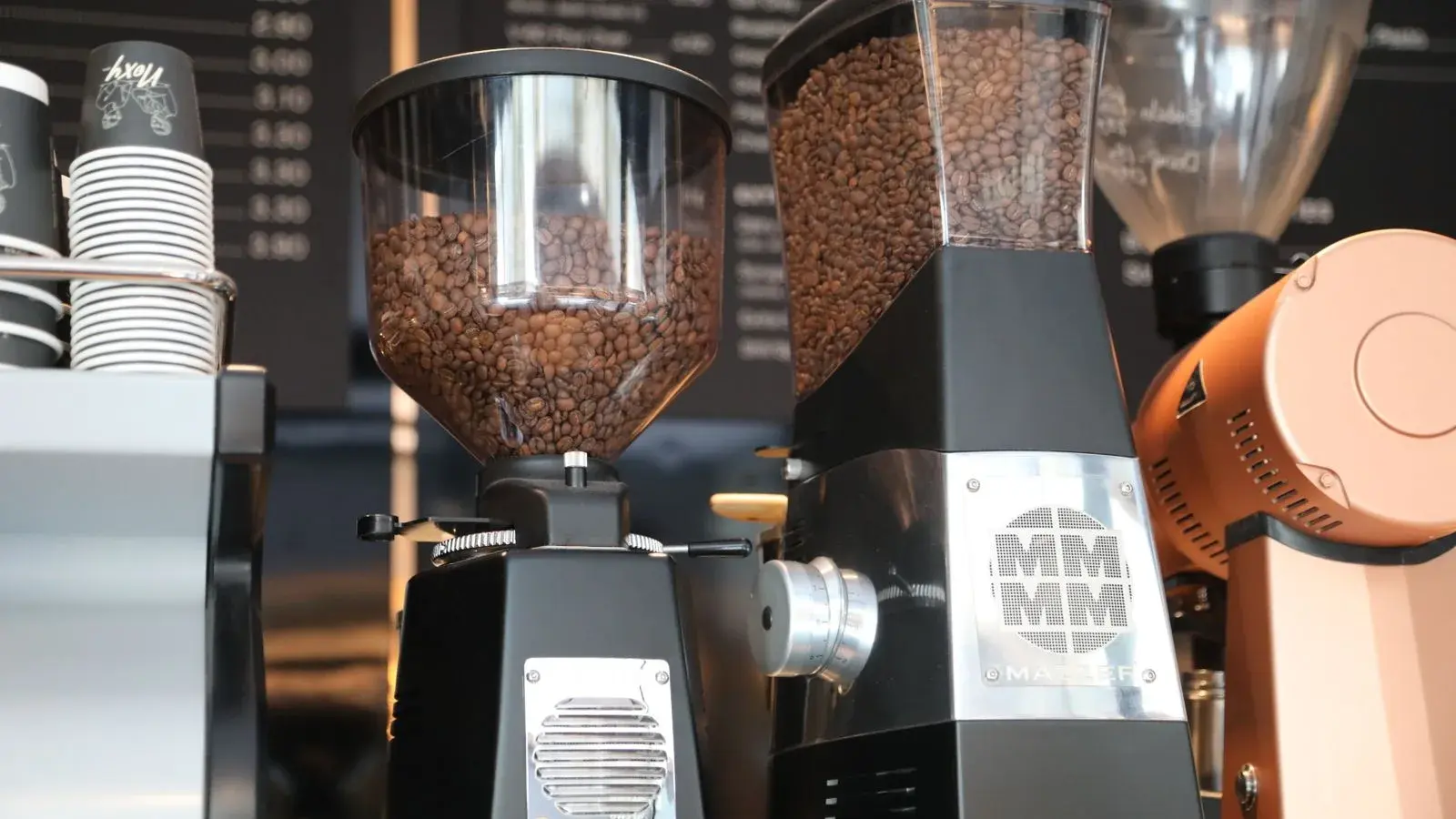
THE DECISION
Which one fits your routine?
DF54
Keep the initial purchase cost lower
Main limit: Does not provide the compared 64 mm burr options
DF64 II
A specific supported burr option matters
Main limit: Higher price; fitting and upgrade cost need confirmation
Compare the exact versions
Check the exact version first. We compared MiiCoffee's U.S. listings for the DF54 v1.5 and the DF64 II v2.6, and “DF64” can also refer to an older model. So check the invoice, voltage, revision, and burr set (the two cutting discs that grind the beans) before you compare an offer. The product pages name the revisions, and the seller's version log adds more context.
| Listed field | DF54 | DF64 II |
|---|---|---|
| Revision checked | v1.5 | v2.6 |
| Displayed base price, September 11, 2026 | $229 | $399 |
| Stock burrs | 54 mm stainless steel flat burrs | 64 mm stainless steel flat burrs |
| Adjustment | Stepless | Stepless |
| Listed burr option | Stock set compared here | Seller lists an SSP upgrade option; price not included |
Sources: MiiCoffee DF54 listing and MiiCoffee DF64 II listing. The table holds seller specifications and displayed prices, and none of them are delivered quotes. The availability text covers several variants, so we make no stock promise. SSP in the last row is a burr upgrade option named in the seller's listing.
Stepless means the adjustment turns through a smooth range, like a gas burner knob with no marked clicks. Single dosing means you weigh the beans for each drink right before you grind them.
Those shared words matter more to a first purchase than the burr diameter alone. With either grinder, you plan a bean dose, grind it, move the grounds to your basket, and make a small dial change when the shot needs one. Stepless adjustment gives you room between marked positions, but it also asks you to record the dial position if you want to return to an old recipe. If you prefer to leave a hopper full of one coffee and press a timed button, neither single-dose routine may match the way you want to work.
The 54 mm and 64 mm figures describe burr size. They do not measure the taste of a shot, how much ground coffee stays inside, or the sound in your kitchen. Burr shape, alignment, coffee, and recipe also affect what you experience.
We have seller specifications for the two stock burr sets, not a controlled comparison that holds those other factors steady. Keep a diameter claim in the specification column, where it belongs.
Start with the cost difference
The checked base prices are $170 apart: $399 minus $229. Tax, delivery, optional burrs, and accessories can change that final gap. At checkout, compare the same voltage and the same included burr set.
To weigh the extra cost against your own mornings, spread it across the grinding you expect to do. The math below assumes three years of use at 365 days a year. We make no durability claim.
| Your assumed use | Grind sessions over three years | Extra purchase cost per session |
|---|---|---|
| One session each day | 1,095 | About $0.16 |
| Two sessions each day | 2,190 | About $0.08 |
Calculation: $170 divided by the assumed number of sessions. It spreads the purchase difference across use. It says nothing about savings, resale value, repair cost, or how the coffee tastes.
If your whole setup budget is fixed, write down what you'd drop to pay the extra $170. If that means losing the scale or leaving too little for coffee, the lower purchase price may serve your routine better. If the rest of your counter is already covered, weigh the extra grinder cost on its own.
If you grind only a few times a week, use your own expected session count. Divide $170 by that count. The result is a way to view purchase cost, with no implied service life or savings.
Compare checkout totals with the same contents. An optional burr upgrade on one offer, an accessory bundle on another, or delivery charges can make the displayed base-price gap misleading. Ask for the exact included stock burrs and voltage before you use the $170 figure.
If your plan includes an upgrade, write its price and any fitting cost on a separate line. The published base comparison is still useful, but it no longer describes your planned cart.
When the DF54 is the simpler purchase
Pick the lower-cost grinder when you want a separate grinder and can't name a feature of the pricier one you'd use. That's a budget call. We don't claim both grinders make identical coffee.
For a first setup, ask “What problem would the more expensive grinder solve for me?” instead of “Which has the bigger burrs?” Write your answer down before you open another upgrade list. If the line stays blank, the DF54 is the simpler pick.
Open the DF54 product record to see the dated evidence and its limits. Check the seller's current terms before you order.
The lower price can leave room for the other parts of a first setup. A scale helps you record the beans and drink weight; coffee and cleaning supplies also need a place in the budget. Make the full counter list before deciding that the extra grinder money is available.
If you already own those items, the same calculation may point elsewhere. The decision changes with what is on your counter, not with a universal ranking of burr sizes.
When to consider the DF64 II
Look at the DF64 II when you can name a particular supported burr set you want to use. Confirm the exact compatibility, any fitting work, and the total upgrade price with the seller. A shared diameter doesn't establish that every aftermarket set fits.
If a review says an upgrade improves flavor, check which burrs, coffee, roast, and recipe it used. A result from another configuration doesn't tell you how the stock grinder in this comparison performs. We haven't run a controlled taste comparison.
Open the DF64 II product record for the model details. Match the model name to the exact listing, because some listings use only “DF64” as the name.
MiiCoffee's listed SSP option does not establish which other burrs fit your revision or how an upgrade would change your drink. Ask the seller to name the compatible set and complete installed cost. If the answer is unclear, compare the stock grinders.
The seller's version log helps explain why the revision number belongs on your order record. A used listing or a marketplace title may omit that number. Ask for a photo of the model label and the included burrs when buying a particular revision. If the seller cannot identify the exact unit, you cannot safely apply every feature from the newer product page to it.
Check fit, daily use, and support
Run through this list for either grinder:
- Record the exact seller, model, revision, voltage, and included burr set.
- Ask for a dimension drawing for that revision. Leave working room to add beans, lift the lid, move the cup, and clean. Body width alone won't prove fit.
- Confirm the total delivered price. Include any planned burrs and fitting service.
- Read the current warranty and return terms for your location. Confirm who handles a fault and who pays return delivery.
- Name the feature you expect to use. If the upgrade has no clear job, keep the cheaper option.
We don't rank these grinders by noise, grinding speed, retention (old grounds left inside the grinder), static (the charge that makes grounds cling), or reliability. Each of those would need a defined test and a recorded result. Seller claims about those qualities aren't independent measurements.
Make a dry run of your own routine before paying for either one. Place the scale, bean container, cup, and portafilter on the counter. Can you weigh a dose, pour it into the grinder, and transfer the grounds without moving everything twice?
Can you reach the adjustment dial with the grinder in its planned spot? That exercise checks your space and habits. It cannot tell you how either grinder performs, but it can reveal a setup that would annoy you every morning.
Ask where you would get replacement parts. The seller's answer may matter more to your routine than an unmeasured performance claim.
Once you have either grinder, use the first few shots to set a recipe instead of judging the purchase from one cup. Start with the same beans, coffee dose, and target drink weight. Record the grinder setting and how the shot tastes.
Change the grind a small amount, pull again, and taste before you change anything else. Stop when the drink tastes good to you. That experiment helps you learn your grinder; it does not compare the DF54 with the DF64 II unless both machines, burr sets, coffee, and recipe are documented in a matched test.
If you already own an espresso-capable grinder, name the problem before you replace it. Does your current control fail to make the small changes you need? Do you want to weigh a new bean dose for each drink?
Is a confirmed burr option part of your plan? A new model could fit one of those jobs. The two seller listings cannot tell you that it will fix a sour shot, reduce noise, or shorten cleanup in your kitchen. Try one controlled grind change on the grinder you have before assigning the problem to the hardware.
Try this next
Put the DF54 model record next to the DF64 II model record. Then ask for a quote on the exact version you want. If neither fits your budget or routine, the broader espresso grinder guide has more options.
Products mentioned
Open a product to see its exact source, checked date, known uncertainty, dimensions, and main downside.
Compare these 2 grinders side by side →
Common questions
Is the DF64 II worth the extra $170?
It can be if its specific burr options solve a need you already have. The difference alone does not prove better value or better taste. Recalculate the difference from your delivered quotes.
Is the DF64 II the same as the original DF64?
No. This comparison covers the explicitly named DF64 II listing. Check the seller and revision when a review or offer uses the shorter name.
Will bigger burrs make better espresso?
Diameter alone cannot answer that. We have not tested these stock configurations side by side. Do not infer a taste result from the specification table.

About Mara Ellis
Warm, practical, and lightly witty, Mara turns coffee jargon into clear choices for your counter, budget, and next shot.
Read the profile and guides by Mara Ellis →Sources (3)
- DF54 U.S. listingMiiCoffee · Checked September 11, 2026(opens in a new tab)
- DF64 II U.S. listingMiiCoffee · Checked September 11, 2026(opens in a new tab)
- Version numberingMiiCoffee · Checked September 11, 2026(opens in a new tab)
See an old price or conflicting detail? Send a correction.
How we researched this
- Method
- Primary product listings and the exact model records below.
- What we added
- A dated purchase-price comparison and a cost-per-drink worksheet with explicit assumptions.
- Limits
- Price, revision, compatibility, and support terms can change; check them again before ordering.
Espresso Receipt Editorial compared dated seller records and calculated the base-price difference. What we added is the version boundary, the cost-per-session math, and the buying checklist.
We did not test, own, taste, or measure these grinders, and nobody has been credited with a physical test. The facts here come from the sources below and our stated math.
What the evidence labels mean
- Source checked
- A cited source stated this fact when Espresso Receipt checked it. This is not a physical product test.
- Estimated
- This is calculated from stated inputs and assumptions. It is not a measured result or a current quote.
- Observed physical test
- This is a hands-on result for the exact unit under a stated test method.
- We could not confirm this
- The available sources do not establish one reliable answer.