
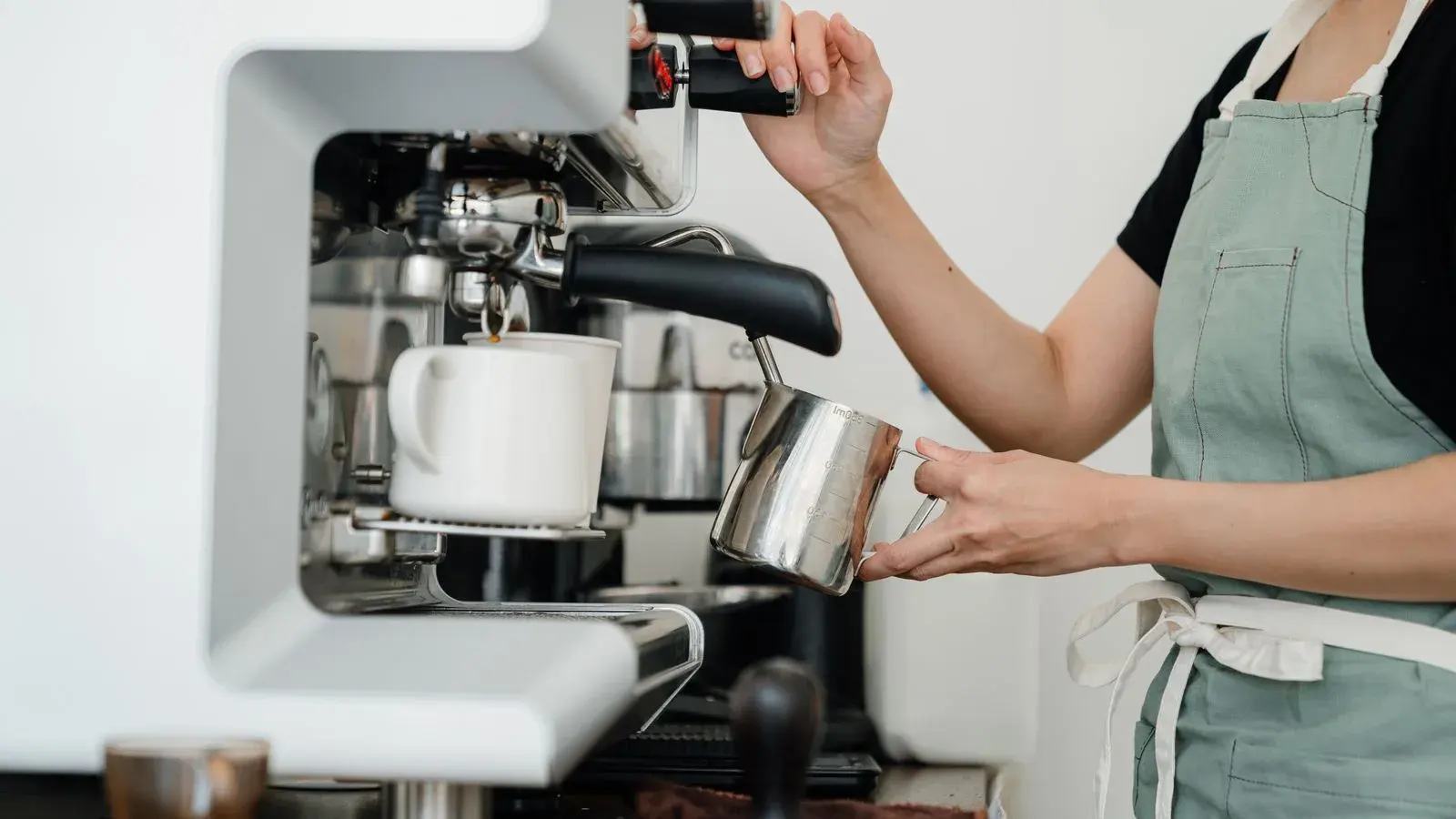
THE DECISION
Which one fits your routine?
Bambino · BES450BSS1BUS1
Choose it when you want to steam milk manually and keep more of your budget for a separate grinder.
Main limit: You control the milk texture yourself.
Bambino Plus · BES500BSS1BUS1
Choose it when automatic milk temperature and texture controls solve a daily need.
Main limit: The higher machine price leaves less of the same budget for a grinder.
Choose the Bambino for value or the Plus for automatic milk
Choose the Bambino if you will steam milk by hand and want to keep $200 for a grinder. Choose the Bambino Plus if hands-free milk with three temperature and three texture choices is worth $200 to you. Neither machine includes a grinder. Check the delivered price and measure the exact unit before you order.
Bambino and Bambino Plus at a glance
We compared the current U.S. brushed-stainless records BES450BSS1BUS1 and BES500BSS1BUS1, with prices checked September 7, 2026. Compare the current delivered prices before you order.
A portafilter is the handled part that holds the coffee basket. A stepless grinder changes in a smooth range instead of fixed clicks or steps. A 54mm basket size determines which tools fit.
ThermoJet is a heating system, and PID manages temperature. Pre-infusion wets coffee before extraction. Volumetric controls run preset shot amounts, and 9-bar is the listed extraction pressure.
| Field | Bambino / BES450BSS1BUS1 | Bambino Plus / BES500BSS1BUS1 |
|---|---|---|
| Checked U.S. price | $299.95 snapshot | $499.95 snapshot; Add to cart state |
| Published electrical fields | 110–120 V; 1560 W | 110–120 V; 1560 W on exact-SKU page; 120 V/60 Hz/1560 W in Y25 manual |
| Heating | ThermoJet with PID | ThermoJet with PID |
| Manufacturer startup claim | 3 seconds | 3 seconds |
| Portafilter | 54mm | 54mm stainless steel |
| Reference dose | 18g | 18g |
| Extraction description | Low-pressure pre-infusion, then 9 bar | Low-pressure pre-infusion, then 9 bar |
| Shot controls | Volumetric 1 and 2 shot | Volumetric 1 and 2 shot |
| Milk | Manual | Automatic with 3 temperatures and 3 textures, or manual |
| Basket types listed | 1- and 2-cup single wall and dual wall | 1- and 2-cup single wall and dual wall |
| Catalog warranty record | 1 year | 2 years |
| Published dimensions | Conflicted; current U.S. sources differ; do not size-rank | Conflicted; exact-SKU and generic U.S. sources differ; measure the unit |
Both machines use a 54mm portafilter around an 18-gram reference dose, low-pressure pre-infusion, 9-bar extraction, volumetric one- and two-shot controls, and ThermoJet with PID, a control that manages temperature. With that much shared on the brewing side, the milk system and the complete setup budget are the main differences. The three-second figure is Breville's heating-system claim. A complete drink takes longer to prepare.
Bambino: choose manual milk and keep the $200
The base Bambino asks you to texture milk yourself. You position the steam tip, add air, create circulation, judge temperature, stop the steam, purge, and wipe the wand. The learning curve is real, and so is the control.
The machine’s current product page lists a milk jug, portafilter, tamper, steam-wand cleaning tool, descaling powder, and both single- and dual-wall baskets. The interface provides one-shot, two-shot, steam, and hot-water controls. Hot water is handy for Americanos and warming a cup, and it says nothing about a different brew system.
The $200 saved can fund the part of the setup that neither machine includes. At the September 7 snapshots, the Bambino plus Baratza Encore ESP costs $499.90 before accessories. Pair it with the stepless single-dose MiiCoffee DF54 and the hardware total is $528.95.
Add the disclosed $90 required-item allowance and the estimated totals become $589.90 and $618.95. The espresso setup calculator will rebuild them with current prices.
Choose the Bambino when manual milk sounds like a skill you'd enjoy, when the budget needs room for a grinder, or when automatic milk would rarely be used.
Bambino Plus: choose repeatable milk assistance
The Plus has three temperature and three texture settings for automatic milk. Breville’s BES500 Y25 manual, pages 14–15, requires the supplied jug to rest on the drip-tray temperature sensor, with the wand fully lowered and its tip covered by milk. The automatic cycle stops at the selected temperature. In manual mode, automatic shutoff is disabled; press STEAM to stop before removing the jug.
This can help when milk is frequent and you want less hands-on steaming: two household lattes before work, someone who'd rather not judge pitcher temperature by hand, or several people with different experience levels sharing one machine. Automatic control can make the requested setting more repeatable for that household. It does not prove café-level texture or identical results across milk types.
The current Plus page lists a stainless milk jug, 54mm tools, single- and dual-wall baskets, and cleaning accessories. The model-specific Y25 manual identifies a 64 fl oz removable tank, 54mm portafilter, 120 V/60 Hz/1560 W rating, and a 200-extraction cleaning alert separate from descaling. Use these details to plan setup and maintenance.
Choose the Plus when that milk assistance is worth $200 before buying the grinder. If you expect to steam by hand every time, choose the base Bambino instead.
Measure either machine before a tight-cabinet purchase
Breville’s current U.S. sources publish conflicting dimensions for both Bambino records. The exact model and measurement method behind them are unresolved. Do not use either machine for a tight-cabinet conclusion from this table. Measure the exact unit while stored, used, refilled, and cleaned.
Include grinder width, reservoir removal, steam-wand swing, portafilter movement, cord bend, scale, pitcher, and working space. Both exact U.S. records publish 110–120 V and 1560 W. The current Plus manual states 120 V/60 Hz/1560 W. Verify the physical nameplate and household circuit.
Both require a real grinder decision
Neither machine has an integrated grinder. That's an advantage when you want to replace or upgrade parts separately. It also means a second appliance, purchase, outlet, and footprint.
Three current entry options show the decision:
| Grinder | Checked price snapshot | Adjustment | Daily routine | Pair total with Bambino | Pair total with Plus |
|---|---|---|---|---|---|
| Baratza Encore ESP | $199.95 | 40 steps; 1–20 espresso | Hopper | $499.90 | $699.90 |
| Fellow Opus 2 | $199.95 | Nested stepless | Single dose | $499.90 | $699.90 |
| MiiCoffee DF54 | $229.00 | External stepless | Single dose | $528.95 | $728.95 |
The Encore ESP explicitly includes a 54mm dosing cup, which aligns with the Breville basket system. The Opus 2 and DF54 create single-dose routines. A 58mm cup can still transfer into a 54mm basket, so verify the funnel or cup method before assuming a direct portafilter fork fit.
Do not spend the entire budget on the Plus and then use a grinder that cannot make small repeatable espresso adjustments. The brewing features both machines share still depend on a controllable puck.
Single-wall and dual-wall baskets create two learning paths
Breville lists single-wall and dual-wall baskets with both machines.
A dual-wall or pressurized basket creates resistance through the basket system. It's more forgiving when coffee is pre-ground or the grinder cannot make small changes, a bit like a boxed cake mix. A single-wall or non-pressurized basket depends more directly on grind, dose, distribution, and tamp for resistance.
A first owner can begin with dual wall while learning the interface and milk, then move to single wall after setting up a capable grinder and a weighing routine. You don't have to master the machine all at once. Expect that the same coffee and setting may flow very differently when the basket changes.
For single-wall dialing in, try a tiny experiment. Weigh the dry dose and drink yield, starting from the common 18g in and 36g out, a 1:2 brew ratio you can calculate here. Keep those two numbers fixed and change only the grind, then taste. Time is something to watch, and taste and repeatability decide when you can stop and keep the recipe.
Automatic milk does not eliminate cleanup
The Plus reduces active milk technique. Milk hygiene is still your job.
Both machines need the wand wiped and purged promptly after milk use. Baskets and portafilters collect coffee oils and fine particles, and drip trays fill. Cleaning and descaling schedules depend on use and water, so follow the exact manual for cleaning cycles, tablets, and descaling instead of a generic calendar.
The Plus adds sensing and automatic-milk behavior, which makes a clean wand and sensor area especially relevant. The base Bambino places more control with you and still needs immediate milk cleanup. Neither machine should be judged “low maintenance” from the number of buttons.
Water deserves its own decision. “Filtered” water can still contain scale-forming minerals, and extremely low-mineral water can fall outside a manufacturer’s intended use. Match treatment to the source water and manual. A $200 milk upgrade does not protect a machine from an unsuitable water plan.
Compare the morning sequence
For one straight espresso, the sequences are almost the same:
- Warm and prepare the machine and portafilter as needed.
- Weigh and grind.
- Distribute and tamp.
- Place the cup and scale.
- Brew to the target yield.
- Rinse and reset.
For a latte, the paths separate after brewing.
With the Bambino, you position and control the pitcher throughout steaming. With the Plus, the pitcher rests on the sensor during the automatic cycle. Stay with either machine while it operates. Breville’s Plus manual, pages 4–5, says to switch off and unplug it before leaving it unattended or cleaning, and let parts cool before cleaning. Follow its separate after-steaming wand-wipe and automatic-purge instructions.
If speed decides the purchase, compare a review that times the same two-drink routine on both machines.
The $200 can fund a grinder
The $200 difference is almost exactly the checked price of an Encore ESP or Opus 2. A Bambino plus one of those grinders costs $499.90, and a Plus without a grinder costs $499.95. For a new setup, you're weighing automatic milk against a complete adjustable machine-and-grinder pair.
The setup also needs suitable water, a scale, cleaning supplies, coffee, and enough working space for the machine and grinder. The estimated totals above use a disclosed $90 required-item allowance. They exclude tax, shipping, beans, milk, repairs, and optional accessories. Rebuild the total with the current delivered prices before ordering.
Warranty and ownership
The catalog records a one-year warranty for the Bambino and a two-year warranty for the Plus. Read the exact U.S. warranty terms and merchant return policy. Keep the receipt and serial number, and follow the cleaning and water instructions for the exact model.
A warranty sets coverage terms, and service life is a separate question. Water, cleaning, use, parts, and service access affect ownership after purchase. The Plus adds automatic milk controls and sensing, while the Bambino keeps milk control manual. Both still require routine coffee-path, steam-wand, drip-tray, and water-system care.
When neither machine fits the job
Compare another machine when you need an integrated grinder, simultaneous brewing and steaming for a high-volume session, published user temperature adjustment, or a 58mm accessory system. Also choose another setup when the machine, grinder, reservoir access, and working area do not fit together.
A higher machine budget should solve a named constraint. The grinder, water, electrical, cleaning, and counter checks still apply.
Before checkout, price the full station and walk through one normal drink from grinding to cleanup. That shows whether automatic milk removes a daily task, or whether the same money solves a larger grinder or space constraint.
For a shared household, list who will steam milk and how often. The Plus can reduce the technique required for repeated milk drinks. The Bambino gives each person direct control and keeps the interface simpler.
Also check the busiest session. These machines brew and steam in sequence. A household making several drinks back to back can value a different heating or boiler design more than either Bambino milk routine.
Include the separate grinder, your budget, and your available counter space.
Check my complete setupProducts mentioned
Open a product to see its exact source, checked date, known uncertainty, dimensions, and main downside.
Compare these 2 machines side by side →Compare these 3 grinders side by side →
Common questions
Is the Bambino Plus worth $200 more?
It can be, when automatic milk meaningfully improves your daily routine. It is not automatically better for someone who prefers manual steaming.
Do both use a 54mm portafilter?
Yes, according to the checked Breville product records.
Which one is smaller?
We can't say from the current U.S. sources, because the published Bambino dimensions conflict. Measure the exact unit before you choose.

About Mara Ellis
Warm, practical, and lightly witty, Mara turns coffee jargon into clear choices for your counter, budget, and next shot.
Read the profile and guides by Mara Ellis →Sources (8)
- Bambino product pageBreville · Checked September 16, 2026(opens in a new tab)
- Bambino Plus product pageBreville · Checked October 20, 2026(opens in a new tab)
- Bambino Plus Y25 instruction bookBreville US · Check date not recorded(opens in a new tab)
- Encore ESP product pageBaratza · Check date not recorded(opens in a new tab)
- DF54 product pageMiiCoffee · Checked October 20, 2026(opens in a new tab)
- Espresso Receipt methodologyEspresso Receipt · Check date not recorded
- Encore ESP product pageBaratza · Checked October 20, 2026(opens in a new tab)
- Opus 2 product pageFellow · Checked October 20, 2026(opens in a new tab)
See an old price or conflicting detail? Send a correction.
How we researched this
- Method
- We compared the listed U.S. models, manufacturer instructions, and the dated prices in the product records below.
- What we added
- The comparison separates the milk routine from the full setup budget. It flags conflicting dimensions instead of choosing a size winner.
- Limits
- We have not tested these machines side by side. Current U.S. dimension sources for the Bambino records conflict. We can't tell you how they taste, how much working clearance you need, or what your delivered price will be.
What the evidence labels mean
- Source checked
- A cited source stated this fact when Espresso Receipt checked it. This is not a physical product test.
- Estimated
- This is calculated from stated inputs and assumptions. It is not a measured result or a current quote.
- Observed physical test
- This is a hands-on result for the exact unit under a stated test method.
- We could not confirm this
- The available sources do not establish one reliable answer.