
Match an espresso machine water filter to the exact model, sales region, production batch and filter holder. Keep the cartridge part number with that record. If the manual, existing parts and maker's listing disagree, stop and ask the manufacturer before ordering or fitting anything.
Start with the machine you have
Write down the full model code and the country where the machine was sold. Add its production batch code, if shown, and the manual's document code. A familiar product name is only the start of the check.
Keep this note beside the product listing:
- Machine model and sales region.
- Batch code and matching manual revision.
- Existing cartridge part number, if readable.
- Holder or adapter part number, if readable.
- Replacement part and any batch restriction in the maker's listing.
A holder is the piece that supports the cartridge inside the water tank. Record a missing number as unknown. For a used machine, treat the fitted cartridge as something to verify against the maker's records; it may have been changed by a previous owner.
Check the manual's shutdown instructions before moving the machine or removing parts. For example, Breville's BES920 USCM Y23 manual, English pages 2 to 5, requires POWER off and unplugging for assembly or moving, and cooling before parts are removed. It also prohibits opening cartridges or using damaged ones. Use the instructions for your exact machine, and do not tilt a hot, filled appliance to look for a code.
Read the batch conditions
Read the detailed compatibility text as well as the product-family list. Breville's current US listings show why both matter: the ClaroSwiss BES008 page names the Dual Boiler BES920 family, while the BWF100NA resin-filter page specifies BES920 batch 1800 and earlier.
Here are the batch conditions in Breville's US BWF100NA Details section, checked October 23, 2026. These are source lookup points; your existing parts and machine instructions still need to agree.
| Machine family | US BWF100NA listing condition | Check on your machine |
|---|---|---|
| Oracle Touch BES990 | Batch 1746 and earlier | Exact batch and holder |
| Oracle BES980 | Batch 1813 and earlier | Exact batch and holder |
| Dual Boiler BES920 | Batch 1800 and earlier | Exact batch and holder |
Breville's US resin-filter page specifically asks owners to check the existing filter or machine batch code. If your code is later than a listed cutoff, that row does not identify your replacement. Look up the current part for that exact machine or contact support.
Keep the sales region attached
Use the maker's page for the country where your machine was sold. Breville's Australian BWF100 listing gives the Oracle BES980 cutoff as batch 1750 and earlier. Its US BWF100NA listing gives 1813 and earlier.
Keep those two statements separate. We could not confirm the reason for the difference from these pages. Do not transfer either cutoff to a machine from the other market, or decode a batch number into a date without the maker's instructions.
If you imported the machine, include its original sales region when asking for a replacement. The website country you happen to browse cannot establish the machine's region.
Check a conflicting listing
Suppose you have a US BES920 with batch 1800. This is a hypothetical example, not a machine we inspected. The broad ClaroSwiss family list and the resin page's batch-specific text both mention the BES920.
Use that conflict to pause the order. Copy the model, region and batch into your note, then compare the exact manual, cartridge and holder numbers. If they still disagree, send those details and the two source links to Breville support and ask which cartridge and holder combination it specifies for your unit.
Do not buy both to see which can be pushed into place. Do not modify the holder or use an adapter without the manufacturer's confirmation. You have enough information to ask a precise question; guessing can stop here.
Confirm care after identifying the part
Find the preparation and replacement instructions for the confirmed cartridge and machine. Save the soaking or rinsing method, installation steps, any flushing requirement and the replacement interval from those exact instructions. Leave a missing instruction unknown and ask the maker.
For example, the BES920 USCM Y23 manual has a separate water-filter installation section on English page 9. That section describes its filter and holder assembly; it does not identify the cartridge for every historical BES920 revision. Read the full section only after confirming that it applies to your unit.
Keep filter identification separate from descaling, which removes mineral buildup. Follow the machine's descaling procedure.
For general brewing setup, return to making espresso at home. If you're checking a different accessory, the coffee-holding handle and basket fit guide has its own machine-specific checks.
Keep cartridge replacement separate from the machine-specific descaling instructions.
Find the exact descaling procedure
About Mara Ellis
Warm, practical, and lightly witty, Mara turns coffee jargon into clear choices for your counter, budget, and next shot.
Read the profile and guides by Mara Ellis →Sources (4)
- ClaroSwiss BES008 US compatibilityBreville · Checked October 23, 2026(opens in a new tab)
- Resin water filters BWF100NA US batch conditionsBreville · Checked October 23, 2026(opens in a new tab)
- Resin water filters BWF100 Australia batch conditionsBreville · Checked October 23, 2026(opens in a new tab)
- BES920 USCM Y23 instruction book, English pages 2–5 and 9Breville · Checked October 23, 2026(opens in a new tab)
See an old price or conflicting detail? Send a correction.
How we researched this
We compared Breville's US ClaroSwiss and resin-filter listings, the Australian resin-filter listing and the BES920 USCM Y23 manual. The comparison above exposes a market and batch mismatch that a model-name search can miss.
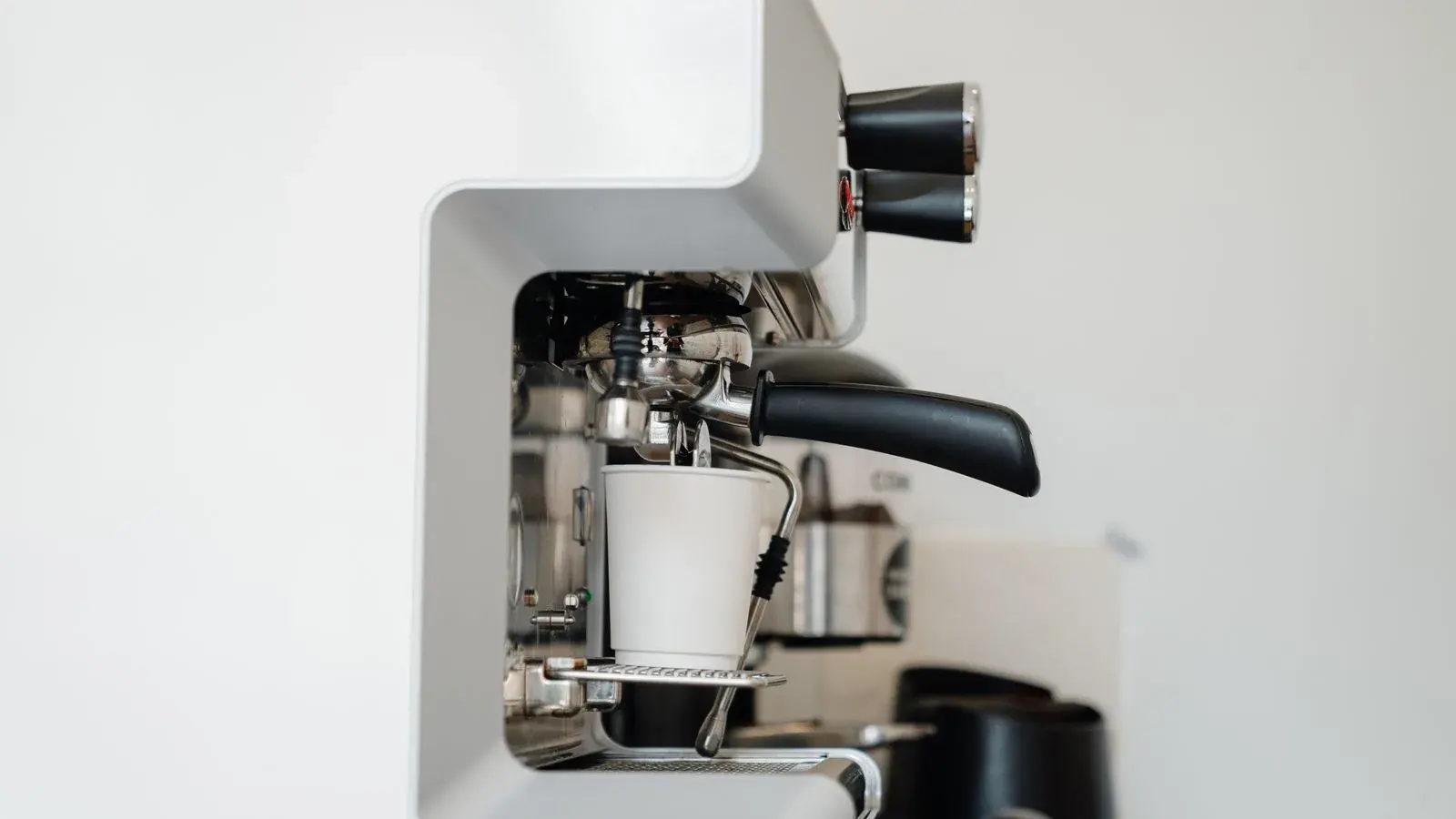
We have no ownership, physical testing, taste tests or measured filtration results for these cartridges. The photo shows an espresso machine scene, with no identified cartridge or compatible model. Keep your completed model-and-part note with the manual, so the next replacement starts with the same confirmed details.
What the evidence labels mean
- Source checked
- A cited source stated this fact when Espresso Receipt checked it. This is not a physical product test.
- Estimated
- This is calculated from stated inputs and assumptions. It is not a measured result or a current quote.
- Observed physical test
- This is a hands-on result for the exact unit under a stated test method.
- We could not confirm this
- The available sources do not establish one reliable answer.