
Buy a used espresso machine only when its exact identity, condition, support and whole-setup cost are clear enough for your needs.
A lower asking price helps only if you can use the machine and afford the missing pieces. Start with the records, then decide whether a safe demonstration can answer what remains. If you need a warranty and a return option, compare the seller's written terms with a manufacturer remanufactured offer.
Choose the kind of purchase
Separate a private used sale from a manufacturer's remanufactured program. The word "refurbished" on its own tells you little about who did the work or who will help later.
Breville's remanufactured program says its units are inspected, cleaned and tested, with a six-month warranty. Minor cosmetic marks may remain. Those are Breville's claims about its own program; another seller's listing needs its own evidence.
| Purchase | Ask for | What remains to check |
|---|---|---|
| Private used machine | Exact model, purchase record, repair history and a safe demonstration | Condition, included parts, support and the seller's return terms |
| Breville certified remanufactured | Program identity, exact product and current warranty terms | Delivered total, stock, included parts and return terms |
| Third-party refurbished | Who repaired it, work performed and written coverage | Whether the stated work and support fit this exact machine |
Breville's North American limited warranty is non-transferable. It describes purchase-proof requirements and says registration does not replace proof of purchase. A seller's original receipt helps document history, but does not by itself give you their manufacturer warranty. Other legal rights vary by location; confirm the terms for your own purchase.
Build a record of the machine
Ask for a clear model-label photo and a list of everything included. Match the model, region and electrical rating to the manufacturer record. Keep serial details private when sharing a public listing or asking a forum for help.
Ask what water the owner used, when care was done, and whether the machine has had a repair or modification. Request dated records where available. "Regularly cleaned" is a starting answer, so follow it with the actual method and date.
The portafilter is the removable handle that holds the filter basket. Copy this worksheet into your notes. Mark each answer as a seller statement, a document you saw, a demonstration you watched, or unknown.
| Item | Evidence to request | If it is missing |
|---|---|---|
| Identity | Readable model label and matching manual | Resolve the identity before using model-specific advice |
| Ownership history | Purchase receipt, approximate use and reason for sale | Leave age and use uncertain |
| Care | Water history and cleaning or descaling records | Do not assume internal cleanliness from a clean exterior |
| Repairs | Service record, replaced parts and modifications | Ask the manufacturer about support for that condition |
| Included parts | Photos and list of tank, tray, portafilter, baskets and accessories | Check exact replacement availability and cost |
| Coverage | Seller return terms and applicable warranty | Compare with an offer whose terms meet your needs |
Use Breville's product support hub to find the exact manual and support route for a Breville machine. For another brand, use that manufacturer's support. Ask about the specific model and fault; a parts page alone does not confirm that a repair is possible or economical.
Keep the demonstration safe
Do not operate a damaged machine. Do not open its casing, touch internal parts or remove a portafilter while brewing. Ask the seller to stop if damage, a leak from the body or an electrical fault appears. Contact manufacturer support instead of trying another powered test.
Agree on the demonstration while the machine is off, unplugged and cool. Start with an exterior check of the cord, plug, housing and supplied parts. If you cannot safely observe ordinary operation, leave operating condition unknown or arrange a qualified service assessment.
For a Breville Barista Express BES870, use the USCM X26 instruction book. Have the seller follow its complete setup, brewing and milk instructions. Its preset shot stops with either the 1 CUP or 2 CUP button. Return the steam dial to STANDBY before removing the milk jug. Use POWER to switch off, unplug, and let the machine cool before moving or general cleaning. These controls apply to this manual and model; check the matching manual for another machine.
Record what you actually saw: the selected function, whether it completed, and any fault. A single successful drink leaves long-term reliability and internal condition unknown. Keep those limits in your purchase decision.
Count the whole setup
Add the machine, delivery or collection, missing parts, grinder, applicable tax and any confirmed service cost. Keep an unknown repair separate instead of assigning it a convenient small number. Check current prices for the exact parts and offers you are comparing.
For an illustrative example, suppose the machine costs $250, collection costs $20, and a missing compatible part costs $35. That is a $305 subtotal before a grinder, tax or service: $250 + $20 + $35 = $305. These are hypothetical amounts, not observed offers or repair estimates.
If you also need a $200 grinder in that example, the subtotal becomes $505 before tax or service. Add applicable tax and any confirmed service cost, then compare the complete total with an alternative and its coverage. An unknown repair cost means the comparison is still incomplete.
Check the room to use the machine, fill the tank and fit the grinder on your counter. The beginner setup guide covers that wider choice. Use the cost-per-cup calculator after you have actual setup inputs.
Make the decision from the missing answers
Choose the used machine when its documented condition, support and total fit your budget and the uncertainty you can accept. Choose an offer with clearer coverage when you need help if a fault appears. If identity, safe operation or a necessary repair remains unknown, pause the purchase and get that answer first.
After purchase, follow the exact manual's care instructions. The descaling guide explains why the method changes by model. Once the machine is ready for normal use, start with a repeatable recipe in the dial-in guide.
Research notes
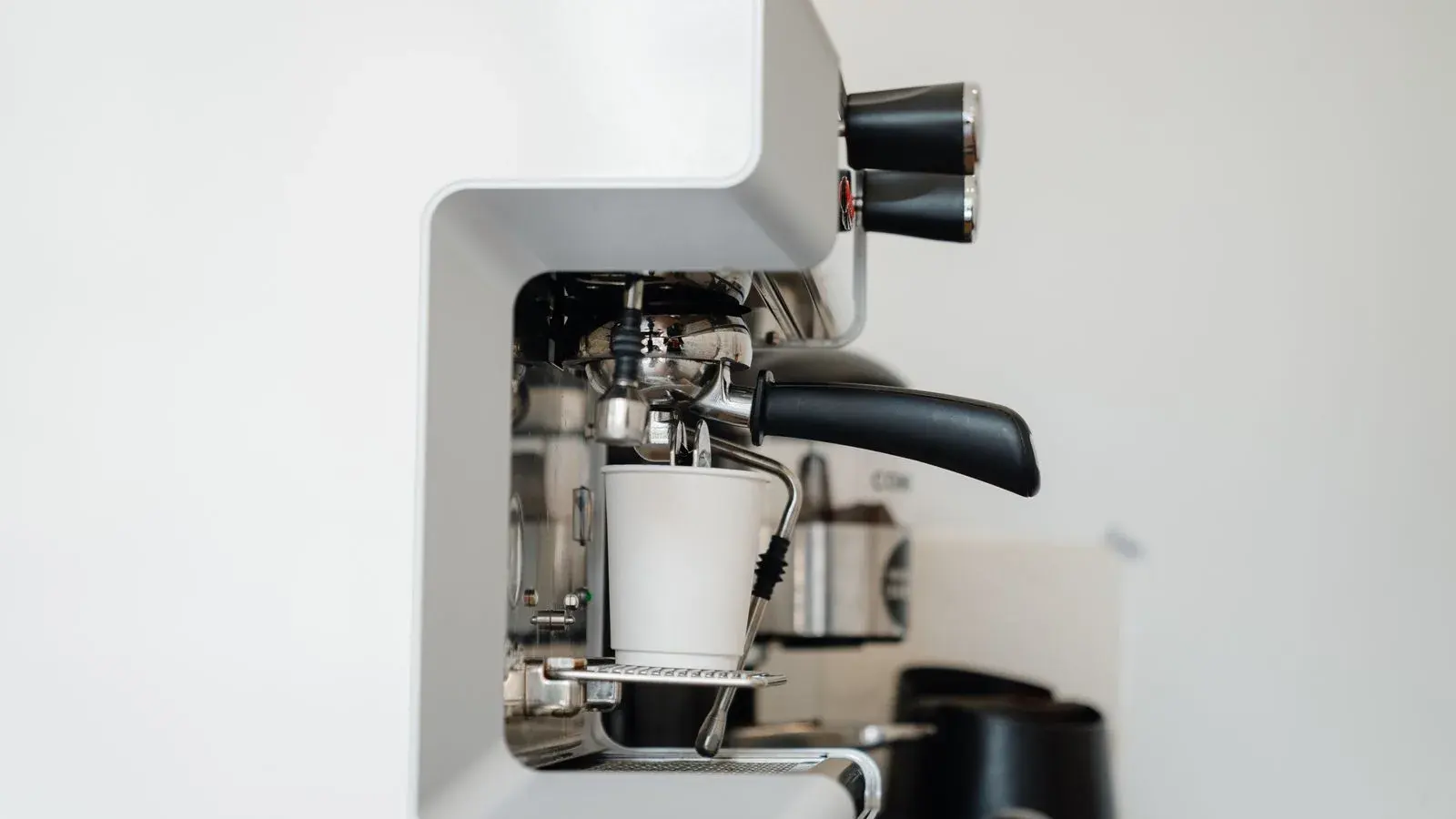
We have not owned, tested, tasted or physically measured these machines. We checked manufacturer documents on October 10, 2026. The purchase worksheet and cost example are editorial aids; we did not inspect a seller's machine or verify an offer. The photo shows an espresso machine and does not establish its model, condition or use history.
Count the grinder, parts and counter space before choosing the machine.
Check your complete setup
About Mara Ellis
Warm, practical, and lightly witty, Mara turns coffee jargon into clear choices for your counter, budget, and next shot.
Read the profile and guides by Mara Ellis →Sources (4)
- North American limited product warrantyBreville · Checked October 10, 2026(opens in a new tab)
- Certified remanufactured programBreville · Checked October 10, 2026(opens in a new tab)
- Product support hubBreville · Checked October 10, 2026(opens in a new tab)
- BES870 USCM X26 instruction bookBreville · Checked October 10, 2026(opens in a new tab)
See an old price or conflicting detail? Send a correction.
How we researched this
We use manufacturer, standards group, government, and authorized-retailer records when available. We label a hands-on result as an observed test only when we name the exact product and test it. A checked price shows what the seller listed on the check date. It can change after that date, and your delivered total may differ.
What the evidence labels mean
- Source checked
- A cited source stated this fact when Espresso Receipt checked it. This is not a physical product test.
- Estimated
- This is calculated from stated inputs and assumptions. It is not a measured result or a current quote.
- Observed physical test
- This is a hands-on result for the exact unit under a stated test method.
- We could not confirm this
- The available sources do not establish one reliable answer.