
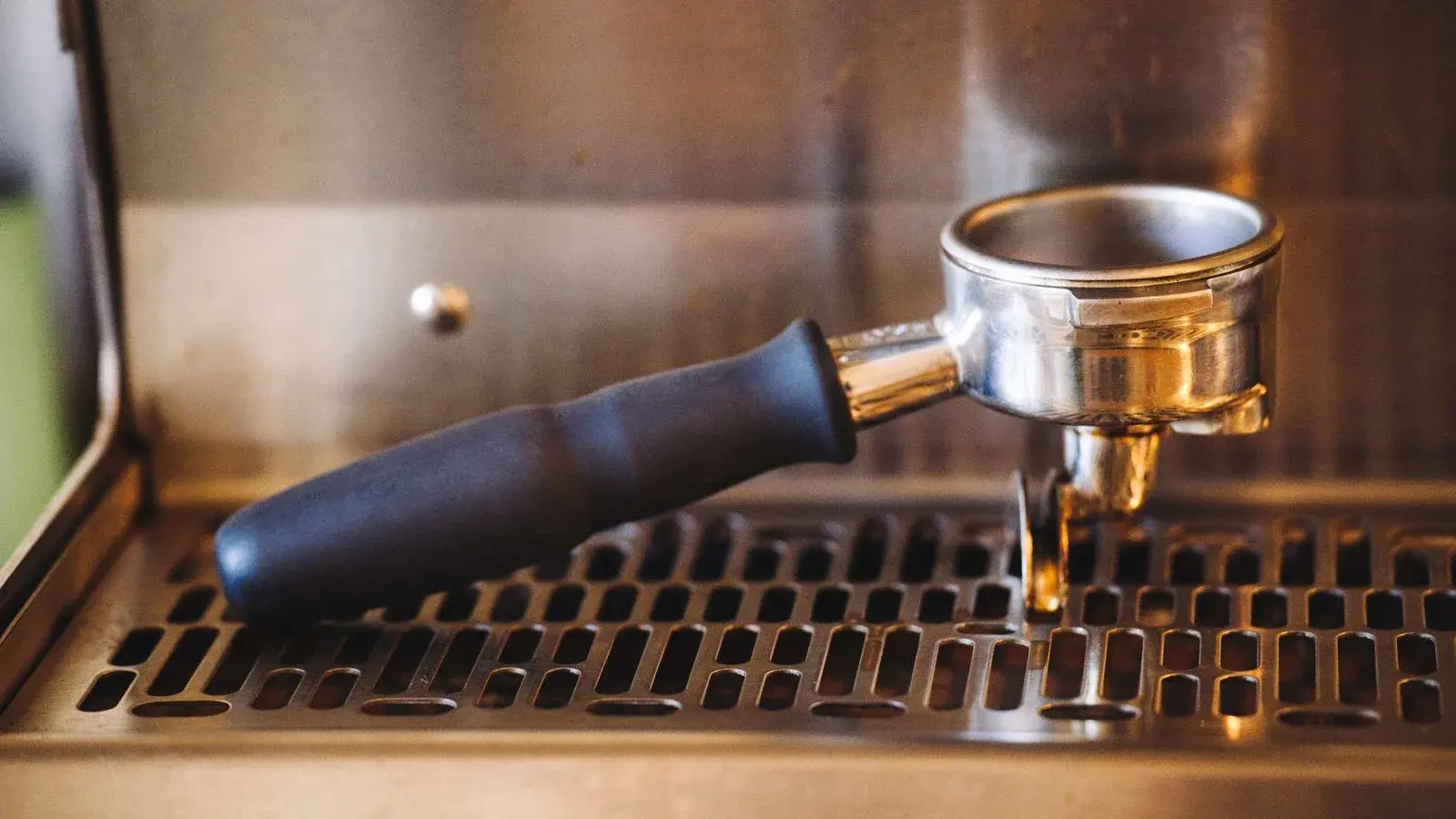
Check the space above your coffee first. The compressed coffee in the basket is called the puck, and the gap above it is called headspace. A metal screen takes up some of that gap, so start with your machine's instructions and the basket's intended dose range.
Similar names, different dimensions
| Named screen | Listed diameter | Listed thickness | Limit of this comparison |
|---|---|---|---|
| Weber Workshops Puck Screen | 58 mm | 2 mm | The maker gives a broad 58 mm compatibility statement; exact basket clearance still needs checking |
| Crema Puck Screens | 51, 53.4, or 58.5 mm variants | 1.7 mm | Select the exact variant and check the maker's model guide |
Sources: Weber's screen page and Crema's screen page. Those are the makers' published dimensions. A similar label on two screens doesn't establish that one fits every basket.
Crema says you may need to adjust the dose to make room for its screen. Do not treat that as a fixed dose cut for every machine. Basket shape, coffee volume, and the machine's upper parts can change the space available, much like a lid that closes on one pot and sits high on another.
Confirm fit before brewing
Do not force a portafilter (the handled part that holds the basket) into place. If it binds, leaks, or needs unusual force, stop. Wait until the machine is safe and depressurized, then remove the added accessory. Follow the machine maker's instructions before you try again.
Work through this list before you order:
- Record the machine's exact model and region.
- Record the basket maker, part number, and intended dose range. A replacement basket may differ from the original.
- Record the screen's exact variant, diameter, and thickness.
- Ask the screen seller to confirm that combination, including the required space above the coffee.
- Keep the reply and current return terms. Leave fit unconfirmed if the answer only repeats a nominal diameter.
The portafilter size chart is a good starting point for your model record. For a screen the chart doesn't list, its size information still leaves fit to confirm.
What a screen can and cannot establish
Weber describes its screen as a layer that can help keep the machine's dispersion screen cleaner and reduce disturbance at the top of the coffee. The dispersion screen is the metal plate that spreads water over the coffee. Those are the maker's intended uses, and we haven't seen a measured result for your machine or a taste comparison.
A screen also gives you another surface to clean. A cleaner-looking machine screen says nothing on its own about taste. A neat used puck can't measure extraction, which is how much flavor the water pulls from the coffee. If you already enjoy your drinks, ask whether the extra part solves a problem you actually have.
If your shots are inconsistent, write a recipe card before you add anything. Note the beans, dry dose, grind setting, drink mass, and time. If you later change the dose to make room, write that down too, because once two things have moved you can no longer pin every difference on the screen.
Cleaning adds a step
The screen and portafilter can be hot. Let the machine depressurize as instructed, and handle hot parts with suitable protection. Do not reach into the basket with bare fingers to retrieve a hot screen.
For its named screen, Weber recommends a rinse after use and a periodic clean with a coffee-specific cleaner. Follow the current instructions for your exact screen and the cleaner's stated concentration, contact time, and rinsing method. Those instructions don't set a universal dishwasher setting or soak time.
Plan the cleanup ahead of time. Decide how you'll:
- Remove the screen safely without losing it in the used grounds.
- Rinse it without dropping it into a drain.
- Keep cleaning chemicals away from food and follow their labels.
- Check that it is clean and undamaged before the next use.
If the seller gives no care instructions for the exact material or coating, ask before you use a chemical cleaner. Use each brand's own cleaning instructions for its own screen.
A simple decision worksheet
| Question | Record your answer |
|---|---|
| What problem am I trying to solve? | Name a cleaning or preparation issue |
| Is exact fit confirmed? | Keep the model, basket, screen variant, and source |
| Does the normal dose leave enough space? | Use the maker's method; do not invent a universal gap |
| What changes if I add the screen? | Include any dose change and the cleaning step |
| How will I judge the result? | Record handling, cleaning, and your own drink preference separately |
Hold off on buying if fit is still uncertain or the extra cleaning has no clear benefit for you. If you do try a confirmed combination, keep the rest of the recipe the same, taste the shot, and write down each change you make. If the cup and cleanup aren't better for you, take the screen back out.
Keep fit and flavor as separate checks
An exact screen diameter is necessary information, but it is only one part of fit. A basket's stated size, its inside wall shape, the coffee dose, the screen's thickness, and the space under the machine's shower screen all affect whether the portafilter closes normally. Weber's 58 mm screen and Crema's 58.5 mm variant are not interchangeable just because both sound close to a 58 mm basket. Ask the seller about the exact combination and keep that answer with your basket record.
Thickness is a real space cost. The listed Weber screen is 2 mm thick; Crema lists 1.7 mm for its named variants. Those figures do not tell you the free headspace in your filled basket. A hypothetical 18 g dose that clears one machine may touch the upper parts in another. Do not subtract a guessed number of grams from every recipe. If Crema's instructions call for a dose adjustment on your setup, record the old dose, new dose, and new espresso yield. Otherwise, a different cup could come from the changed dose as well as the screen.
If a confirmed screen fits, begin with an easy question: does it reduce the cleaning work you care about? Weber describes keeping the dispersion screen cleaner as a product purpose. Check your machine screen after the same number of shots with and without the puck screen, using the cleaning method your machine manual permits. Count the time and work needed to rinse the added screen too. A cleaner machine screen may be useful even if the cup tastes the same; a new part that takes longer to clean may not suit your routine.
For a flavor comparison, keep the coffee, basket, dose, grind, target drink weight, and machine setting fixed if the screen fits without a dose change. Write down actual yield, time, and a taste note for a shot without the screen and one with it. Repeat if the first pair varies. Do not call one longer shot an extraction improvement. We have no controlled test that proves a taste benefit for either listed screen. Stop if the portafilter binds, leaks, or behaves differently in a way your machine manual does not allow.
If you must change the dose to fit a screen, do not describe the next cup as a screen-only test. You can still decide whether the whole new recipe works for you, but the screen and dose moved together. That distinction protects you from buying a part for a result that came from a different recipe.
Plan where a hot screen goes
After brewing, the screen can come out with the spent coffee or stay near the basket. Let the machine depressurize and follow its handling instructions before you remove the portafilter. Use a safe surface for the hot part. Do not reach into the used puck with a finger to fish out metal. If the screen goes into the knock box with the grounds, wait until it can be handled safely before you rinse it. Make sure it does not go into the trash with a used puck.
Inspect the screen before it goes back into the basket. A bent edge, damaged mesh, or residue that will not clean under the maker's method is a reason to stop using it and ask the maker what to do. Store the clean, dry part where it will not collect grounds between drinks. That storage spot is part of the daily cost of using a screen, just like the rinse and the extra fit check.
Try this next
Find your exact model in the portafilter size chart. Ask the manufacturer about the specific screen and basket combination before ordering. If shot behavior is your main concern, log it in Fix a shot before you add parts.
Common questions
Does the same diameter prove that a screen fits?
No. Confirm the exact machine, basket, screen variant, and clearance. A nominal size is only a starting point.

About Mara Ellis
Warm, practical, and lightly witty, Mara turns coffee jargon into clear choices for your counter, budget, and next shot.
Read the profile and guides by Mara Ellis →Sources (2)
- Puck ScreenWeber Workshops · Checked September 11, 2026(opens in a new tab)
- Puck ScreensCrema Coffee Products · Checked September 11, 2026(opens in a new tab)
See an old price or conflicting detail? Send a correction.
How we researched this
Espresso Receipt Editorial checked two primary screen listings and the site's accessory limits. What we added is the exact-part checklist and a worksheet that keeps fit, cleaning, and drink preference apart.
We did not test, own, taste, or measure these screens or their effect on extraction, and we claim no fit test, cleaning-time result, or taste improvement. The facts here come from the sources below.
What the evidence labels mean
- Source checked
- A cited source stated this fact when Espresso Receipt checked it. This is not a physical product test.
- Estimated
- This is calculated from stated inputs and assumptions. It is not a measured result or a current quote.
- Observed physical test
- This is a hands-on result for the exact unit under a stated test method.
- We could not confirm this
- The available sources do not establish one reliable answer.