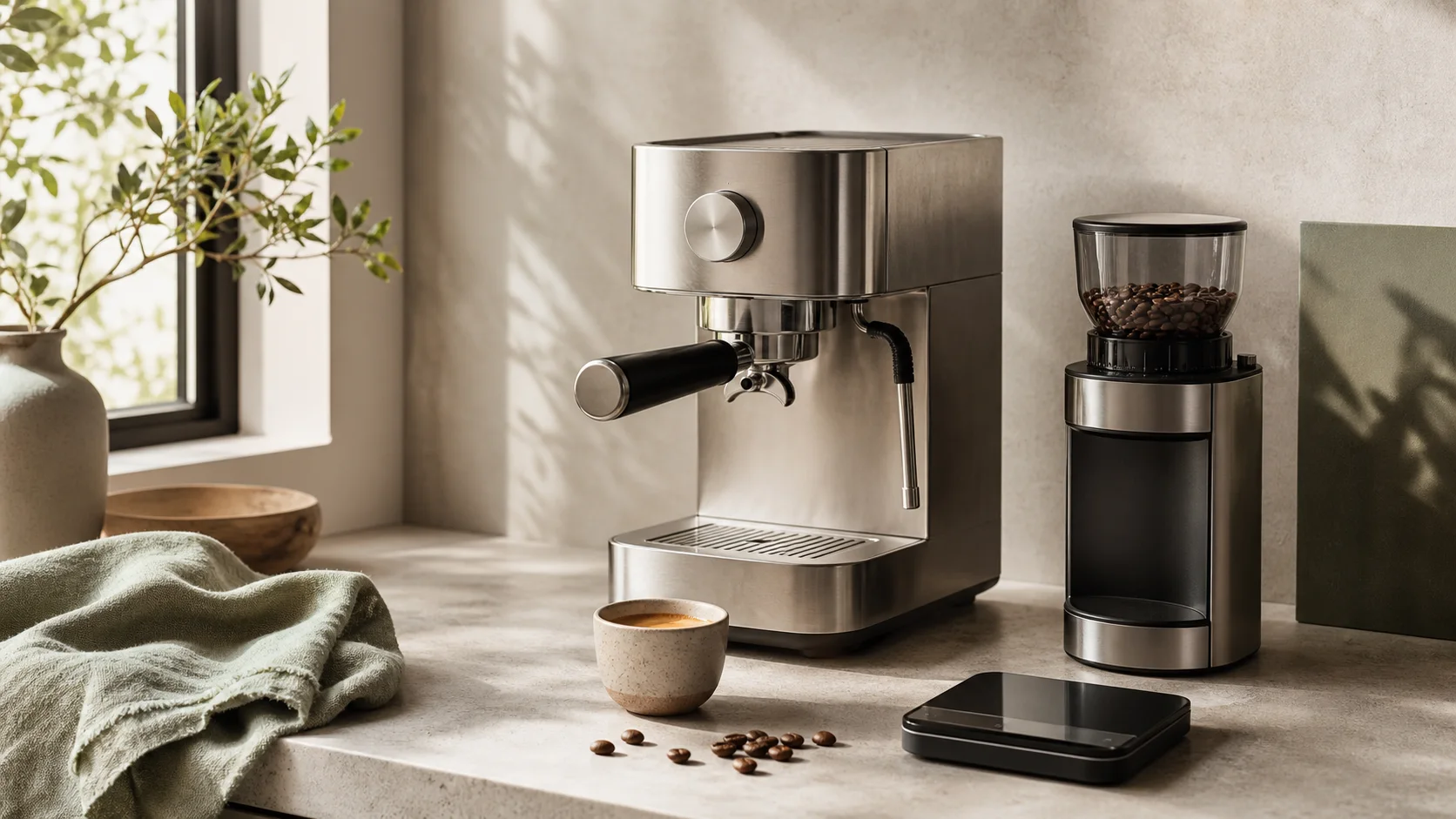
Sharp, thin, and quickly finishing espresso often points toward insufficient extraction; harsh, drying, or ashy espresso can point toward excessive or uneven extraction. Taste words overlap, roast flavor matters, and channeling can create both. Record dose, beverage mass, time, temperature state, and preparation, then change one variable.
This page compares published specifications, prices, and disclosed models. It does not claim hands-on testing unless a specific statement is labeled “Observed.” Price is a dated snapshot, not a guarantee.
Sour is not a timer alarm
Acidity can be desirable. A shot can run within a common time range and still taste hollow because grind, distribution, temperature, or coffee has changed. Use time as context.
Bitter is not always over-extraction
Dark roast, high temperature, stale coffee, channeling, or a dirty machine can create harsh flavors. Cleaning and coffee identity belong in the diagnosis.
A controlled sequence
Keep dose and target beverage mass fixed. Adjust grind to change flow. If the flow is repeatable but taste remains off, consider ratio and temperature using the machine’s documented controls.
Questions, answered
Should I grind finer for sour espresso?
Often, if the shot is also running too quickly and preparation is even. Change one step and taste again.
Should I grind coarser for bitter espresso?
Often, if flow is too slow and the basket is not overdosed. Check roast and cleanliness too.
Can espresso be sour and bitter?
Yes. Uneven extraction can produce a confusing mix of sharp and harsh sensations.
Sources and checks
We favor manufacturer, standards-body, government, and authorized-retailer records. Follow the links below to inspect the underlying evidence.
See a stale price or conflicting specification? Send a correction.