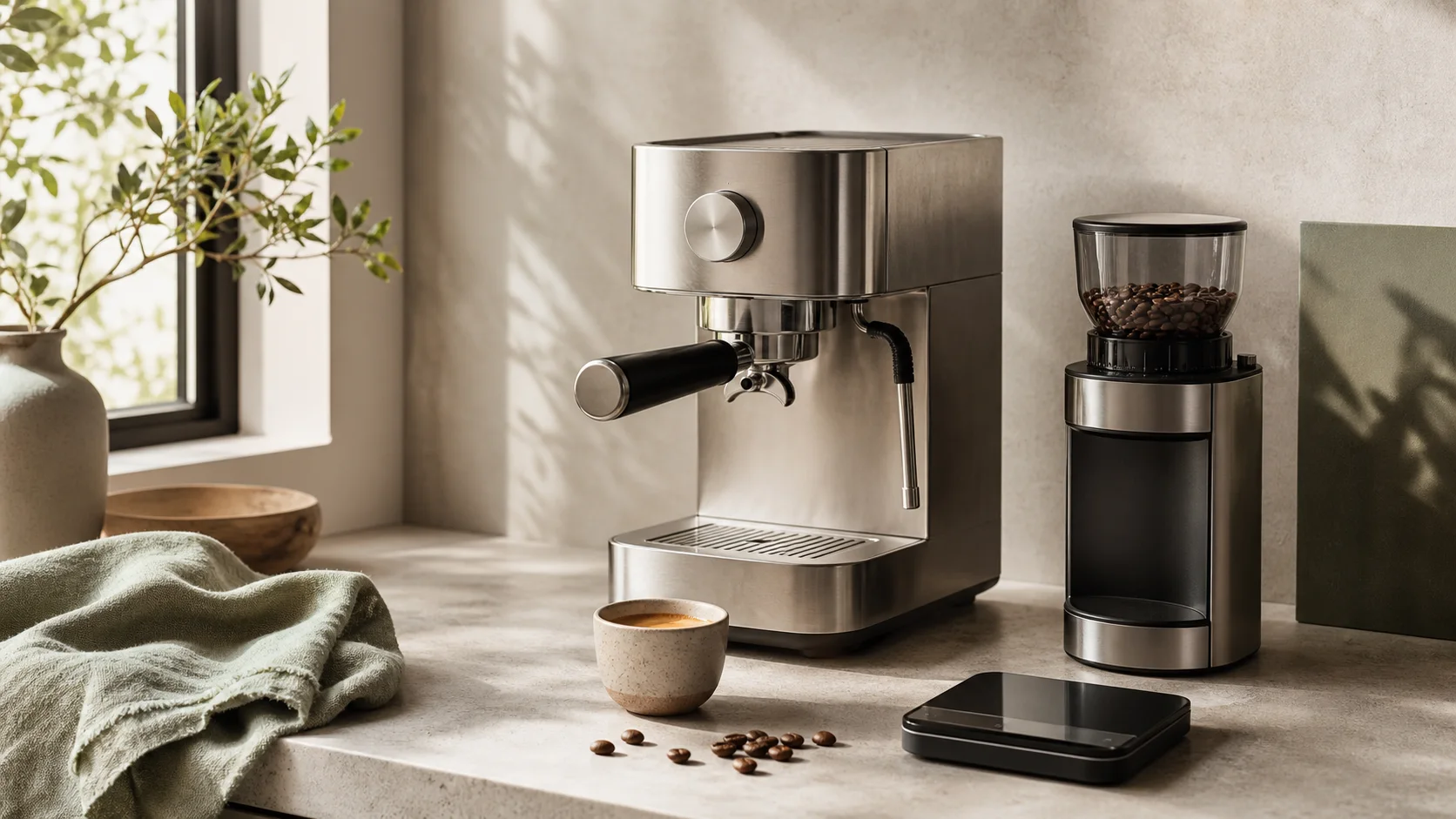
Home espresso time has at least four parts: machine readiness, grinder and puck preparation, brewing and milk, and cleanup. Manufacturer heat-up claims range from seconds to roughly eleven minutes in the launch catalog, but readiness claims use different definitions and do not equal total drink time.
This page compares published specifications, prices, and disclosed models. It does not claim hands-on testing unless a specific statement is labeled “Observed.” Price is a dated snapshot, not a guarantee.
Warm-up is not one standardized measurement
A heater can reach a control state before the portafilter, group, and cup are thermally ready for a repeatable workflow. Preserve the manufacturer wording unless a test protocol measures more.
Hands-on and elapsed time differ
A machine can warm while the user showers, while grinding and steaming require active attention. Report both when testing rather than collapsing them into one number.
The second drink is the real test
Recovery, steaming sequence, refill, wiping, and grinder repetition determine household throughput. Ask how many drinks happen in the busiest session.
Questions, answered
Do three-second machines make a latte in three seconds?
No. That is a manufacturer heat-up claim for the heating system, not total grind, brew, milk, and cleanup time.
Are boiler machines always slower?
They often require more warm-up, but timers and passive warm-up can change perceived morning effort.
How will Espresso Receipt test workflow?
The planned protocol separates ready time, hands-on time, two-drink elapsed time, and cleanup under defined conditions.
Sources and checks
We favor manufacturer, standards-body, government, and authorized-retailer records. Follow the links below to inspect the underlying evidence.
- Bambino product pageBreville · source reviewed 2026-07-21
- Espresso Receipt methodologyEspresso Receipt · source reviewed 2026-07-21
See a stale price or conflicting specification? Send a correction.